

‘Toast’ SHEENAGH PUGH
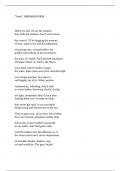
When I'm old, I'll say the summer
they built the stadium. And I won't mean
the council. I'll be hugging the memory
of how, open to sun and the judgement
of passing eyes, young builders lay
golden and melting on hot pavements,
the toast of Cardiff. Each blessed lunchtime
Westgate Street, St. John's, the Hayes
were lined with fit bodies; forget
the jokes, these jeans were fuzz stretched tight
over unripe peaches. Sex objects,
and happily up for it. When women
sauntered by, whistling, they'd bask
in warm smiles, browning slowly, loving
the light. Sometimes they'd clock men
looking them over. It made no odds;
they never got mad; it was too heady
being young and fancied and in the sun.
They're gone now; all we have left of them
this vast concrete-and-glass mother-ship
that seems to have landed awkwardly
in our midst. And Westgate's dark
with November rain, but different, as if
the stones retain heat, secret impressions
of shoulder-blades, shallow cups,
as sand would do. The grey façade
, of the empty auction house, three storeys
of boarded windows, doesn't look sad,
more like it's closed its eyes, breathing in
the smell of sweat, sunblock, confidence.
(Please note that context is not an assessed element of this component of the
WJEC GCSE in English Literature.) Sheenagh Pugh was born in Birmingham in 1950, attained
a degree in Modern Languages from Bristol University and lived for many years in Cardiff, where she
worked as a civil servant before lecturing in creative writing at the University of Glamorgan. She retired in
2008, and moved to Shetland, where she still lives and writes. Author of two novels and a critical work
(about fan fiction), as well as eleven poetry collections, Pugh was alongside Gillian Clarke among others
one of the first women to earn attention and acclaim for her poetry in Wales. Partly as a result of this early
visibility, her work has been widely anthologised, and appears in most of the significant anthologies
produced in or about Wales in the course of her career, including The Bright Field (ed. Meic Stephens,
Carcanet), Twentieth Century Anglo-Welsh Poetry (ed. Dannie Abse, Seren) and Welsh Women s Poetry
(ed. Katie Gramich, Honno).
Subject- Matter
The title immediately demands our intention as we instinctively know that this will not be a poem about
‘toast’; the poet is playing with the word and it can be perceived in varying ways. Is the poem in essence
a ‘toast’ to the ‘toasting’ bodies of the workers? Does it also however carry connotations of something
that has ceased to be? The poem has a tone of nostalgia for the way things were; the word ‘toast’ is
sometimes used colloquially to mean ‘gone’. It is therefore a playful title that immediately engages the
reader.
The title is open to interpretation; possibly referring to a toast in the sense of a salutation – a
celebratory drink to honour someone or something, perhaps for a special event or achievement. The
title may also be alluding to the golden crisping effect of intense heat on bread in the same way as the
sun tans the human skin. The word ‘toast’ also has connotations of heat and warmth and as the builders
are being described as “the toast of Cardiff” there may be an implication that their presence brought a
warmth to the city of Cardiff. This interpretation is corroborated with the image at the end of the poem
of the way that the “stones retain heat” long after the builders have gone; one lasting impression that
the builders have left on the buildings of Cardiff itself is one of warmth. The title therefore can be seen
as having several possible meanings. Sheelagh Pugh is known for having a playful and humorous style.
When I'm old, I'll say the summer
they built the stadium. And I won't mean
the council. I'll be hugging the memory
of how, open to sun and the judgement
of passing eyes, young builders lay
golden and melting on hot pavements,
the toast of Cardiff. Each blessed lunchtime
Westgate Street, St. John's, the Hayes
were lined with fit bodies; forget
the jokes, these jeans were fuzz stretched tight
over unripe peaches. Sex objects,
and happily up for it. When women
sauntered by, whistling, they'd bask
in warm smiles, browning slowly, loving
the light. Sometimes they'd clock men
looking them over. It made no odds;
they never got mad; it was too heady
being young and fancied and in the sun.
They're gone now; all we have left of them
this vast concrete-and-glass mother-ship
that seems to have landed awkwardly
in our midst. And Westgate's dark
with November rain, but different, as if
the stones retain heat, secret impressions
of shoulder-blades, shallow cups,
as sand would do. The grey façade
, of the empty auction house, three storeys
of boarded windows, doesn't look sad,
more like it's closed its eyes, breathing in
the smell of sweat, sunblock, confidence.
(Please note that context is not an assessed element of this component of the
WJEC GCSE in English Literature.) Sheenagh Pugh was born in Birmingham in 1950, attained
a degree in Modern Languages from Bristol University and lived for many years in Cardiff, where she
worked as a civil servant before lecturing in creative writing at the University of Glamorgan. She retired in
2008, and moved to Shetland, where she still lives and writes. Author of two novels and a critical work
(about fan fiction), as well as eleven poetry collections, Pugh was alongside Gillian Clarke among others
one of the first women to earn attention and acclaim for her poetry in Wales. Partly as a result of this early
visibility, her work has been widely anthologised, and appears in most of the significant anthologies
produced in or about Wales in the course of her career, including The Bright Field (ed. Meic Stephens,
Carcanet), Twentieth Century Anglo-Welsh Poetry (ed. Dannie Abse, Seren) and Welsh Women s Poetry
(ed. Katie Gramich, Honno).
Subject- Matter
The title immediately demands our intention as we instinctively know that this will not be a poem about
‘toast’; the poet is playing with the word and it can be perceived in varying ways. Is the poem in essence
a ‘toast’ to the ‘toasting’ bodies of the workers? Does it also however carry connotations of something
that has ceased to be? The poem has a tone of nostalgia for the way things were; the word ‘toast’ is
sometimes used colloquially to mean ‘gone’. It is therefore a playful title that immediately engages the
reader.
The title is open to interpretation; possibly referring to a toast in the sense of a salutation – a
celebratory drink to honour someone or something, perhaps for a special event or achievement. The
title may also be alluding to the golden crisping effect of intense heat on bread in the same way as the
sun tans the human skin. The word ‘toast’ also has connotations of heat and warmth and as the builders
are being described as “the toast of Cardiff” there may be an implication that their presence brought a
warmth to the city of Cardiff. This interpretation is corroborated with the image at the end of the poem
of the way that the “stones retain heat” long after the builders have gone; one lasting impression that
the builders have left on the buildings of Cardiff itself is one of warmth. The title therefore can be seen
as having several possible meanings. Sheelagh Pugh is known for having a playful and humorous style.


