§
QQQChapters 7-14
Chapter 7
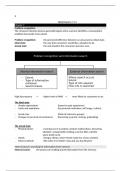
Problem recognition
The consumer decision process generally begins when a person identifies a consumption
problem that needs to be solved.
Problem recognition: the perceived difference between an actual and an ideal state.
Ideal state: the way that consumers would like a situation to be.
Actual state the real situation the consumers perceive now.
Problem recognition and information search
Internal information search External information search
- Extent Where search occurs
- Type of information Extent
retrieved Type of info aquired
- Search biases How info is searched
High descrepancy -> higher level of MAO -> more likely for customers to act
The ideal state
- Simple expectations (based on past experience)
- Goals and aspirations (by personal motivation, self image, culture)
- Social class (think of reference groups)
- Changes in personal circumstances (becoming a parent, moving, graduating)
The actual state
- Physical factors (running out of a product, product malfunctions, becoming
xxxxxxxxxxxxxxxxxxxxxx obsolete, unexpectedly needing a service (like a dentist
xxxxxxxxxxxxxxxxxxxxxx when teeth hurt))
- Needs (hungry, thirsty, when friends make fun of your clothes)
- External stimuli (like when it’s Mother’s Day and you buy flowers)
Internal search: searching for information from memory
Internal search: the process of recalling stored information from the memory.
,Researchers are investigating the;
- Extent of the search
- Nature of the search
- Process by which consumers recall info, feelings and experiences and enter them to the
descision making process
Extent of the search
The effort consumers devote to internal search depends on their MAO to process
information. Time pressure or distractions will limit internal search.
Nature of the search
- Recall of brands
Consumers tend to recall a subset of two to eight brands known as a
consideration or evoked set. Consideration sets vary in terms of their size, stability,
variety, and preference dispersion (the equality of preferences toward brands or
products in the set).
These factors increase the possibility of consumers’ recalling a brand during internal
search and including the brand in their consideration set:
1. Prototypicality: consumers recall brands that are closest to the prototype or that
most resemble other category members.
2. Brand familiarity: well-known brands are more easily recalled because the memory
links associated with these brands tend to be stronger.
3. Goals and usage intentions: marketers can attempt to associate products with certain
goals and usage intentions.
4. Brand preference:
5. Retrieval cues: like logo’s, packages
- Recall of attributes: These factors influence the recall of attribute information
i. Accessibility or availability: marketers can make information more accessible by
repeatedly drawing attention to it in communications or making the information
more relevant.
ii. Diagnosticity: this is what helps us distinguish objects from one another, like price for
example (only when prices vary, otherwise not). Negative information tends to be
more diagnostic than positive or neutral.
iii. Salience: whether an attribute is top of mind or not. By repeatedly calling attention
to an attribute in marketing messages, marketers can increase salience. For
information to be recalled and entered into the decision, it must have attribute
determinance, which means that information is both salient and diagnostic.
iv. Vividness: concrete words, pictures of instructions to imagine or through WOM. Vivid
information only seems to influence judgment when consumers have not formed a
strong prior evaluation.
v. Goals
,- Recall of evaluations
i. We find overall evaluations or attitudes easier to remember than specific
attributes. Evaluations are also more likely to be recalled by consumers who are actively
evaluating the brand when they are exposed to relevant information. Online processing is
when a consumer is actively evaluating a brand as he/she sees an ad for it. Afterward, you
will more likely remember your overall evaluation than the attributes that lead to it.
- Recall of experiences
Advertising may affect how accurately consumers can recall their product
experiences, their recall of the evaluation is not necessarily affected.
Process by which consumers recall information, feelings and experiences and enter them
into the decision process
a. We all have processing biases that alter the nature of internal search, which are;
i. Confirmation bias: refers to our tendency to recall information that reinforces or
confirms our overall beliefs, making our decision more positive than it should be. This
is related to the concept of selective perception; we see what we want to see.
ii. Inhibition: the recall of one attribute inhibiting the recall of another. Inhibition can
also lead to a biased judgment because consumers may remember but still ignore
important information.
iii. Mood: consumers engaged in internal search are most likely to recall information
that matches their mood. So, marketing communications that put consumers in a
good mood can enhance the recall of positive attribute information.
Online processing: when a consumer is actively evaluating a brand as
he/she sees an ad for it.
Evoked/Consideration set Subset of top-of-mind brands evaluated when making a
choice
(Example: think of buying a smartphone. You emediatelly think of samsung, apple, etc.)
Attribute determinance Information is both salient and diagnostic
(Example: buying a car. They talk on the tv a lot about fuel efficiency, so it must be important
‘cause it stands out -> salient. When
you try to be good for the environment/you want to drive with less costs, thinking about it
makes it diagnostic)
Diagnostic information: that which helps us discriminate among objects
(Example: battery 1 lasts 6 hours, battery 2 lasts 10 hours. You choose number 2 based off diagnostic information)
Salient attribute: Attribute on top of mind or more important
Online processing: When a consumer is actively evaluation a brasnd as
he/she views an add for it
, External search: searching for information from the environment
External search is the process of collecting information from outside
sources, such as magazines, dealers and ads.
2 types of external search
1. Prepurchase search is a search for information that aids a specific acquisition
decision
2. Ongoing search is search that occurs regularly, regardless of whether
xxxxx xxxxxx xxxxxx xxxxxx the consumer is making a choice
There are five key aspects of the external search process;
- Source information
- Extent of external search
- Content of external search
- Seach typologies
- Process or order of the search
External sources where consumers can aquire information:
1. Retailer search: stores, dealers
2. (social) media search
3. Interpersonal search: advice from friends, family, etc.
4. Independent search: books, Zoover, etc.
5. Experiential search: product samples, trials
6. Consumers increase use of interpersonal sources when;
i. Brand knowledge decreases
ii. When consumers believe that their purchase will be judged by others
The extent of external search:
When researching experience goods consumers tend to spend more time on the webpage
and dig into details. When researching experience goods, consumers tend to visit more
websites but less time per page.
How much do we engage in external search?
a. Motivation to process information
- Involvement and perceived risk
- Perceived costs and benefits
- Consideration set: a smaller consideration set reduces the need to search for
information.
- Relative brand uncertainty: when consumers are more uncertain about which
- brand is the best, they are more motivated to engage in external search.
- Attitudes towards the search: some consumers like searching for information
- and therefore do so extensively.
- Discrepancy of information: consumers are likely to reject highly incongruous
information (information that doesn’t fit in a category) to process information
- Presence of others
QQQChapters 7-14
Chapter 7
Problem recognition
The consumer decision process generally begins when a person identifies a consumption
problem that needs to be solved.
Problem recognition: the perceived difference between an actual and an ideal state.
Ideal state: the way that consumers would like a situation to be.
Actual state the real situation the consumers perceive now.
Problem recognition and information search
Internal information search External information search
- Extent Where search occurs
- Type of information Extent
retrieved Type of info aquired
- Search biases How info is searched
High descrepancy -> higher level of MAO -> more likely for customers to act
The ideal state
- Simple expectations (based on past experience)
- Goals and aspirations (by personal motivation, self image, culture)
- Social class (think of reference groups)
- Changes in personal circumstances (becoming a parent, moving, graduating)
The actual state
- Physical factors (running out of a product, product malfunctions, becoming
xxxxxxxxxxxxxxxxxxxxxx obsolete, unexpectedly needing a service (like a dentist
xxxxxxxxxxxxxxxxxxxxxx when teeth hurt))
- Needs (hungry, thirsty, when friends make fun of your clothes)
- External stimuli (like when it’s Mother’s Day and you buy flowers)
Internal search: searching for information from memory
Internal search: the process of recalling stored information from the memory.
,Researchers are investigating the;
- Extent of the search
- Nature of the search
- Process by which consumers recall info, feelings and experiences and enter them to the
descision making process
Extent of the search
The effort consumers devote to internal search depends on their MAO to process
information. Time pressure or distractions will limit internal search.
Nature of the search
- Recall of brands
Consumers tend to recall a subset of two to eight brands known as a
consideration or evoked set. Consideration sets vary in terms of their size, stability,
variety, and preference dispersion (the equality of preferences toward brands or
products in the set).
These factors increase the possibility of consumers’ recalling a brand during internal
search and including the brand in their consideration set:
1. Prototypicality: consumers recall brands that are closest to the prototype or that
most resemble other category members.
2. Brand familiarity: well-known brands are more easily recalled because the memory
links associated with these brands tend to be stronger.
3. Goals and usage intentions: marketers can attempt to associate products with certain
goals and usage intentions.
4. Brand preference:
5. Retrieval cues: like logo’s, packages
- Recall of attributes: These factors influence the recall of attribute information
i. Accessibility or availability: marketers can make information more accessible by
repeatedly drawing attention to it in communications or making the information
more relevant.
ii. Diagnosticity: this is what helps us distinguish objects from one another, like price for
example (only when prices vary, otherwise not). Negative information tends to be
more diagnostic than positive or neutral.
iii. Salience: whether an attribute is top of mind or not. By repeatedly calling attention
to an attribute in marketing messages, marketers can increase salience. For
information to be recalled and entered into the decision, it must have attribute
determinance, which means that information is both salient and diagnostic.
iv. Vividness: concrete words, pictures of instructions to imagine or through WOM. Vivid
information only seems to influence judgment when consumers have not formed a
strong prior evaluation.
v. Goals
,- Recall of evaluations
i. We find overall evaluations or attitudes easier to remember than specific
attributes. Evaluations are also more likely to be recalled by consumers who are actively
evaluating the brand when they are exposed to relevant information. Online processing is
when a consumer is actively evaluating a brand as he/she sees an ad for it. Afterward, you
will more likely remember your overall evaluation than the attributes that lead to it.
- Recall of experiences
Advertising may affect how accurately consumers can recall their product
experiences, their recall of the evaluation is not necessarily affected.
Process by which consumers recall information, feelings and experiences and enter them
into the decision process
a. We all have processing biases that alter the nature of internal search, which are;
i. Confirmation bias: refers to our tendency to recall information that reinforces or
confirms our overall beliefs, making our decision more positive than it should be. This
is related to the concept of selective perception; we see what we want to see.
ii. Inhibition: the recall of one attribute inhibiting the recall of another. Inhibition can
also lead to a biased judgment because consumers may remember but still ignore
important information.
iii. Mood: consumers engaged in internal search are most likely to recall information
that matches their mood. So, marketing communications that put consumers in a
good mood can enhance the recall of positive attribute information.
Online processing: when a consumer is actively evaluating a brand as
he/she sees an ad for it.
Evoked/Consideration set Subset of top-of-mind brands evaluated when making a
choice
(Example: think of buying a smartphone. You emediatelly think of samsung, apple, etc.)
Attribute determinance Information is both salient and diagnostic
(Example: buying a car. They talk on the tv a lot about fuel efficiency, so it must be important
‘cause it stands out -> salient. When
you try to be good for the environment/you want to drive with less costs, thinking about it
makes it diagnostic)
Diagnostic information: that which helps us discriminate among objects
(Example: battery 1 lasts 6 hours, battery 2 lasts 10 hours. You choose number 2 based off diagnostic information)
Salient attribute: Attribute on top of mind or more important
Online processing: When a consumer is actively evaluation a brasnd as
he/she views an add for it
, External search: searching for information from the environment
External search is the process of collecting information from outside
sources, such as magazines, dealers and ads.
2 types of external search
1. Prepurchase search is a search for information that aids a specific acquisition
decision
2. Ongoing search is search that occurs regularly, regardless of whether
xxxxx xxxxxx xxxxxx xxxxxx the consumer is making a choice
There are five key aspects of the external search process;
- Source information
- Extent of external search
- Content of external search
- Seach typologies
- Process or order of the search
External sources where consumers can aquire information:
1. Retailer search: stores, dealers
2. (social) media search
3. Interpersonal search: advice from friends, family, etc.
4. Independent search: books, Zoover, etc.
5. Experiential search: product samples, trials
6. Consumers increase use of interpersonal sources when;
i. Brand knowledge decreases
ii. When consumers believe that their purchase will be judged by others
The extent of external search:
When researching experience goods consumers tend to spend more time on the webpage
and dig into details. When researching experience goods, consumers tend to visit more
websites but less time per page.
How much do we engage in external search?
a. Motivation to process information
- Involvement and perceived risk
- Perceived costs and benefits
- Consideration set: a smaller consideration set reduces the need to search for
information.
- Relative brand uncertainty: when consumers are more uncertain about which
- brand is the best, they are more motivated to engage in external search.
- Attitudes towards the search: some consumers like searching for information
- and therefore do so extensively.
- Discrepancy of information: consumers are likely to reject highly incongruous
information (information that doesn’t fit in a category) to process information
- Presence of others