The Doctrine of Precedent:
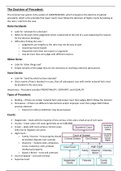
The common law system is the system of JURISPRUDENCE, which is based on the doctrine of judicial
precedent, which is the principle that lower courts must follow the decisions of higher courts by looking at
the ratio / rule from the case.
Ratio Decidendi:
Latin for ‘rationale for a decision’
Refers to the part of the judgement which is delivered at the end of a case explaining the reasons
for the decision (binding).
Difficulties finding the ratio –
o judgements are lengthy so the ratio may not be easy to spot
o reasoning may be biased
o frequently more than one reason or argument
o may be more than one judge with different reasons.
Obiter Dicta:
Latin for ‘other things said’
Simply remarks of the judge that are not necessary to reaching a decision (persuasive).
Stare Decisis:
Latin for ‘stand by what has been decided’
Once a point of law is decided in a case, then all subsequent case with similar material facts must
be decided in the same way.
Importance – Precedent provides PREDICTABILITY, CERTAINTY, and EQUALITY.
Types of Precedent:
Binding – if there are similar material facts and proper court then judges MUST follow the decision.
Persuasive – if there are different material facts and/or improper court then judges MAY follow
previous decision.
o Cases from other jurisdictions may be persuasive.
Courts:
Magistrates – deals with the majority of less serious crime and a small array of civil cases.
County – lower value civil cases (generally up to £100,000).
Crown – deals with more serious criminal cases.
Only one to regularly use juries.
High Court –
o Family / Divorce – how property should
be divided; disputes over custody.
o Chancery – involves land, companies,
trusts, insolvency, wills, probate,
intellectual property.
o Queen’s Bench – torts and contracts.
Court of Appeal – Civil and Criminal
Supreme Court
The common law system is the system of JURISPRUDENCE, which is based on the doctrine of judicial
precedent, which is the principle that lower courts must follow the decisions of higher courts by looking at
the ratio / rule from the case.
Ratio Decidendi:
Latin for ‘rationale for a decision’
Refers to the part of the judgement which is delivered at the end of a case explaining the reasons
for the decision (binding).
Difficulties finding the ratio –
o judgements are lengthy so the ratio may not be easy to spot
o reasoning may be biased
o frequently more than one reason or argument
o may be more than one judge with different reasons.
Obiter Dicta:
Latin for ‘other things said’
Simply remarks of the judge that are not necessary to reaching a decision (persuasive).
Stare Decisis:
Latin for ‘stand by what has been decided’
Once a point of law is decided in a case, then all subsequent case with similar material facts must
be decided in the same way.
Importance – Precedent provides PREDICTABILITY, CERTAINTY, and EQUALITY.
Types of Precedent:
Binding – if there are similar material facts and proper court then judges MUST follow the decision.
Persuasive – if there are different material facts and/or improper court then judges MAY follow
previous decision.
o Cases from other jurisdictions may be persuasive.
Courts:
Magistrates – deals with the majority of less serious crime and a small array of civil cases.
County – lower value civil cases (generally up to £100,000).
Crown – deals with more serious criminal cases.
Only one to regularly use juries.
High Court –
o Family / Divorce – how property should
be divided; disputes over custody.
o Chancery – involves land, companies,
trusts, insolvency, wills, probate,
intellectual property.
o Queen’s Bench – torts and contracts.
Court of Appeal – Civil and Criminal
Supreme Court