
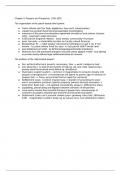
Chapter 3: Paupers and Pauperism, 1780-1832
The organisation of the parish-based relief system:
● Parish officials set Poor Rate, eligible/not, how much, indoor/outdoor
● unpaid+non-profesh (local farmers/respectable householders)
● overseers of the poor+churchwardens appointed annually by local justices of peace
(JPs) - tyrannical / settle old scores
● 1500 parish England+Wales - local needs, community→humane
● poor harvests → intolerable burden on locally raised finances
● Elizabethan PL → relief seeker returned to birthplace to get it (or if not
known - to place where lived for year +/ last parish didn’t break law)
● post-Settlement Act 1662, by birth/marriage/apprenticeship/ inheritance
● Removal Act 1795 prevented strangers removed unless applied 4 relief - true attempt
to provide clearly defined legal settlement/criteria for removal
The problem of the ‘able-bodied pauper’:
● Soc writers/reformers poverty necessary; fear → work; indigence bad
● Cat: deserving = no fault of own+worthy of help eg. old, sick, child; undeserving =
poverty result of perceived moral failure eg. drunk/prost
● Overseers exploit system - common 4 magistrates to enquire closely into
pauper’s background+ circumstances b4 agree to parish app 4 removal of
pauper fam -> freq→ pre-printed forms (apps for removal)
● Settlement Laws →control migrant pop + burden of providing for poor
won’t overwhelm parishes (parish property owners elected overseers →
keep Poor Rate low) - not applied consistently always / differed by place
● squabbling, prevaricating and litigation between overseers of diff parishes
● Local vestry minutes freq recorded fortunes of pauper fam+ manoeuvrings of
overseers as paupers shunted back and forth across parish boundaries
● Settlement Laws can’t prevent mobile pop→ growing cities late 18th/early
19th - magistrates couldn’t keep up w/ issue+carry out settlement orders
The organisation of the parish-based relief system:
● Parish officials set Poor Rate, eligible/not, how much, indoor/outdoor
● unpaid+non-profesh (local farmers/respectable householders)
● overseers of the poor+churchwardens appointed annually by local justices of peace
(JPs) - tyrannical / settle old scores
● 1500 parish England+Wales - local needs, community→humane
● poor harvests → intolerable burden on locally raised finances
● Elizabethan PL → relief seeker returned to birthplace to get it (or if not
known - to place where lived for year +/ last parish didn’t break law)
● post-Settlement Act 1662, by birth/marriage/apprenticeship/ inheritance
● Removal Act 1795 prevented strangers removed unless applied 4 relief - true attempt
to provide clearly defined legal settlement/criteria for removal
The problem of the ‘able-bodied pauper’:
● Soc writers/reformers poverty necessary; fear → work; indigence bad
● Cat: deserving = no fault of own+worthy of help eg. old, sick, child; undeserving =
poverty result of perceived moral failure eg. drunk/prost
● Overseers exploit system - common 4 magistrates to enquire closely into
pauper’s background+ circumstances b4 agree to parish app 4 removal of
pauper fam -> freq→ pre-printed forms (apps for removal)
● Settlement Laws →control migrant pop + burden of providing for poor
won’t overwhelm parishes (parish property owners elected overseers →
keep Poor Rate low) - not applied consistently always / differed by place
● squabbling, prevaricating and litigation between overseers of diff parishes
● Local vestry minutes freq recorded fortunes of pauper fam+ manoeuvrings of
overseers as paupers shunted back and forth across parish boundaries
● Settlement Laws can’t prevent mobile pop→ growing cities late 18th/early
19th - magistrates couldn’t keep up w/ issue+carry out settlement orders


