Glycolysis Pathway
10 August 2020 09:36
Definition of Glycolysis: It is the pathway that breaks down glucose.
• Glycolysis takes place in the cytosol of a cell.
• Active in all tissues.
• Does not require oxygen.
• Important for ATP production: Depleted oxygen (exhausted muscles), Cells lacking a mitochondria (Erythrocytes)
10 step process
• 3 irreversible enzymatic steps
• 2 stages (Consumption of ATP and Acquisition of ATP)
Step 1:
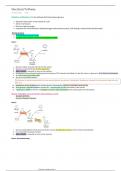
i. Glucose is taken up by the cell and into the cytosol.
ii. Glucose is processed by the enzyme hexokinase.
iii. Mg2+ cofactor is required to carry out the reaction
iv. Hexokinase enzyme phosphorylates glucose by taking an ATP molecule and adding it to the 6th carbon on glucose to form Glucose-6-phosphate.
v. The ATP is then processed to ADP.
vi. This is an irreversible reaction.
Glucokinase is another enzyme which can also convert glucose into glucose-6-phosphate. Glucokinase is located in the pancreatic beta cells and
the liver.
vii. Hexokinase can be inhibited by the product glucose-6-phosphate. (NEGATIVE FEEDBACK REGUALTOR)
viii. Once glucose is phosphorylated by hexokinase, it cannot leave the cell and remains in the cytosol.
ix. If galactose is added to the diet, it undergoes a process called 'Galactolysis' and produces glucose-6-phosphate.
Glucose-6-phosphte can be processed in other pathways as well:
- Glycogen Synthesis
- Pentose Phosphate Pathway
Step 2:
i. Glucose-6-phosophate is then processed by the enzyme phospho-glucomutase to form fructose-6-phosphate.
ii. It is a reversible enzymatic reaction.
iii. Mg2+ cofactor is required to carry out the reaction
Step 3: (Committed step)
Glycolysis pathway Page 1
10 August 2020 09:36
Definition of Glycolysis: It is the pathway that breaks down glucose.
• Glycolysis takes place in the cytosol of a cell.
• Active in all tissues.
• Does not require oxygen.
• Important for ATP production: Depleted oxygen (exhausted muscles), Cells lacking a mitochondria (Erythrocytes)
10 step process
• 3 irreversible enzymatic steps
• 2 stages (Consumption of ATP and Acquisition of ATP)
Step 1:
i. Glucose is taken up by the cell and into the cytosol.
ii. Glucose is processed by the enzyme hexokinase.
iii. Mg2+ cofactor is required to carry out the reaction
iv. Hexokinase enzyme phosphorylates glucose by taking an ATP molecule and adding it to the 6th carbon on glucose to form Glucose-6-phosphate.
v. The ATP is then processed to ADP.
vi. This is an irreversible reaction.
Glucokinase is another enzyme which can also convert glucose into glucose-6-phosphate. Glucokinase is located in the pancreatic beta cells and
the liver.
vii. Hexokinase can be inhibited by the product glucose-6-phosphate. (NEGATIVE FEEDBACK REGUALTOR)
viii. Once glucose is phosphorylated by hexokinase, it cannot leave the cell and remains in the cytosol.
ix. If galactose is added to the diet, it undergoes a process called 'Galactolysis' and produces glucose-6-phosphate.
Glucose-6-phosphte can be processed in other pathways as well:
- Glycogen Synthesis
- Pentose Phosphate Pathway
Step 2:
i. Glucose-6-phosophate is then processed by the enzyme phospho-glucomutase to form fructose-6-phosphate.
ii. It is a reversible enzymatic reaction.
iii. Mg2+ cofactor is required to carry out the reaction
Step 3: (Committed step)
Glycolysis pathway Page 1