Summary lectures Media & Communication
This summary includes all the lectures slides + further notes. Of each recommended chapter
of the book, I included the ‘conclusions’ section + important topics*. Tip: If these topics don’t
seem familiar to you, look it up in the book!
*except for lecture 4, sorry
, Lecture 1: Introduction and influence part 1
A persuasive message is broadly defined; from small nudges and billboards, to elaborate
information brochures. It can be used in all possible media, from traditional media like videos
and posters, to online campaigns or elements in the environment.
Example video about nudges: Stairs made out of piano keys. Each stair tread makes the
sound of a piano, which makes it fun to use the stairs. This results in more people taking the
stairs instead of the escalator.
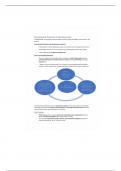
Lasswell’s model of communication:
Not all evidence is equally ‘good’ evidence:
- Source; is this reliable information?
- Theory; is the theory replicated/ debunked?
- Data; does it generalize to my situation/ target group?
- Strength evidence; is it only one study? A small N? Is it a meta-analysis?
Your knowledge as starting point
Theory-based reasoning
Content = Goal of the messages based on
the problem definition (e.g. awareness)
Attention = Will you be able to process?
(elaboration likelihood model)
What is the goal of the message?
For example: Knowledge, awareness, attitude change, behavior change
The goal of the message is based on the problem definition; what a persuasive message
aims to change. Think about what you know about it, e.g. Attitude change.
Difference between elements:
- Awareness is not attitude change
- Attitude is not behavior
,Elaboration likelihood model
= Overview of thinking fast and thinking slow
System 1: Peripheral route 2: Central route
‘Fast’ ‘Slow’
Defining Unconscious Deliberate and conscious
characteristics Effortless Effortful
Automatic Controlled mental process
WITHOUT self-awareness or WITH self-awareness or control
control
‘What you see is all there is’ Logical and skeptical
Role Assesses the situation Seeks new/ missing information
Delivers updates Makes decisions
The way of processing a message is based on motivation and ability of the receiver, e.g.
involvement, relevance, cognitive busyness and the attitude they have; reasoned or intuitive.
This is highly relevant to media use and in deciding which medium you should choose.
, In the ‘persuasion’ stage, we focus on surface features, for example the ‘expert’ that is
shown in toothpaste commercials. This doesn’t have to be a real expert, but the lab jacket
will make us think that he/she is a professional.
- Primacy/ recency effect: Most information is stated at the beginning or the end
- Repetition is not always good
- Figures of speech:
- Rhetoric question → How deep you process a message
- Metaphors → Making it fun
- Hyperbole → Enhance attention
- Rhymes
Framing
The impact of type of frame:
- Loss frame vs gain frame
- Prevention vs promotion
For example preventing illness or promoting health
Ethical concerns
Follow the ethical guidelines of the NIP for applying knowledge about influence.
- Also knowledge about ‘how to say no’
- It’s possible to prevent persuasion or inform people how to
No influence is not always possible. Default situations are also designed. Think about the
effective choice situations.
Example: Showing the percentage of registered donors (rather than those who are actually
donating), the higher percentage might get people’s attention
Example: The positioning of fruits and vegetables near the check-out in supermarkets, will
people buy these healthy foods at this point in the supermarket?
This summary includes all the lectures slides + further notes. Of each recommended chapter
of the book, I included the ‘conclusions’ section + important topics*. Tip: If these topics don’t
seem familiar to you, look it up in the book!
*except for lecture 4, sorry
, Lecture 1: Introduction and influence part 1
A persuasive message is broadly defined; from small nudges and billboards, to elaborate
information brochures. It can be used in all possible media, from traditional media like videos
and posters, to online campaigns or elements in the environment.
Example video about nudges: Stairs made out of piano keys. Each stair tread makes the
sound of a piano, which makes it fun to use the stairs. This results in more people taking the
stairs instead of the escalator.
Lasswell’s model of communication:
Not all evidence is equally ‘good’ evidence:
- Source; is this reliable information?
- Theory; is the theory replicated/ debunked?
- Data; does it generalize to my situation/ target group?
- Strength evidence; is it only one study? A small N? Is it a meta-analysis?
Your knowledge as starting point
Theory-based reasoning
Content = Goal of the messages based on
the problem definition (e.g. awareness)
Attention = Will you be able to process?
(elaboration likelihood model)
What is the goal of the message?
For example: Knowledge, awareness, attitude change, behavior change
The goal of the message is based on the problem definition; what a persuasive message
aims to change. Think about what you know about it, e.g. Attitude change.
Difference between elements:
- Awareness is not attitude change
- Attitude is not behavior
,Elaboration likelihood model
= Overview of thinking fast and thinking slow
System 1: Peripheral route 2: Central route
‘Fast’ ‘Slow’
Defining Unconscious Deliberate and conscious
characteristics Effortless Effortful
Automatic Controlled mental process
WITHOUT self-awareness or WITH self-awareness or control
control
‘What you see is all there is’ Logical and skeptical
Role Assesses the situation Seeks new/ missing information
Delivers updates Makes decisions
The way of processing a message is based on motivation and ability of the receiver, e.g.
involvement, relevance, cognitive busyness and the attitude they have; reasoned or intuitive.
This is highly relevant to media use and in deciding which medium you should choose.
, In the ‘persuasion’ stage, we focus on surface features, for example the ‘expert’ that is
shown in toothpaste commercials. This doesn’t have to be a real expert, but the lab jacket
will make us think that he/she is a professional.
- Primacy/ recency effect: Most information is stated at the beginning or the end
- Repetition is not always good
- Figures of speech:
- Rhetoric question → How deep you process a message
- Metaphors → Making it fun
- Hyperbole → Enhance attention
- Rhymes
Framing
The impact of type of frame:
- Loss frame vs gain frame
- Prevention vs promotion
For example preventing illness or promoting health
Ethical concerns
Follow the ethical guidelines of the NIP for applying knowledge about influence.
- Also knowledge about ‘how to say no’
- It’s possible to prevent persuasion or inform people how to
No influence is not always possible. Default situations are also designed. Think about the
effective choice situations.
Example: Showing the percentage of registered donors (rather than those who are actually
donating), the higher percentage might get people’s attention
Example: The positioning of fruits and vegetables near the check-out in supermarkets, will
people buy these healthy foods at this point in the supermarket?