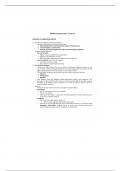
The Environment 08-27-24
→area in which an organism lives
Environmental Science
→ studies all aspects of the environment
Ecosystems
→ interacting community
Biota - living organisms (plants, animals, etc.)
Abiotic - non-living elements of the environment (water, temp, etc.)
—–––––––––––––––––––––––––––
Ecosystems
- Integrated system of living and nonliving parts + processes
- Energy and matter must flow in and out of the system
_______________________
Ecosystems provide humans with many resources and processes:
1. Provisioning
2. Regulating
3. Cultural
4. Supporting
-Our activities can produce change in ecosystem functions
Principles of Ecosystem Function
~Organization and function of ecosystems depends on 4 fundamental principles:
• Conservation of matter and energy
• Ecosystems are open
• Ecosystem stability
• Ecosystems change
_________________________
Law of energy and mass conservation
- Energy and matter can be neither created nor destroyed
- This law can be applied in environmental science
Ecosystems are open
- Boundaries are usually arbitrary
- Matter and energy flow into and out of ecosystems
, Ecosystem stability
- Achieved by complex interactions among biotic and abiotic components
- Dynamic homeostasis – process by which systems adjust to change in ways that
minimize variation from normal values
- Negative feedback
- System reverses a directional change
- Tend to stabilize
- Positive feedback
- System reinforces change
- If not counteracted, can destabilize ecosystem
__________________________
Ecosystems change
➔ Change is inevitable and essential
➔ Constant response to external/internal actions
◆ Seasonal
● Temperature
◆ Disturbances
● Storms, floods, fires
◆ Long-term changes
● Climate change – produce new patterns of change
- Impact of humans?
____________________________
08-29-24
-Earth is thought to be 4.6 Billion years old with the first living organisms appearing 3.5 Billion
years ago
- Modern humans appear ~300-200,000 years ago 10,000 years ago – agriculture
Human Impact
What are ways humans have impacted ecosystems?
• Human population increase (8 billion now vs <2 billion 100 years ago)
• Use of natural resources increase
• Loss of biodiversity
• Pollutants
• Greenhouse gases => Increase in average temperature of Earth’s atmosphere
→area in which an organism lives
Environmental Science
→ studies all aspects of the environment
Ecosystems
→ interacting community
Biota - living organisms (plants, animals, etc.)
Abiotic - non-living elements of the environment (water, temp, etc.)
—–––––––––––––––––––––––––––
Ecosystems
- Integrated system of living and nonliving parts + processes
- Energy and matter must flow in and out of the system
_______________________
Ecosystems provide humans with many resources and processes:
1. Provisioning
2. Regulating
3. Cultural
4. Supporting
-Our activities can produce change in ecosystem functions
Principles of Ecosystem Function
~Organization and function of ecosystems depends on 4 fundamental principles:
• Conservation of matter and energy
• Ecosystems are open
• Ecosystem stability
• Ecosystems change
_________________________
Law of energy and mass conservation
- Energy and matter can be neither created nor destroyed
- This law can be applied in environmental science
Ecosystems are open
- Boundaries are usually arbitrary
- Matter and energy flow into and out of ecosystems
, Ecosystem stability
- Achieved by complex interactions among biotic and abiotic components
- Dynamic homeostasis – process by which systems adjust to change in ways that
minimize variation from normal values
- Negative feedback
- System reverses a directional change
- Tend to stabilize
- Positive feedback
- System reinforces change
- If not counteracted, can destabilize ecosystem
__________________________
Ecosystems change
➔ Change is inevitable and essential
➔ Constant response to external/internal actions
◆ Seasonal
● Temperature
◆ Disturbances
● Storms, floods, fires
◆ Long-term changes
● Climate change – produce new patterns of change
- Impact of humans?
____________________________
08-29-24
-Earth is thought to be 4.6 Billion years old with the first living organisms appearing 3.5 Billion
years ago
- Modern humans appear ~300-200,000 years ago 10,000 years ago – agriculture
Human Impact
What are ways humans have impacted ecosystems?
• Human population increase (8 billion now vs <2 billion 100 years ago)
• Use of natural resources increase
• Loss of biodiversity
• Pollutants
• Greenhouse gases => Increase in average temperature of Earth’s atmosphere