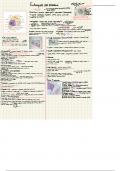
Eukaryotic cell allowse a
a
structure within for
&
area responsible bosomes
controlls cell's DNA molecules which directs
the synthesis nucleus produces
protects it from
of all proteins
-
activities
amagethe
&
(chromosomes
-
i
* nucleus - contains coded genetic information cy
↳ controls metabolic reactions which occur in the cell ↓ embrane
↳ double
DNA associates w/ proteins
called
↳ synthesis of abosomes
histones to form a complex called
chromatin >
- condenses into chromosomes
needing ↓
memban conteant
* Mitochondria -
found in large numbers in cells
ne e
nativ
bobrembrane
↳ contains an enzyme rich liquid
called matrix
↓
· ↳ surrounded by adouble membrane inner folded
e to form Cristae
contains is own DNA (mtDNA) fribosomes e it produce its own enzymes t repr ae
specializeda
- including old organelles tors
rebreaks down wastematerial Mey
are
↳ site
↑ digest invading
of aerobic respiration >
- produces ATP cens using
I
>
-
> contain hydrolytic enzymes
- + surrounded to keep
by a membrane enzymes separate
from Cytoplasm
* Vesicles - membraneous sacss w/storage + transport roles *
lysosomes organelles w/
-> round no clear internal structure
↳ consist of a single membrane a transport
w/fluid inside
materials inside the all lysosome oomed hydrolytzymes
Cell-Surface membrane Rough Endoplasmic Reticulum (RER) covered w/ bosomes (rough
-
* -
↳ found on the surface of animal cells
partially >
-
Contains a network of membranes enclosing a fluid-filled space >
- Listernal
↳ mainly made up ofupids + proteins / permeable
↳ controls movement into cell the cistemat is covered w/ ribosomes
of substrates fout of me surface of
>
-
↳ cell signalling -
receptive / detect signals from other cells
↳ synthesis + transport of proteins >
- connected to me outer membrane of the nucleus
a network of fibres
-
Smoot Endoplasmic Reticulum (SER)
Cytoskeleton
* lacks ribosomes
* - >
present throughout the cytoplasm + provides structure + support to me can -
Omicrofilaments solidtrands mmmmovement
mori a ↳
g. Cholester
-
Activ Mummmmm by
a
synthesis storage + transport of lipide + carbohydrates e .
+ steroid hormones
↳ made up of me protein - -
,
↳ involved in cell movement + locomotion e g . .
crawling (muscle contraction + movement of organdles
↳ responsible L cell movement/contraction during Cytollenesis * Ribosomes
② microtubules -hellow strands
↳ made
of
me protein tubulin ↳ made up of proteins + rRNA
in a
in forms a scafete-like structure used division
↳ consists of a large + small submit Mitochondria + chorplans also contain ribosomes
Hick
>
-
protein denter + darker >
- + in
↳ forms me main component of the mitotic spindle
↳ X surrounded by membrane prokaryotic cells
back as tracks 4 intracellular transport of vesicles + organdle
↳ site of protein synthesis
③ intermediate filaments S
involved in tell cell signalling
position of organelles in the cell
-
↳ maintains te
↳ responsible uncertain bissues Skin
*
Golgi Apparatus - consists of cistema + resides
the mechanical strength 2 g . .
+ hair
cisternal
↳ anchors nucleus ↳ contains fluid-filled ,
membrane-bound sacs >
-
resides
The importance of te
Cytoskeleton : ↳ contains smaller
>
- secretory vesicles are one which
support Functions : leave the cell
strengthening
·
* +
↳ provides the cell vo/mechanical strength -
providing a kind
of 'scaffolding' - maintains the shape
of the cell ↳ process + package lipids + proteins >
- carried out by cistemat
↳ keeps organdles in place resides
↳ store + transport lipids + proteins - carried out by
* intracellular ( l)
(within movement DYENIN KINESIN
↳ ands transport within cells by forming tracks' along which organettes more >
- mour proteins walk 6
along synthese lysosomes - specialised resides
↳ movement of vesicles + chromosomes to opposite ends f me all during cell division
* cellular movement via ulia
↳ these contain microtubules
+ flagella
Protein Production
Q MRNA copy of instructions made in nucleus
*
Centrioles - a component of te cytoskeleton in most Eukaryotic cells except flowering planes + fungi
② mRNA leaves via nuclear pore
↳ made of microtubules
to ribosome which reads the
③ MRNA attatches
a
↳ 2 associated centricles forms the centrosome
instructions to anemble the protein
↳ not in 972 arrangement
⑦ molecules are 'pinched of into resides + travel Golgi App
2
*
flagella + Lilia - me
extensions of cytoplasm which protrude fur the cer
⑤ Vesicles fur w/GA
↳ flagella primarily cell's motility (ability to independently using metabolic E)
to ble
h release
③ GA processes + packages the molemle ready
is used a more
or used as a
sensory organelle -
detecting chemical changes ⑦ packaged molecule pinched into vesicles from GA2
↳ Cilia can be nubele or
stationary -
Stationary cilia are
usually at the surface and have an important me plasma membrane
function in censory organs e
.
g the nose ⑧ vesicles fuse w/ plasma membrane
outside
↳ mobile cilia beat in a rhythmic manner e
creating a current to allow fluids/objects adjacent to more ⑦ Plasma membrane opens to release the molecule
e
.
g. in tracked to more mucus + in fallopian tubes to more eggels from ovary 2utems.
↳ each cilium contains 2 central microtubules + are surrounded by 9 other pain in a wheel formation
known of paravel microtubules slide each
e ae
merangemepais
over
a
structure within for
&
area responsible bosomes
controlls cell's DNA molecules which directs
the synthesis nucleus produces
protects it from
of all proteins
-
activities
amagethe
&
(chromosomes
-
i
* nucleus - contains coded genetic information cy
↳ controls metabolic reactions which occur in the cell ↓ embrane
↳ double
DNA associates w/ proteins
called
↳ synthesis of abosomes
histones to form a complex called
chromatin >
- condenses into chromosomes
needing ↓
memban conteant
* Mitochondria -
found in large numbers in cells
ne e
nativ
bobrembrane
↳ contains an enzyme rich liquid
called matrix
↓
· ↳ surrounded by adouble membrane inner folded
e to form Cristae
contains is own DNA (mtDNA) fribosomes e it produce its own enzymes t repr ae
specializeda
- including old organelles tors
rebreaks down wastematerial Mey
are
↳ site
↑ digest invading
of aerobic respiration >
- produces ATP cens using
I
>
-
> contain hydrolytic enzymes
- + surrounded to keep
by a membrane enzymes separate
from Cytoplasm
* Vesicles - membraneous sacss w/storage + transport roles *
lysosomes organelles w/
-> round no clear internal structure
↳ consist of a single membrane a transport
w/fluid inside
materials inside the all lysosome oomed hydrolytzymes
Cell-Surface membrane Rough Endoplasmic Reticulum (RER) covered w/ bosomes (rough
-
* -
↳ found on the surface of animal cells
partially >
-
Contains a network of membranes enclosing a fluid-filled space >
- Listernal
↳ mainly made up ofupids + proteins / permeable
↳ controls movement into cell the cistemat is covered w/ ribosomes
of substrates fout of me surface of
>
-
↳ cell signalling -
receptive / detect signals from other cells
↳ synthesis + transport of proteins >
- connected to me outer membrane of the nucleus
a network of fibres
-
Smoot Endoplasmic Reticulum (SER)
Cytoskeleton
* lacks ribosomes
* - >
present throughout the cytoplasm + provides structure + support to me can -
Omicrofilaments solidtrands mmmmovement
mori a ↳
g. Cholester
-
Activ Mummmmm by
a
synthesis storage + transport of lipide + carbohydrates e .
+ steroid hormones
↳ made up of me protein - -
,
↳ involved in cell movement + locomotion e g . .
crawling (muscle contraction + movement of organdles
↳ responsible L cell movement/contraction during Cytollenesis * Ribosomes
② microtubules -hellow strands
↳ made
of
me protein tubulin ↳ made up of proteins + rRNA
in a
in forms a scafete-like structure used division
↳ consists of a large + small submit Mitochondria + chorplans also contain ribosomes
Hick
>
-
protein denter + darker >
- + in
↳ forms me main component of the mitotic spindle
↳ X surrounded by membrane prokaryotic cells
back as tracks 4 intracellular transport of vesicles + organdle
↳ site of protein synthesis
③ intermediate filaments S
involved in tell cell signalling
position of organelles in the cell
-
↳ maintains te
↳ responsible uncertain bissues Skin
*
Golgi Apparatus - consists of cistema + resides
the mechanical strength 2 g . .
+ hair
cisternal
↳ anchors nucleus ↳ contains fluid-filled ,
membrane-bound sacs >
-
resides
The importance of te
Cytoskeleton : ↳ contains smaller
>
- secretory vesicles are one which
support Functions : leave the cell
strengthening
·
* +
↳ provides the cell vo/mechanical strength -
providing a kind
of 'scaffolding' - maintains the shape
of the cell ↳ process + package lipids + proteins >
- carried out by cistemat
↳ keeps organdles in place resides
↳ store + transport lipids + proteins - carried out by
* intracellular ( l)
(within movement DYENIN KINESIN
↳ ands transport within cells by forming tracks' along which organettes more >
- mour proteins walk 6
along synthese lysosomes - specialised resides
↳ movement of vesicles + chromosomes to opposite ends f me all during cell division
* cellular movement via ulia
↳ these contain microtubules
+ flagella
Protein Production
Q MRNA copy of instructions made in nucleus
*
Centrioles - a component of te cytoskeleton in most Eukaryotic cells except flowering planes + fungi
② mRNA leaves via nuclear pore
↳ made of microtubules
to ribosome which reads the
③ MRNA attatches
a
↳ 2 associated centricles forms the centrosome
instructions to anemble the protein
↳ not in 972 arrangement
⑦ molecules are 'pinched of into resides + travel Golgi App
2
*
flagella + Lilia - me
extensions of cytoplasm which protrude fur the cer
⑤ Vesicles fur w/GA
↳ flagella primarily cell's motility (ability to independently using metabolic E)
to ble
h release
③ GA processes + packages the molemle ready
is used a more
or used as a
sensory organelle -
detecting chemical changes ⑦ packaged molecule pinched into vesicles from GA2
↳ Cilia can be nubele or
stationary -
Stationary cilia are
usually at the surface and have an important me plasma membrane
function in censory organs e
.
g the nose ⑧ vesicles fuse w/ plasma membrane
outside
↳ mobile cilia beat in a rhythmic manner e
creating a current to allow fluids/objects adjacent to more ⑦ Plasma membrane opens to release the molecule
e
.
g. in tracked to more mucus + in fallopian tubes to more eggels from ovary 2utems.
↳ each cilium contains 2 central microtubules + are surrounded by 9 other pain in a wheel formation
known of paravel microtubules slide each
e ae
merangemepais
over