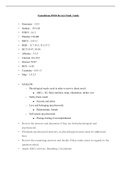
EEX3093 Test 2 Study Guide With
Complete Solution
Artist with CP video - ANSWER Paul Smith; art by using a typewriter; artistic
ability=gift from God; passed away recently`
The Beginning video - ANSWER Arron Fotheringham with spina bifida; wheelchair
stunts; double back flip at 18 yoa; back flip at 14 yoa
A Day in the Life of Bonnie Consolo video - ANSWER no arms; cut fruit with feet;
wear ring on foot; 1975 video
Tisha Unarmed video - ANSWER getting dressed with no arms
Murderball video - ANSWER Quadriplegic Rugby; Canada beats USA in National
Championship in Sweden
monoplegia - ANSWER 1 limb
hemiplegia - ANSWER 1 side of the body
paraplegia - ANSWER legs
quadriplegia - ANSWER all 4 extremities (loss of movement, not paralysis)
all -plegias refer to... - ANSWER range of motion (ROM)
range can vary from... - ANSWER some loss of mobility to complete paralysis
CP - ANSWER cerebral palsy
cerebral refers to - ANSWER area of the brain affected
palsy refers to - ANSWER partial/complete paralysis, accompanied (most times) by
loss of sensation and uncontrollable body movements/tremors
, symptoms of CP - ANSWER delayed development: crawling, walking, and/or
speaking, easily startled, bad balance, bad muscle tone, many other symptoms (but
in all areas, child isn't developing normally)
symptoms of CP start to show in... - ANSWER first 3 years of life
Spastic (type of CP) characteristics - ANSWER Muscle stiffness; hemiplegia, diplegia:
both legs, quadriplegia: legs, arms, & body, mental retardation likely
Ataxic (type of CP) characteristics - ANSWER balance issues, clumsiness; normal
intelligence
Athetoid (type of CP) characteristics - ANSWER whole body affected by muscle
problems; random & controllable body movements; trouble speaking; normal
intelligence
Hypotonic (aka '"rag doll" type of CP) characteristic - ANSWER almost no muscle
tone
Causes of CP - ANSWER damage 2 cerebrum (brain) by any of the following: Loss of
O2 during birth, mom has infections during pregnancy, abnormal brain
development; hemorrhage/stroke (baby); anything that cause premature birth/low
birth weight baby
Treatment for CP - ANSWER no cure; treatment=life long
CP may require the practices of what professionals - ANSWER general practitioner,
pediatrician, speech language support, PT & OT
CP should be tackled in what kind of approach - ANSWER team
prevalence of CP - ANSWER 10,000 babies per year in USA
Multiple Sclerosis (MS) - ANSWER progressive but unpredictable, degeneration of
CNS that an affect muscles and organs
is MS directly inherited - ANSWER no
Complete Solution
Artist with CP video - ANSWER Paul Smith; art by using a typewriter; artistic
ability=gift from God; passed away recently`
The Beginning video - ANSWER Arron Fotheringham with spina bifida; wheelchair
stunts; double back flip at 18 yoa; back flip at 14 yoa
A Day in the Life of Bonnie Consolo video - ANSWER no arms; cut fruit with feet;
wear ring on foot; 1975 video
Tisha Unarmed video - ANSWER getting dressed with no arms
Murderball video - ANSWER Quadriplegic Rugby; Canada beats USA in National
Championship in Sweden
monoplegia - ANSWER 1 limb
hemiplegia - ANSWER 1 side of the body
paraplegia - ANSWER legs
quadriplegia - ANSWER all 4 extremities (loss of movement, not paralysis)
all -plegias refer to... - ANSWER range of motion (ROM)
range can vary from... - ANSWER some loss of mobility to complete paralysis
CP - ANSWER cerebral palsy
cerebral refers to - ANSWER area of the brain affected
palsy refers to - ANSWER partial/complete paralysis, accompanied (most times) by
loss of sensation and uncontrollable body movements/tremors
, symptoms of CP - ANSWER delayed development: crawling, walking, and/or
speaking, easily startled, bad balance, bad muscle tone, many other symptoms (but
in all areas, child isn't developing normally)
symptoms of CP start to show in... - ANSWER first 3 years of life
Spastic (type of CP) characteristics - ANSWER Muscle stiffness; hemiplegia, diplegia:
both legs, quadriplegia: legs, arms, & body, mental retardation likely
Ataxic (type of CP) characteristics - ANSWER balance issues, clumsiness; normal
intelligence
Athetoid (type of CP) characteristics - ANSWER whole body affected by muscle
problems; random & controllable body movements; trouble speaking; normal
intelligence
Hypotonic (aka '"rag doll" type of CP) characteristic - ANSWER almost no muscle
tone
Causes of CP - ANSWER damage 2 cerebrum (brain) by any of the following: Loss of
O2 during birth, mom has infections during pregnancy, abnormal brain
development; hemorrhage/stroke (baby); anything that cause premature birth/low
birth weight baby
Treatment for CP - ANSWER no cure; treatment=life long
CP may require the practices of what professionals - ANSWER general practitioner,
pediatrician, speech language support, PT & OT
CP should be tackled in what kind of approach - ANSWER team
prevalence of CP - ANSWER 10,000 babies per year in USA
Multiple Sclerosis (MS) - ANSWER progressive but unpredictable, degeneration of
CNS that an affect muscles and organs
is MS directly inherited - ANSWER no