Intelligence and methods
What is intelligence
Questions that will be addressed in this lecture:
- Is there a fixed set of properties?
- Can it be described by a set of abstract laws?
- Is there intelligence outside the human mind? For example, can machines think?
When you ask people “what is intelligence”, they usually come up with:
- The ability to use reason and logic → But is this a sufficient description of intelligence, or is
there more to it? If you push people a bit further, they might come up with:
- The ability to write and speak clearly
- performance in school → But sometimes people are intelligent, but they can’t apply
themselves, or there are circumstantial factors that cause them to perform worse in
school.
- behavior in social situations → knowing which behavior is appropriate in different
social situations.
- knowing when you’re wrong and learning from your errors. Everybody makes
mistakes, but that is not a problem. The problem is not learning from your mistakes.
The above are intuitive definitions that people will give you when you ask them about intelligence.
What is intelligence?
Intelligence is an inferred process that humans use to explain the different degrees of adaptive
success in people’s behavior → We don’t know directly what intelligence is, we infer what it is by
observing people’s behavior. If people are more adaptive and more successful in behaving in certain
situations, we call them more intelligent.
- The mental abilities that enable one to adapt to, shape, or select one’s environment
- The ability to judge, comprehend, and reason → We need to be able to judge and understand
situations, and we need to be able to reason about situations.
- The ability to understand and deal with people (what are their motivations, how do we interact
with them?), objects (how do we interact with simple and complex objects) and symbols
(understanding language is a critical aspect of cognition).
- The ability to act purposefully, think rationally, and deal effectively with the environment
Is there a set of laws?
Intelligence is not just one thing, it is actually a cluster of mental abilities. Different theories have
different numbers of mental abilities that they
distinguish.
- 7 (Thurstone)
- 9 (Gardner)
- 9 intelligences
- spatial: visualizing the world
in 3D
- naturalist: Understanding
living things and reading
nature
- musical: discerning sounds,
their pitch, tone, rhythm, and
timbre
- logical-mathematical:
quantifying things, making
, hypotheses and proving them through logical reasoning
- existential: tackling the question of why we live, and why we die
- interpersonal: sensing people’s feelings and emotions
- bodily-kinesthetic: coordinating your mind with your body
- linguistic: finding the right words to express what you mean and being able to
understand other people’s expressions of thoughts.
- intra-personal: understanding yourself, what you feel, and what you want
- 3 of these intelligences are most commonly associated with intelligence:
logical-mathematical intelligence, linguistic intelligence, and spatial intelligence.
These are the intelligences that are measured on an IQ test, but Gardner has argues
that these other intelligences are also important and worth considering.
- 3 (Sternberg)
- 3 intelligences:
- Componential (analytic)
- Comparing, analyzing, and evaluating.
- This type of process correlates best with IQ
- Experiential (creative)
- Inventing solutions to new problems
- Transfer skills to new situations
- Contextual (practical)
- Applying the things you know to everyday contexts → we can all
think of people who are book smart, but can’t apply their knowledge
to everyday contexts.
- At an intuitive level it makes sense to distinguish these types of intelligence.
What are the processes that underlie human intelligent behavior?
We can’t measure intelligence directly, because it is a cluster of factors, but we can ask what the
processes that underlie human intelligent behavior are → this is what we’re interested in, in the field of
brain & cognition.
Because we cannot measure intelligence directly, we have to engage in reverse engineering.
- Imagine that an alien spaceship has crashed on earth, and we don’t know how it works. All
we can now do is manipulate some buttons or keys and see what happens → reverse
engineering.
- We manipulate the object to see how it works. This is also what we do with intelligence and
human cognition.
The human information processing system
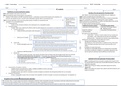
The human information processing system is kind of
like a blueprint of the mind.
- There is a physical world, and the human
information processing system has a
detection system that allows us to detect
information about the physical world. This
information can be visual (iconic
information), auditory (echoic), interactive
information (haptic), taste, smell (olfaction),
functioning of our own bodies. If we were
paying attention to all of this information, we
might get an information overload, so a
stimulus filter (attention) is built in to the
system. Your attention helps you focus on
What is intelligence
Questions that will be addressed in this lecture:
- Is there a fixed set of properties?
- Can it be described by a set of abstract laws?
- Is there intelligence outside the human mind? For example, can machines think?
When you ask people “what is intelligence”, they usually come up with:
- The ability to use reason and logic → But is this a sufficient description of intelligence, or is
there more to it? If you push people a bit further, they might come up with:
- The ability to write and speak clearly
- performance in school → But sometimes people are intelligent, but they can’t apply
themselves, or there are circumstantial factors that cause them to perform worse in
school.
- behavior in social situations → knowing which behavior is appropriate in different
social situations.
- knowing when you’re wrong and learning from your errors. Everybody makes
mistakes, but that is not a problem. The problem is not learning from your mistakes.
The above are intuitive definitions that people will give you when you ask them about intelligence.
What is intelligence?
Intelligence is an inferred process that humans use to explain the different degrees of adaptive
success in people’s behavior → We don’t know directly what intelligence is, we infer what it is by
observing people’s behavior. If people are more adaptive and more successful in behaving in certain
situations, we call them more intelligent.
- The mental abilities that enable one to adapt to, shape, or select one’s environment
- The ability to judge, comprehend, and reason → We need to be able to judge and understand
situations, and we need to be able to reason about situations.
- The ability to understand and deal with people (what are their motivations, how do we interact
with them?), objects (how do we interact with simple and complex objects) and symbols
(understanding language is a critical aspect of cognition).
- The ability to act purposefully, think rationally, and deal effectively with the environment
Is there a set of laws?
Intelligence is not just one thing, it is actually a cluster of mental abilities. Different theories have
different numbers of mental abilities that they
distinguish.
- 7 (Thurstone)
- 9 (Gardner)
- 9 intelligences
- spatial: visualizing the world
in 3D
- naturalist: Understanding
living things and reading
nature
- musical: discerning sounds,
their pitch, tone, rhythm, and
timbre
- logical-mathematical:
quantifying things, making
, hypotheses and proving them through logical reasoning
- existential: tackling the question of why we live, and why we die
- interpersonal: sensing people’s feelings and emotions
- bodily-kinesthetic: coordinating your mind with your body
- linguistic: finding the right words to express what you mean and being able to
understand other people’s expressions of thoughts.
- intra-personal: understanding yourself, what you feel, and what you want
- 3 of these intelligences are most commonly associated with intelligence:
logical-mathematical intelligence, linguistic intelligence, and spatial intelligence.
These are the intelligences that are measured on an IQ test, but Gardner has argues
that these other intelligences are also important and worth considering.
- 3 (Sternberg)
- 3 intelligences:
- Componential (analytic)
- Comparing, analyzing, and evaluating.
- This type of process correlates best with IQ
- Experiential (creative)
- Inventing solutions to new problems
- Transfer skills to new situations
- Contextual (practical)
- Applying the things you know to everyday contexts → we can all
think of people who are book smart, but can’t apply their knowledge
to everyday contexts.
- At an intuitive level it makes sense to distinguish these types of intelligence.
What are the processes that underlie human intelligent behavior?
We can’t measure intelligence directly, because it is a cluster of factors, but we can ask what the
processes that underlie human intelligent behavior are → this is what we’re interested in, in the field of
brain & cognition.
Because we cannot measure intelligence directly, we have to engage in reverse engineering.
- Imagine that an alien spaceship has crashed on earth, and we don’t know how it works. All
we can now do is manipulate some buttons or keys and see what happens → reverse
engineering.
- We manipulate the object to see how it works. This is also what we do with intelligence and
human cognition.
The human information processing system
The human information processing system is kind of
like a blueprint of the mind.
- There is a physical world, and the human
information processing system has a
detection system that allows us to detect
information about the physical world. This
information can be visual (iconic
information), auditory (echoic), interactive
information (haptic), taste, smell (olfaction),
functioning of our own bodies. If we were
paying attention to all of this information, we
might get an information overload, so a
stimulus filter (attention) is built in to the
system. Your attention helps you focus on