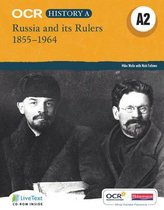
RUSSIA & ITS RULERS
OCR A-LEVEL HISTORY - UNIT Y318
ESSAYS
Contents:
1. “The Communists were effective autocrats; the Tsars were not” – how far
do you agree?
2. Assess the view that the condition of the peasantry was transformed
between 1855 and 1964.
3. Assess the view that the Communists did less to improve the lives of the
proletariat than the Tsars.
4. “Russia’s rulers failed to solve the problems of Russian society” - how far
do you agree?
5. Assess the reasons why the opponents of Russian governments were rarely
successful.
6. “Stalin developed the rights of nationalities the least of all rulers in Russia
1855-1964” - how far do you agree?
7. “The fall of the Provisional Government in October 1917 was the most
important turning point in the development of Russian government” - how
far do you agree?
, “The Communists were effective autocrats; the Tsars were not” – how far do you agree?
Both the Tsars and Communists were autocrats: they were leaders who had absolute power.
Key features of an autocratic system include a centralised state, the employment of
repressive tactics to crush opponents and harsh social policies, for example, against
minorities and nationalities. However, the Communists excelled in oppression and proved
far more effective at removing opponents. Whilst they were similar in the other two areas,
the Communists were slightly more effective because of the constancy of their policies and
the attention given to the portrayal of the leader.
An autocracy would have one person in absolute power and a highly centralised state,
which were features to both Tsars and Communists. Yet, unlike the Communists, the Tsars
made small concessions that lessened their personal power like the creation of zemstvas
and dumas. Nevertheless, these institutions faced major limitations, such as the restrictions
posed by Nicholas II's Fundamental Laws of 1906 which meant that only the Tsar could
propose laws and suspend the Duma at any time. The first two Dumas were dismissed for
being too 'radical' and Nicholas used emergency powers to change electoral laws giving less
voting power to workers and peasants. Similarly, Alexander III's 'Manifesto on Unshakable
Autocracy' emphasised his absolute power. Both Lenin and Stalin enjoyed absolute power
as shown by Lenin's success in pushing forward the NEP against opposition. However, the
Communists were much more effective in nurturing their personal image as leaders: Stalin's
cult of personality had elevated him to a god-like status by the end of his rule. The cult was
effective because Stalin associated himself with great leaders such as Marx, Engels and
Lenin, first portraying him as Lenin's humble successor and, as his rule continued, a strong
leader who was responsible for the success in the Second World War. In comparison,
Nicholas II's propaganda attempts during the tercentenary celebrations of Romanov rule
were not widely supported because the Romanov family were not considered by all to be
great, inspirational leaders and Nicholas' own success as leader were questionable given
the failure of the Russo-Japanese War. Therefore, although the Tsars and Communists were
very similar in structuring the state around their personal power, the Communists,
particularly Stalin, were more effective in fostering their individual images and how they
portrayed themselves to the masses. This was important because it helped secure their
power and lessened the force of opposition because they had public support.
In terms of repression, it must be conceded that the Tsars were successful to some extent.
Alexander III's reign is characterised by its harsh beginnings: one of his first actions was to
publicly execute five men who assassinated his father. The use of the Okhrana led to the
deaths of 14000 people under the last two Tsars however the Communist equivalents, the
Cheka and the NKVD, executed 140000 people between 1917 and 1922 and over 1.5 million
from 1937 to 1938 respectively. Lenin's Red Terror and Stalin's Great Purge introduced new
methods of repression: show trials, gulags and party purges. The lack of successful
opposition under the Communists indicates that these measures were successful. In
contrast, under the Tsars, opposition was rife and often succeeded. For example, despite
introducing emancipation as a way to control the peasantry, Alexander II was met with 647
instances of peasant unrest in the first four months followings its introduction; Stalin
imprisoned/executed wealthier peasants and successfully destroyed potential opposition
from the kulaks. Moreover, both Alexander II and Nicholas II were executed in 1881 and
OCR A-LEVEL HISTORY - UNIT Y318
ESSAYS
Contents:
1. “The Communists were effective autocrats; the Tsars were not” – how far
do you agree?
2. Assess the view that the condition of the peasantry was transformed
between 1855 and 1964.
3. Assess the view that the Communists did less to improve the lives of the
proletariat than the Tsars.
4. “Russia’s rulers failed to solve the problems of Russian society” - how far
do you agree?
5. Assess the reasons why the opponents of Russian governments were rarely
successful.
6. “Stalin developed the rights of nationalities the least of all rulers in Russia
1855-1964” - how far do you agree?
7. “The fall of the Provisional Government in October 1917 was the most
important turning point in the development of Russian government” - how
far do you agree?
, “The Communists were effective autocrats; the Tsars were not” – how far do you agree?
Both the Tsars and Communists were autocrats: they were leaders who had absolute power.
Key features of an autocratic system include a centralised state, the employment of
repressive tactics to crush opponents and harsh social policies, for example, against
minorities and nationalities. However, the Communists excelled in oppression and proved
far more effective at removing opponents. Whilst they were similar in the other two areas,
the Communists were slightly more effective because of the constancy of their policies and
the attention given to the portrayal of the leader.
An autocracy would have one person in absolute power and a highly centralised state,
which were features to both Tsars and Communists. Yet, unlike the Communists, the Tsars
made small concessions that lessened their personal power like the creation of zemstvas
and dumas. Nevertheless, these institutions faced major limitations, such as the restrictions
posed by Nicholas II's Fundamental Laws of 1906 which meant that only the Tsar could
propose laws and suspend the Duma at any time. The first two Dumas were dismissed for
being too 'radical' and Nicholas used emergency powers to change electoral laws giving less
voting power to workers and peasants. Similarly, Alexander III's 'Manifesto on Unshakable
Autocracy' emphasised his absolute power. Both Lenin and Stalin enjoyed absolute power
as shown by Lenin's success in pushing forward the NEP against opposition. However, the
Communists were much more effective in nurturing their personal image as leaders: Stalin's
cult of personality had elevated him to a god-like status by the end of his rule. The cult was
effective because Stalin associated himself with great leaders such as Marx, Engels and
Lenin, first portraying him as Lenin's humble successor and, as his rule continued, a strong
leader who was responsible for the success in the Second World War. In comparison,
Nicholas II's propaganda attempts during the tercentenary celebrations of Romanov rule
were not widely supported because the Romanov family were not considered by all to be
great, inspirational leaders and Nicholas' own success as leader were questionable given
the failure of the Russo-Japanese War. Therefore, although the Tsars and Communists were
very similar in structuring the state around their personal power, the Communists,
particularly Stalin, were more effective in fostering their individual images and how they
portrayed themselves to the masses. This was important because it helped secure their
power and lessened the force of opposition because they had public support.
In terms of repression, it must be conceded that the Tsars were successful to some extent.
Alexander III's reign is characterised by its harsh beginnings: one of his first actions was to
publicly execute five men who assassinated his father. The use of the Okhrana led to the
deaths of 14000 people under the last two Tsars however the Communist equivalents, the
Cheka and the NKVD, executed 140000 people between 1917 and 1922 and over 1.5 million
from 1937 to 1938 respectively. Lenin's Red Terror and Stalin's Great Purge introduced new
methods of repression: show trials, gulags and party purges. The lack of successful
opposition under the Communists indicates that these measures were successful. In
contrast, under the Tsars, opposition was rife and often succeeded. For example, despite
introducing emancipation as a way to control the peasantry, Alexander II was met with 647
instances of peasant unrest in the first four months followings its introduction; Stalin
imprisoned/executed wealthier peasants and successfully destroyed potential opposition
from the kulaks. Moreover, both Alexander II and Nicholas II were executed in 1881 and