© 2024 Daniel Day (Science for Oxbridge). All Rights Reserved.
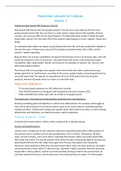
ESAT: Biology Notes
Concise and comprehensive notes on all chemistry in the ESAT speci cation
1. Cells
Eukaryotic cells
• Plant and animal cells are eukaryotic
• Larger and more complex than prokaryotic cells
• Contain membrane-bound organelles (including nucleus)
• Cell structure:
• Cell membrane: semi-permeable; controls what enters and leaves cell
• Cytoplasm: solution in cell where most reactions take place
• Nucleus: contains DNA and controls cell activities
• Mitochondria: where aerobic respiration takes place
• Cell wall (plant only): made from cellulose; supports cell; prevents lysis when turgid
• Chloroplasts (plant only): contains chlorophyll (green pigment) for absorption of
light energy for photosynthesis
• Permanent vacuole (plant only): contains cell sap (salt solution); lls the plant cell
when turgid
Prokaryotic cells
• Bacteria are prokaryotic cells
• Smaller and less complex than eukaryotic cells
• Do not contain membrane-bound organelles (no nucleus)
• Cell structure
• Cell membrane: same as eukaryotes
• Cytoplasm: same as eukaryotes
• Cell wall: made from murein (peptidoglycan, a protein and carbohydrate structure);
supports cell
• Chromosomal DNA: single loop chromosome in cytoplasm
• Plasmids: rings of DNA in some bacteria which can be exchanged between
bacteria
Organisation of multicellular organisms
• Cell: basic unit of all living organisms
• Tissue: group of similar cells working together to carry out particular function
• Organ: group of tissues working together to carry out particular function
• Organ system: group of organs working together to carry out particular function
• Organism: group of cells working together to carry out particular function
© 2024 Daniel Day. All Rights Reserved. This document is protected by copyright law. Unauthorised reproduction, distribution, or use of any part of this
material is strictly prohibited. 1 of 22
fi fi
, © 2024 Daniel Day (Science for Oxbridge). All Rights Reserved.
2. Movement across membranes
Diffusion
• Movement of molecules from high to low concentration (down concentration
gradient)
• Passive process (no energy)
• Examples:
• Gas exchange between alveoli and blood
• Substance exchange between blood and cells
• Dispersion of gas in container
Active transport
• Movement of molecules from low to high concentration (against concentration
gradient) using energy from respiration
• Examples:
• Glucose absorption into bloodstream from gut
• Selective reabsorption of glucose in kidney nephron
• Mineral ion absorption in root hair cells
Osmosis
• Movement of water from low solute concentration (high water potential) to high solute
concentration (low water potential) across a semi-permeable membrane
• Examples:
• Exchange of water between cells in plants
• Movement of water in and out of food sample (eg. potato), causing change in mass
• Visking tube: tubing acts as partially-permeable membrane so water and certain
solutes can pass through (e.g. glucose) whilst other solutes (e.g. starch) cannot
3. Cell division and sex determination
Cell cycle
1. Interphase: cell growth and DNA replication; cell growth includes synthesis of new
organelles; proteins synthesised for cell activity; DNA replicated for mitosis
2. Mitosis or meiosis
3. Cytokinesis: cell membrane splits
Mitosis
• Single cell division
• Two diploid (two copies of each chromosome), daughter cells
• Daughter cells genetically identical to each other and parent cell (clones)
• For growth, repair and asexual reproduction
© 2024 Daniel Day. All Rights Reserved. This document is protected by copyright law. Unauthorised reproduction, distribution, or use of any part of this
material is strictly prohibited. 2 of 22
, © 2024 Daniel Day (Science for Oxbridge). All Rights Reserved.
• Growth: increases number of cells
• Repair: replaces dead cells
• Asexual reproduction: produces clones of single parent
• Cancer:
• Uncontrolled cell division where new cells are able to spread (malignant)
• Caused by mutations to DNA
• Tumour: mass of cells produced by uncontrolled cell division
Meiosis
• Two cell divisions
• Four haploid (single copy of each chromosome) daughter cells
• Daughter cells genetically different
• Reduction division: halves chromosome number
• Makes gametes for sexual reproduction
Asexual reproduction
• Mitosis only
• One parent (no mating so no competition, faster and lower energy cost)
• Offspring genetically identical to each other and parent
• No genetic variation: more vulnerable to extinction by selection pressure
(e.g. disease) and slower adaptation without mixing of genes
Sexual reproduction
• Meiosis and mitosis:
1. Meiosis makes gametes
2. Fertilisation: haploid gametes fuse to form diploid zygote
3. Zygote divides by mitosis to form embryo
4. Embryo divides by mitosis to form offspring)
• Two parents (mating causes competition, slower and higher energy cost)
• Offspring genetically different to each other and parents
• More genetic variation: less vulnerable to extinction by selection pressure
(e.g. disease) and faster adaptation due to mixing of genes
Sex determination
• In humans and most mammals, female sex chromosomes are XX and male
chromosomes are XY (often opposite for birds)
• In humans and many species, sex ratio is about 50%
• Punnett square shows equal probability of XX and XY in offspring
4. Inheritance
© 2024 Daniel Day. All Rights Reserved. This document is protected by copyright law. Unauthorised reproduction, distribution, or use of any part of this
material is strictly prohibited. 3 of 22
, © 2024 Daniel Day (Science for Oxbridge). All Rights Reserved.
• Gene: section of DNA (sequence of bases) coding for speci c protein (and trait)
• Allele: alternative version of the same gene (single letter in genotype)
• Dominant: allele always expressed (capital letter)
Recessive: allele only expressed if no dominant allele (lower case letter)
Heterozygous: different alleles (e.g. Aa)
• Homozygous: same alleles (e.g. AA, aa)
• Phenotype: trait of organism (caused by genotype and/or environment)
• Genotype: genetic composition, often for one gene (pair of alleles)
• Chromosome: single molecule of DNA (wrapped around histone proteins in
eukaryotes)
• Autosome: non-sex chromosome (22 pairs in humans)
Monohybrid crosses
• Monohybrid cross: Cross of single gene between parents (e.g. using Punnett square)
• Punnett square: shows possible genotypes/phenotypes from combination of parent
alleles (e.g. for monohybrid cross)
• Family pedigree: Shows genotype/phenotypes of individuals in family tree
• Probability does not necessarily determine outcome
• Lethal genotypes (causing death of offspring before birth) can modify ratio of
offspring genotypes compared to expected genotype ratio
• If recessive condition expressed in offspring from healthy parents, parents must be
heterozygous
• Assume no mutations unless indicated
• Probabilities found using AND (multiply) and OR (add) rule
• Inherited conditions are usually recessive (often meaning a required protein is not
synthesised)
• Carrier: has single allele for trait/disorder
• Polygenic trait: Caused by multiple genes and shows continuous variation (any value within
a given range)
• Monogenic trait: caused by single gene and shows discrete variation (limited values within
a given range)
5. DNA
• Genome: full set of genetic material (DNA) of an organism
• Single-stranded DNA (ssDNA): polymer of nucleotides joined together by phosphodiester
bonds (between sugar and phosphate group of adjacent nucleotides)
• Double-stranded DNA (dsDNA): double helix of two DNA strands joined together by
hydrogen bonds between complementary bases
• Nucleotide: phosphate + sugar + nitrogenous base
• Bases:
• Adenine (A) and Thymine (T) are complementary (2 hydrogen bonds)
• Cytosine (C) and Guanine (G) are complementary (3 hydrogen bonds
• Same number of A and T in dsDNA
• Same number of C and G in dsDNA
• Sugar: deoxyribose (DNA only)
© 2024 Daniel Day. All Rights Reserved. This document is protected by copyright law. Unauthorised reproduction, distribution, or use of any part of this
material is strictly prohibited. 4 of 22
fi
ESAT: Biology Notes
Concise and comprehensive notes on all chemistry in the ESAT speci cation
1. Cells
Eukaryotic cells
• Plant and animal cells are eukaryotic
• Larger and more complex than prokaryotic cells
• Contain membrane-bound organelles (including nucleus)
• Cell structure:
• Cell membrane: semi-permeable; controls what enters and leaves cell
• Cytoplasm: solution in cell where most reactions take place
• Nucleus: contains DNA and controls cell activities
• Mitochondria: where aerobic respiration takes place
• Cell wall (plant only): made from cellulose; supports cell; prevents lysis when turgid
• Chloroplasts (plant only): contains chlorophyll (green pigment) for absorption of
light energy for photosynthesis
• Permanent vacuole (plant only): contains cell sap (salt solution); lls the plant cell
when turgid
Prokaryotic cells
• Bacteria are prokaryotic cells
• Smaller and less complex than eukaryotic cells
• Do not contain membrane-bound organelles (no nucleus)
• Cell structure
• Cell membrane: same as eukaryotes
• Cytoplasm: same as eukaryotes
• Cell wall: made from murein (peptidoglycan, a protein and carbohydrate structure);
supports cell
• Chromosomal DNA: single loop chromosome in cytoplasm
• Plasmids: rings of DNA in some bacteria which can be exchanged between
bacteria
Organisation of multicellular organisms
• Cell: basic unit of all living organisms
• Tissue: group of similar cells working together to carry out particular function
• Organ: group of tissues working together to carry out particular function
• Organ system: group of organs working together to carry out particular function
• Organism: group of cells working together to carry out particular function
© 2024 Daniel Day. All Rights Reserved. This document is protected by copyright law. Unauthorised reproduction, distribution, or use of any part of this
material is strictly prohibited. 1 of 22
fi fi
, © 2024 Daniel Day (Science for Oxbridge). All Rights Reserved.
2. Movement across membranes
Diffusion
• Movement of molecules from high to low concentration (down concentration
gradient)
• Passive process (no energy)
• Examples:
• Gas exchange between alveoli and blood
• Substance exchange between blood and cells
• Dispersion of gas in container
Active transport
• Movement of molecules from low to high concentration (against concentration
gradient) using energy from respiration
• Examples:
• Glucose absorption into bloodstream from gut
• Selective reabsorption of glucose in kidney nephron
• Mineral ion absorption in root hair cells
Osmosis
• Movement of water from low solute concentration (high water potential) to high solute
concentration (low water potential) across a semi-permeable membrane
• Examples:
• Exchange of water between cells in plants
• Movement of water in and out of food sample (eg. potato), causing change in mass
• Visking tube: tubing acts as partially-permeable membrane so water and certain
solutes can pass through (e.g. glucose) whilst other solutes (e.g. starch) cannot
3. Cell division and sex determination
Cell cycle
1. Interphase: cell growth and DNA replication; cell growth includes synthesis of new
organelles; proteins synthesised for cell activity; DNA replicated for mitosis
2. Mitosis or meiosis
3. Cytokinesis: cell membrane splits
Mitosis
• Single cell division
• Two diploid (two copies of each chromosome), daughter cells
• Daughter cells genetically identical to each other and parent cell (clones)
• For growth, repair and asexual reproduction
© 2024 Daniel Day. All Rights Reserved. This document is protected by copyright law. Unauthorised reproduction, distribution, or use of any part of this
material is strictly prohibited. 2 of 22
, © 2024 Daniel Day (Science for Oxbridge). All Rights Reserved.
• Growth: increases number of cells
• Repair: replaces dead cells
• Asexual reproduction: produces clones of single parent
• Cancer:
• Uncontrolled cell division where new cells are able to spread (malignant)
• Caused by mutations to DNA
• Tumour: mass of cells produced by uncontrolled cell division
Meiosis
• Two cell divisions
• Four haploid (single copy of each chromosome) daughter cells
• Daughter cells genetically different
• Reduction division: halves chromosome number
• Makes gametes for sexual reproduction
Asexual reproduction
• Mitosis only
• One parent (no mating so no competition, faster and lower energy cost)
• Offspring genetically identical to each other and parent
• No genetic variation: more vulnerable to extinction by selection pressure
(e.g. disease) and slower adaptation without mixing of genes
Sexual reproduction
• Meiosis and mitosis:
1. Meiosis makes gametes
2. Fertilisation: haploid gametes fuse to form diploid zygote
3. Zygote divides by mitosis to form embryo
4. Embryo divides by mitosis to form offspring)
• Two parents (mating causes competition, slower and higher energy cost)
• Offspring genetically different to each other and parents
• More genetic variation: less vulnerable to extinction by selection pressure
(e.g. disease) and faster adaptation due to mixing of genes
Sex determination
• In humans and most mammals, female sex chromosomes are XX and male
chromosomes are XY (often opposite for birds)
• In humans and many species, sex ratio is about 50%
• Punnett square shows equal probability of XX and XY in offspring
4. Inheritance
© 2024 Daniel Day. All Rights Reserved. This document is protected by copyright law. Unauthorised reproduction, distribution, or use of any part of this
material is strictly prohibited. 3 of 22
, © 2024 Daniel Day (Science for Oxbridge). All Rights Reserved.
• Gene: section of DNA (sequence of bases) coding for speci c protein (and trait)
• Allele: alternative version of the same gene (single letter in genotype)
• Dominant: allele always expressed (capital letter)
Recessive: allele only expressed if no dominant allele (lower case letter)
Heterozygous: different alleles (e.g. Aa)
• Homozygous: same alleles (e.g. AA, aa)
• Phenotype: trait of organism (caused by genotype and/or environment)
• Genotype: genetic composition, often for one gene (pair of alleles)
• Chromosome: single molecule of DNA (wrapped around histone proteins in
eukaryotes)
• Autosome: non-sex chromosome (22 pairs in humans)
Monohybrid crosses
• Monohybrid cross: Cross of single gene between parents (e.g. using Punnett square)
• Punnett square: shows possible genotypes/phenotypes from combination of parent
alleles (e.g. for monohybrid cross)
• Family pedigree: Shows genotype/phenotypes of individuals in family tree
• Probability does not necessarily determine outcome
• Lethal genotypes (causing death of offspring before birth) can modify ratio of
offspring genotypes compared to expected genotype ratio
• If recessive condition expressed in offspring from healthy parents, parents must be
heterozygous
• Assume no mutations unless indicated
• Probabilities found using AND (multiply) and OR (add) rule
• Inherited conditions are usually recessive (often meaning a required protein is not
synthesised)
• Carrier: has single allele for trait/disorder
• Polygenic trait: Caused by multiple genes and shows continuous variation (any value within
a given range)
• Monogenic trait: caused by single gene and shows discrete variation (limited values within
a given range)
5. DNA
• Genome: full set of genetic material (DNA) of an organism
• Single-stranded DNA (ssDNA): polymer of nucleotides joined together by phosphodiester
bonds (between sugar and phosphate group of adjacent nucleotides)
• Double-stranded DNA (dsDNA): double helix of two DNA strands joined together by
hydrogen bonds between complementary bases
• Nucleotide: phosphate + sugar + nitrogenous base
• Bases:
• Adenine (A) and Thymine (T) are complementary (2 hydrogen bonds)
• Cytosine (C) and Guanine (G) are complementary (3 hydrogen bonds
• Same number of A and T in dsDNA
• Same number of C and G in dsDNA
• Sugar: deoxyribose (DNA only)
© 2024 Daniel Day. All Rights Reserved. This document is protected by copyright law. Unauthorised reproduction, distribution, or use of any part of this
material is strictly prohibited. 4 of 22
fi