One Flew Over The Cuckoo's Nest and Tragedy
According to Greek philosopher Aristotle, the definition of a traditional tragedy is “the
imitation of an action that is serious and also, having magnitude, with incidents arousing, pity
and fear, wherewith to accomplish its catharsis of such emotions.” Tragedy is an element used in
modern literature. Additionally, traditional tragic hero’s must have a flaw. The novel One Flew
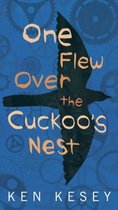
Over The Cuckoo’s Nest by Ken Kesey explores the power struggle within a mental institution.
The character Randle McMurphy draws numerous parallels to the concept of a hero in a tragedy
whilst also diverging from it.
Randle McMurphy's empathy is considered a tragic trait by some readers because it
ultimately leads to his downfall. Initially, his main motivation to deviate from the institution's
routine is fueled by his personal entertainment. As his character develops, his resistance is a
result of his care and protective emotions towards the men. When McMurphy strangles Nurse
Ratched, he does it out of his adoration for the patients within the ward. He is ultimately
provoked by Billy's sudden suicide, which shows that his protective feelings are so intense that
they manifest into action. The protagonist, Chief Bromden, recognizes McMurphys motives.
“We couldn't stop him because we were the ones making him do it. It wasn't the nurse that was
forcing him, it was our need that was making him push himself slowly up from sitting” (Kesey
318). Although he is conscious that his actions have consequences, he acts on his impulse to save
the men. His priority in the ward is teaching the patients to fight for freedom and independence.
According to Greek philosopher Aristotle, the definition of a traditional tragedy is “the
imitation of an action that is serious and also, having magnitude, with incidents arousing, pity
and fear, wherewith to accomplish its catharsis of such emotions.” Tragedy is an element used in
modern literature. Additionally, traditional tragic hero’s must have a flaw. The novel One Flew
Over The Cuckoo’s Nest by Ken Kesey explores the power struggle within a mental institution.
The character Randle McMurphy draws numerous parallels to the concept of a hero in a tragedy
whilst also diverging from it.
Randle McMurphy's empathy is considered a tragic trait by some readers because it
ultimately leads to his downfall. Initially, his main motivation to deviate from the institution's
routine is fueled by his personal entertainment. As his character develops, his resistance is a
result of his care and protective emotions towards the men. When McMurphy strangles Nurse
Ratched, he does it out of his adoration for the patients within the ward. He is ultimately
provoked by Billy's sudden suicide, which shows that his protective feelings are so intense that
they manifest into action. The protagonist, Chief Bromden, recognizes McMurphys motives.
“We couldn't stop him because we were the ones making him do it. It wasn't the nurse that was
forcing him, it was our need that was making him push himself slowly up from sitting” (Kesey
318). Although he is conscious that his actions have consequences, he acts on his impulse to save
the men. His priority in the ward is teaching the patients to fight for freedom and independence.