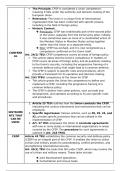
The Principle: CFSP is considered a union competence,
meaning it falls under the authority and decision-making of the
European Union.
Relevance: The Union is a unique form of international
organization that has been conferred with specific powers,
including in the field of foreign policy.
Historic Context:
Previously: CFSP was traditionally part of the second pillar
of the Union, separate from the Community pillar. Initially,
it was sometimes seen as more of a coordinated action of
the Member States or Member States acting together
rather than the Union as a separate entity.
Now: CFSP has evolved, and it is now recognized as a
competence confirmed on the Union itself.
CONFERR
Art. 24(1) TEU: CFSP competence covers all areas of foreign policy
AL
This article states that the Union's competence in matters of
CFSP covers all areas of foreign policy and all questions relating
to the Union's security, including the progressive framing of a
common defence policy that might lead to a common defence.
The CFSP is subject to specific rules and procedures, which
provide a framework for its operation and decision-making.
Art. 2(4) TFEU: competence of the Union for CFSP
This article grants the Union the competence to define and
implement a CFSP, including the progressive framing of a
common defence policy.
The CFSP is distinct from other policies, such as trade and
development, and operates according to its own specific rules
and procedures.
1. Article 25 TEU: outlines how the Union conducts the CFSP,
indicating the various instruments and mechanisms that can be
employed.
INSTRUME 2. Specific legal bases: Various articles, such as 28, 29, 33, and
NTS THAT 42, provide specific provisions that can be utilized in the
CAN BE implementation of CFSP.
USED: 3. Art. 37 TEU: empowers the Union to conclude agreements
with one or more states or international organizations in areas
covered by the CFSP. The procedure for such agreements is
outlined in Art. 218 TFEU.
CSDP Article 42 TEU: establishes the common security and defense policy
(CSDP) as an integral part of the CFSP. It enables the Union to utilize
civilian and military assets for peacekeeping, conflict prevention, and
strengthening international security.
Art. 43(1) TEU: the tasks that fall under CSDP, which may involve the
use of civilian and military means. These tasks include:
joint disarmament operations,
humanitarian and rescue tasks,
, military advice and assistance tasks,
conflict prevention and
peacekeeping tasks,
combat forces' involvement in crisis management
fighting terrorism.
Article 42(7) TEU (Mutual Assistance Clause): if a Member State is
the victim of armed aggression on its territory, other Member States
have an obligation to provide aid and assistance by all means in their
MEMBER
power. This obligation is in accordance with Article 51 of the United
STATE
Nations Charter.
OBLIGATI
Art. 222 TFEU (Solidarity Clause): joint action and coordination
ONS IN
among the Union and its Member States in a spirit of solidarity in
THE CFSP:
response to a terrorist attack or a natural or man-made disaster within
the Union. The Union and its Member States act together and support
each other.
Art. 2(4) TFEU: There is no hierarchical relationship
between the Treaty on European Union (TEU) and the Treaty on
the Functioning of the European Union (TFEU). equal importance
and provide the legal framework for the Union.
Directives and regulations, which are commonly used for
policy implementation in other areas, cannot be used in CFSP.
NATURE Instead, CFSP operates under its own specific rules and
OF THE procedures. Art 24(1)
CFSP: The role of the European Parliament and the European
Commission in CFSP is relatively smaller compared to other
areas of EU policy.
Member States retain significant control and autonomy over
their national foreign policies as long as they do not contradict
the Union's policy objectives.
Sui generis competence
Art. 24(1) TEU states that the Union's CFSP competence covers
all areas of foreign policy and all questions relating to the
Union's security.
The objectives of the CFSP are now referenced in Articles 21-22
CFSP
TEU, which provide a horizontal framework for the Union's
SCOPE
external action, including peace, security, sustainable
AND
development, democracy, human rights, and international law.
OBJECTIV
The scope of the CFSP is broad but excludes areas related to
ES:
trade, development, and external aspects of internal policies.
The definition of what falls outside the CFSP can sometimes be
challenging due to the broad scope of the CFSP and the
existence of separate policies for trade and development
cooperation within the Union.
, DELIMITATION OF CFSP- HORIZONTAL AXIS
UNIFIED 1. Horizontal external relations objectives:
OBJECTIV Article 3(5) TEU in its relations with the wider world, the Union
ES shall uphold and promote its values and interests and contribute
to the protection of its citizens. It shall contribute to peace,
security, the sustainable development of the Earth, solidarity and
mutual respect among peoples, free and fair trade, eradication of
poverty, and the protection of human rights.
Part 5, Title I, TFEU (General Provisions on the Union's External
Action) in Article 205 states that the Union's action on the
international scene, pursuant to this part, shall be guided by the
principles, pursue the objectives, and be conducted in
accordance with the general provisions laid down in Chapter 1 of
Title V of the Treaty on European Union.
Common policies and actions:
to safeguard its values, fundamental interests, security,
independence, and integrity (Article 21(2)(a) TEU).
The objectives include consolidating and supporting democracy,
the rule of law, human rights (Article 21(2)(b) TEU).
Preserving peace, preventing conflicts, and strengthening
international security (Article 21(2)(c) TEU).
Fostering sustainable economic, social, and environmental
development of developing countries with the primary aim of
eradicating poverty (Article 21(2)(d) TEU).
Encouraging the integration of all countries into the world
economy, including through the progressive abolition of
restrictions on international trade (Article 21(2)(e) TEU).
Helping develop international measures to preserve and improve
the quality of the environment and the sustainable management
of global natural resources for sustainable development (Article
21(2)(f) TEU).
Assisting populations, countries, and regions confronting natural
or man-made disasters (Article 21(2)(g) TEU).
Promoting an international system based on stronger multilateral
cooperation and good global governance (Article 21(2)(h) TEU).
2. Cross-references in specific external policies:
The CFSP's action on the international scene is guided by
the principles and objectives of the general provisions laid down
in Chapter 1 (Article 23 TEU).
Development policy is conducted within the framework of the
principles and objectives of the Union's external action, with the
primary objective of reducing and eradicating poverty (Article
208 TFEU).
Cooperation with other countries, excluding developing
countries, is carried out within the framework of the principles
meaning it falls under the authority and decision-making of the
European Union.
Relevance: The Union is a unique form of international
organization that has been conferred with specific powers,
including in the field of foreign policy.
Historic Context:
Previously: CFSP was traditionally part of the second pillar
of the Union, separate from the Community pillar. Initially,
it was sometimes seen as more of a coordinated action of
the Member States or Member States acting together
rather than the Union as a separate entity.
Now: CFSP has evolved, and it is now recognized as a
competence confirmed on the Union itself.
CONFERR
Art. 24(1) TEU: CFSP competence covers all areas of foreign policy
AL
This article states that the Union's competence in matters of
CFSP covers all areas of foreign policy and all questions relating
to the Union's security, including the progressive framing of a
common defence policy that might lead to a common defence.
The CFSP is subject to specific rules and procedures, which
provide a framework for its operation and decision-making.
Art. 2(4) TFEU: competence of the Union for CFSP
This article grants the Union the competence to define and
implement a CFSP, including the progressive framing of a
common defence policy.
The CFSP is distinct from other policies, such as trade and
development, and operates according to its own specific rules
and procedures.
1. Article 25 TEU: outlines how the Union conducts the CFSP,
indicating the various instruments and mechanisms that can be
employed.
INSTRUME 2. Specific legal bases: Various articles, such as 28, 29, 33, and
NTS THAT 42, provide specific provisions that can be utilized in the
CAN BE implementation of CFSP.
USED: 3. Art. 37 TEU: empowers the Union to conclude agreements
with one or more states or international organizations in areas
covered by the CFSP. The procedure for such agreements is
outlined in Art. 218 TFEU.
CSDP Article 42 TEU: establishes the common security and defense policy
(CSDP) as an integral part of the CFSP. It enables the Union to utilize
civilian and military assets for peacekeeping, conflict prevention, and
strengthening international security.
Art. 43(1) TEU: the tasks that fall under CSDP, which may involve the
use of civilian and military means. These tasks include:
joint disarmament operations,
humanitarian and rescue tasks,
, military advice and assistance tasks,
conflict prevention and
peacekeeping tasks,
combat forces' involvement in crisis management
fighting terrorism.
Article 42(7) TEU (Mutual Assistance Clause): if a Member State is
the victim of armed aggression on its territory, other Member States
have an obligation to provide aid and assistance by all means in their
MEMBER
power. This obligation is in accordance with Article 51 of the United
STATE
Nations Charter.
OBLIGATI
Art. 222 TFEU (Solidarity Clause): joint action and coordination
ONS IN
among the Union and its Member States in a spirit of solidarity in
THE CFSP:
response to a terrorist attack or a natural or man-made disaster within
the Union. The Union and its Member States act together and support
each other.
Art. 2(4) TFEU: There is no hierarchical relationship
between the Treaty on European Union (TEU) and the Treaty on
the Functioning of the European Union (TFEU). equal importance
and provide the legal framework for the Union.
Directives and regulations, which are commonly used for
policy implementation in other areas, cannot be used in CFSP.
NATURE Instead, CFSP operates under its own specific rules and
OF THE procedures. Art 24(1)
CFSP: The role of the European Parliament and the European
Commission in CFSP is relatively smaller compared to other
areas of EU policy.
Member States retain significant control and autonomy over
their national foreign policies as long as they do not contradict
the Union's policy objectives.
Sui generis competence
Art. 24(1) TEU states that the Union's CFSP competence covers
all areas of foreign policy and all questions relating to the
Union's security.
The objectives of the CFSP are now referenced in Articles 21-22
CFSP
TEU, which provide a horizontal framework for the Union's
SCOPE
external action, including peace, security, sustainable
AND
development, democracy, human rights, and international law.
OBJECTIV
The scope of the CFSP is broad but excludes areas related to
ES:
trade, development, and external aspects of internal policies.
The definition of what falls outside the CFSP can sometimes be
challenging due to the broad scope of the CFSP and the
existence of separate policies for trade and development
cooperation within the Union.
, DELIMITATION OF CFSP- HORIZONTAL AXIS
UNIFIED 1. Horizontal external relations objectives:
OBJECTIV Article 3(5) TEU in its relations with the wider world, the Union
ES shall uphold and promote its values and interests and contribute
to the protection of its citizens. It shall contribute to peace,
security, the sustainable development of the Earth, solidarity and
mutual respect among peoples, free and fair trade, eradication of
poverty, and the protection of human rights.
Part 5, Title I, TFEU (General Provisions on the Union's External
Action) in Article 205 states that the Union's action on the
international scene, pursuant to this part, shall be guided by the
principles, pursue the objectives, and be conducted in
accordance with the general provisions laid down in Chapter 1 of
Title V of the Treaty on European Union.
Common policies and actions:
to safeguard its values, fundamental interests, security,
independence, and integrity (Article 21(2)(a) TEU).
The objectives include consolidating and supporting democracy,
the rule of law, human rights (Article 21(2)(b) TEU).
Preserving peace, preventing conflicts, and strengthening
international security (Article 21(2)(c) TEU).
Fostering sustainable economic, social, and environmental
development of developing countries with the primary aim of
eradicating poverty (Article 21(2)(d) TEU).
Encouraging the integration of all countries into the world
economy, including through the progressive abolition of
restrictions on international trade (Article 21(2)(e) TEU).
Helping develop international measures to preserve and improve
the quality of the environment and the sustainable management
of global natural resources for sustainable development (Article
21(2)(f) TEU).
Assisting populations, countries, and regions confronting natural
or man-made disasters (Article 21(2)(g) TEU).
Promoting an international system based on stronger multilateral
cooperation and good global governance (Article 21(2)(h) TEU).
2. Cross-references in specific external policies:
The CFSP's action on the international scene is guided by
the principles and objectives of the general provisions laid down
in Chapter 1 (Article 23 TEU).
Development policy is conducted within the framework of the
principles and objectives of the Union's external action, with the
primary objective of reducing and eradicating poverty (Article
208 TFEU).
Cooperation with other countries, excluding developing
countries, is carried out within the framework of the principles