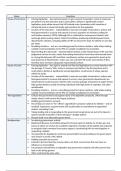
Name Functions
House of Commons Passing legislation – has exclusive power to give consent to taxation; reacts to measures
put before it by the executive and is rarely able to defeat or significantly amend
legislation; party whips ensure that MPs attend votes (sometimes with incentive of
ministerial posts in reward of loyalty and sanctions for the opposite).
Scrutiny of the executive – responsibility to exercise oversight of executive’s actions and
hold government to account and expose its errors; questions to ministers (calling for
oral/written answers); PMQs (although this is criticised for unnecessary theatrics and
seemingly point-scoring nature); Select Committees shadowing individual government
departments; debates, including ability of MPs to choose the topic for debate on one day
per week.
Providing ministers – acts as a recruiting ground for future ministers, with whips making
suitable recommendations to the PM on suitable candidates for promotion
Representing the electorate – representative function as the elected house; MPs use their
judgement on how to vote, rather than taking instructions from those who elected them
in; strong link between MPs and their constituency so they are expected to stand up for
local interests at Westminster; voters can vote out their MP at the next election if they
feel they have not been adequately represented by them.
House of Lords Passing legislation – has right to amend non-financial legislation but cannot interfere with
the passage of ‘money’ bills; reacts to measures put before it by the executive and is
rarely able to defeat or significantly amend legislation; small teams of whips operate
within the Lords.
Scrutiny of the executive - responsibility to exercise oversight of executive’s actions and
hold government to account and expose its errors; most government departments are
represented in Lords by junior minister who oversees passage of business in Upper House;
high quality debates usually involving individuals with high levels of expertise, but often
uninfluential.
Providing ministers - acts as a recruiting ground for future ministers, with whips making
suitable recommendations to the PM on suitable candidates for promotion.
The Opposition Criticise the government and oppose many of its legislative proposals, often through
media, where it will receive the largest audience.
Holding government to account.
Has 20 days per year (17 for ‘official’ opposition) to propose subjects for debate – only of
symbolic importance as government will usually table an amendment to opposition
motion, cancelling it out.
Taking leading role in responding to the government programme set out in the Queen’s
speech and the chancellor of the exchequer’s budget speech.
Present itself as an alternative government
Backbenchers Scrutinising government activity
Backbench Business Committee allowed to choose topic for debate on 35 days per year
(some of which are chosen by e-petitions signed by members of the public) and responds
to proposals that command cross-party support, incentivising MPs to work together in
requesting a debate
The potential for backbench revolt can prevent bills from proceeding as the government
may choose to avoid a HoC defeat
Holding executive to account
Limited in the fact that they may be able to air their concerns but this may have no
influence on proceedings
Can propose amendments to legislation but government majority will often prevail and
lead to this being ignored
Often restrained by party whip
House of Commons Passing legislation – has exclusive power to give consent to taxation; reacts to measures
put before it by the executive and is rarely able to defeat or significantly amend
legislation; party whips ensure that MPs attend votes (sometimes with incentive of
ministerial posts in reward of loyalty and sanctions for the opposite).
Scrutiny of the executive – responsibility to exercise oversight of executive’s actions and
hold government to account and expose its errors; questions to ministers (calling for
oral/written answers); PMQs (although this is criticised for unnecessary theatrics and
seemingly point-scoring nature); Select Committees shadowing individual government
departments; debates, including ability of MPs to choose the topic for debate on one day
per week.
Providing ministers – acts as a recruiting ground for future ministers, with whips making
suitable recommendations to the PM on suitable candidates for promotion
Representing the electorate – representative function as the elected house; MPs use their
judgement on how to vote, rather than taking instructions from those who elected them
in; strong link between MPs and their constituency so they are expected to stand up for
local interests at Westminster; voters can vote out their MP at the next election if they
feel they have not been adequately represented by them.
House of Lords Passing legislation – has right to amend non-financial legislation but cannot interfere with
the passage of ‘money’ bills; reacts to measures put before it by the executive and is
rarely able to defeat or significantly amend legislation; small teams of whips operate
within the Lords.
Scrutiny of the executive - responsibility to exercise oversight of executive’s actions and
hold government to account and expose its errors; most government departments are
represented in Lords by junior minister who oversees passage of business in Upper House;
high quality debates usually involving individuals with high levels of expertise, but often
uninfluential.
Providing ministers - acts as a recruiting ground for future ministers, with whips making
suitable recommendations to the PM on suitable candidates for promotion.
The Opposition Criticise the government and oppose many of its legislative proposals, often through
media, where it will receive the largest audience.
Holding government to account.
Has 20 days per year (17 for ‘official’ opposition) to propose subjects for debate – only of
symbolic importance as government will usually table an amendment to opposition
motion, cancelling it out.
Taking leading role in responding to the government programme set out in the Queen’s
speech and the chancellor of the exchequer’s budget speech.
Present itself as an alternative government
Backbenchers Scrutinising government activity
Backbench Business Committee allowed to choose topic for debate on 35 days per year
(some of which are chosen by e-petitions signed by members of the public) and responds
to proposals that command cross-party support, incentivising MPs to work together in
requesting a debate
The potential for backbench revolt can prevent bills from proceeding as the government
may choose to avoid a HoC defeat
Holding executive to account
Limited in the fact that they may be able to air their concerns but this may have no
influence on proceedings
Can propose amendments to legislation but government majority will often prevail and
lead to this being ignored
Often restrained by party whip