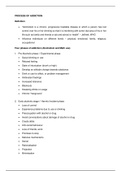
PROCESS OF ADDICTION
Definition
“Alcoholism is a chronic, progressive treatable disease in which a person has lost
control over his or her drinking so that it is interfering with some vital area of his or her
life such as family and friends or job and school or health” – Jellinek, WHO
Influence individuals on different levels – physical, emotional, family, religious,
occupational
Four phases of addiction (Alcoholism and Meth use)
1. Pre-Alcoholic phase // Experimental phase
Social drinking or use
Relaxed feeling
State of intoxication (drunk or high)
Develop an attitude change towards substance
Drink or use for affect, or problem management
Ambivalent feelings
Increased tolerance
Blackouts
Sneaking drinks or usage
Chronic “hangovers”
2. Early alcoholic stage // Harmful incident phase
Loss of control
Experience problems due to use or drinking
Preoccupation with alcohol or drug
Avoid conversations about damage of alcohol or drug
Create alibis
Anti-social behaviour
Loss of friends, work
Promises to stop
Defence mechanisms
Denial
Rationalisation
Projection
Minimisation
,3. Critic alcoholic phase // Continued use
Overall loss of control
Loss of time and place
Grandiose behaviour
Aggressive behaviour
Increased feelings of guilt
Maintain periods of soberness
Change drinking or usage pattern
“Fixers”
Hiding of alcohol or drugs
Geographical escape
Make other friends who are involved in substance use
Social loneliness
Role change
Experience problems on all levels of functioning
Physical deterioration
Suicidal thoughts
4. Chronic phase // Dependency
Morning drinking or usage
Benders: long periods of drunkenness or being high – “Drinking to escape the
problems of drinking”
Decrease in resistance
Tremors – the shakes
Hallucinations
Nameless fears and anxieties
Collapse of alibi system
“Surrender” process
,Models of addiction
Different models can be used to declare addiction
Personal experiences, convictions and values
1. Moral model
Personal choice
Decided to use substance
Problematic behaviour
Religious groups – use is sin and wrong
Legal system – responsible for own deeds
2. Sociocultural model
External to individual
Culture plays a role
Religion
Family
Peer group
3. Psychological model
Drug use seen as secondary problem
That results from primary problem
Compulsive behaviour
Addictive personality
Social learning theory – modelling
Sociocultural factors
4. Medical model
AA supports this model
Disease concept
Jellinek curve – 1960
Primary disease
Phases of addiction
Early stage – increased tolerance, blackouts, sneaking drinks, guilt
Middle stage – loss of control, personality changes, loss of friends or job,
preoccupation with alcohol or drugs
, Chronic stage – morning drinking, violation of ethical standards, tremors,
hallucinations
These phases are progressive
Influenced by age, type of substance, gender, physiological predisposition
Irreversible
Cure – abstinence
5. Biopsychosocial model
Incorporates all other models
Interaction between biological, psychological, cognitive, social, developmental and
environmental variables
Effective treatment: all variables are considered
Conclusion
Moral model – discourage individuals from treatment
Sociocultural model – environmental factors
Psychological model – personality factors
Medical model – medical orientation, focus on abstinence
Biopsychosocial model – more useful model, focus on different variables.
Definition
“Alcoholism is a chronic, progressive treatable disease in which a person has lost
control over his or her drinking so that it is interfering with some vital area of his or her
life such as family and friends or job and school or health” – Jellinek, WHO
Influence individuals on different levels – physical, emotional, family, religious,
occupational
Four phases of addiction (Alcoholism and Meth use)
1. Pre-Alcoholic phase // Experimental phase
Social drinking or use
Relaxed feeling
State of intoxication (drunk or high)
Develop an attitude change towards substance
Drink or use for affect, or problem management
Ambivalent feelings
Increased tolerance
Blackouts
Sneaking drinks or usage
Chronic “hangovers”
2. Early alcoholic stage // Harmful incident phase
Loss of control
Experience problems due to use or drinking
Preoccupation with alcohol or drug
Avoid conversations about damage of alcohol or drug
Create alibis
Anti-social behaviour
Loss of friends, work
Promises to stop
Defence mechanisms
Denial
Rationalisation
Projection
Minimisation
,3. Critic alcoholic phase // Continued use
Overall loss of control
Loss of time and place
Grandiose behaviour
Aggressive behaviour
Increased feelings of guilt
Maintain periods of soberness
Change drinking or usage pattern
“Fixers”
Hiding of alcohol or drugs
Geographical escape
Make other friends who are involved in substance use
Social loneliness
Role change
Experience problems on all levels of functioning
Physical deterioration
Suicidal thoughts
4. Chronic phase // Dependency
Morning drinking or usage
Benders: long periods of drunkenness or being high – “Drinking to escape the
problems of drinking”
Decrease in resistance
Tremors – the shakes
Hallucinations
Nameless fears and anxieties
Collapse of alibi system
“Surrender” process
,Models of addiction
Different models can be used to declare addiction
Personal experiences, convictions and values
1. Moral model
Personal choice
Decided to use substance
Problematic behaviour
Religious groups – use is sin and wrong
Legal system – responsible for own deeds
2. Sociocultural model
External to individual
Culture plays a role
Religion
Family
Peer group
3. Psychological model
Drug use seen as secondary problem
That results from primary problem
Compulsive behaviour
Addictive personality
Social learning theory – modelling
Sociocultural factors
4. Medical model
AA supports this model
Disease concept
Jellinek curve – 1960
Primary disease
Phases of addiction
Early stage – increased tolerance, blackouts, sneaking drinks, guilt
Middle stage – loss of control, personality changes, loss of friends or job,
preoccupation with alcohol or drugs
, Chronic stage – morning drinking, violation of ethical standards, tremors,
hallucinations
These phases are progressive
Influenced by age, type of substance, gender, physiological predisposition
Irreversible
Cure – abstinence
5. Biopsychosocial model
Incorporates all other models
Interaction between biological, psychological, cognitive, social, developmental and
environmental variables
Effective treatment: all variables are considered
Conclusion
Moral model – discourage individuals from treatment
Sociocultural model – environmental factors
Psychological model – personality factors
Medical model – medical orientation, focus on abstinence
Biopsychosocial model – more useful model, focus on different variables.