THE MAIN CHARACTERISTICS OF US FEDERALISM
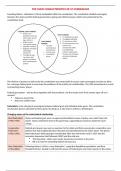
Founding fathers - federalism is firmly embedded within the constitution. The constitution divided sovereignty
between the states and the federal government, giving each distinct powers which were protected by the
constitution itself.
The division of powers as laid out by the constitution was meant both to ensure state sovereignty and also to allow
for a stronger federal govt to overcome the problems of the articles of confederation. The 10th amendment is crucial
in protecting states' power.
Federal govt power - why do they negotiate with the president, not the senate even if the senate signs off on it
anyway?
Takes too much time
Need one unified voice
Federalism: is the sharing of sovereignty between federal govt and individual state govts. The constitution
enumerates powers allocated to these govts. By doing so, it also tries to achieve a limited govt.
Changing nature of the state-federal relationship:
Dual Federalism States and federal govt were co-equal and had distinct areas of policy over which they had
1790s-1930s power. States undertook most of the governing, supporting by numerous Supreme Court
rulings.
Cooperative Federal govt power was seen as supreme to the states and there was greater cooperation over
Federalism policies that had traditionally been directed and administered by the states alone. The power
1930s-1960s that federal govt held expanded considerably after the wall street crash in 1929 and the
economic depression that followed, WW2 and the cold war.
The New Deal - states were weak. Keynesian economics in its prime.
Bit of a front for promoting federal bureaucracy
New Federalism Following Nixon's call for a 'new federalism', respective Republican presidents, and then
1970s-2000s President Clinton, looked to roll back the power of federal govt and return power to the states.
Founding fathers - federalism is firmly embedded within the constitution. The constitution divided sovereignty
between the states and the federal government, giving each distinct powers which were protected by the
constitution itself.
The division of powers as laid out by the constitution was meant both to ensure state sovereignty and also to allow
for a stronger federal govt to overcome the problems of the articles of confederation. The 10th amendment is crucial
in protecting states' power.
Federal govt power - why do they negotiate with the president, not the senate even if the senate signs off on it
anyway?
Takes too much time
Need one unified voice
Federalism: is the sharing of sovereignty between federal govt and individual state govts. The constitution
enumerates powers allocated to these govts. By doing so, it also tries to achieve a limited govt.
Changing nature of the state-federal relationship:
Dual Federalism States and federal govt were co-equal and had distinct areas of policy over which they had
1790s-1930s power. States undertook most of the governing, supporting by numerous Supreme Court
rulings.
Cooperative Federal govt power was seen as supreme to the states and there was greater cooperation over
Federalism policies that had traditionally been directed and administered by the states alone. The power
1930s-1960s that federal govt held expanded considerably after the wall street crash in 1929 and the
economic depression that followed, WW2 and the cold war.
The New Deal - states were weak. Keynesian economics in its prime.
Bit of a front for promoting federal bureaucracy
New Federalism Following Nixon's call for a 'new federalism', respective Republican presidents, and then
1970s-2000s President Clinton, looked to roll back the power of federal govt and return power to the states.