

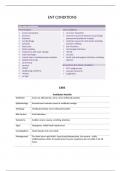
ENT CONDITIONS
EARS
Vestibular Neuritis
Definition Inner ear affected by a virus, nerve inflamed/swollen
Epidemiology Second most common cause of vestibular vertigo
Aetiology Vestibulocochlear nerve inflamed/swollen
Risk Factors Viral infections
Symptoms Sudden onset, nausea, vomiting, dizziness
Signs Nystagmus, failed head impulse test
Investigations Head impulse test, eye check
Management For short term rapid relief - buccal prochlorperazine, less severe - orally,
antihistamines. Refer to stroke team if severe symptoms do not settle in 24-48
hours
, Stroke
Definition Blood supply to brain cut off
Epidemiology 2nd leading cause of death
Aetiology blocked artery (ischemic stroke) or leaking/bursting of blood vessel (hemorrhagic
stroke)
Risk Factors High blood pressure, heart disease, smoking, obesity, poor diet etc.
Symptoms Sudden onset, dizziness, trouble speaking, confusion
Signs Failed head impulse, nystagmus
Investigations Head impulse test, eye exam, checking weakness of body
Management Prompt referral to ED/neurology
BPPV (Benign Positional Paroxysmal Vertigo)
Definition Disorder of inner ear - repeated episodes of positional vertigo
Epidemiology
Aetiology Caused by loose CaCO3 debris in canals of inner ear
Risk Factors Head injury, prolonged recumbent position, ear surgery, episode of inner ear
pathology
Symptoms Episodic vertigo, nausea, vomiting, imbalance, no hearing loss or tinnitus
Signs Normal neuro and otoscopic exam, positive Dix-hallpike manoeuvre
Investigations Dix-Hallpike - lay down and lift up patient, nystagmus when lying down
Management Epley manoeuvre - reposition, Brandt-Daroff, imaging and referral if no improvement
is seen
Meniere’s Disease
Definition Inner ear - causes dizzy spells
Epidemiology Ages 40-60, lifelong condition
Aetiology Unknown cause
EARS
Vestibular Neuritis
Definition Inner ear affected by a virus, nerve inflamed/swollen
Epidemiology Second most common cause of vestibular vertigo
Aetiology Vestibulocochlear nerve inflamed/swollen
Risk Factors Viral infections
Symptoms Sudden onset, nausea, vomiting, dizziness
Signs Nystagmus, failed head impulse test
Investigations Head impulse test, eye check
Management For short term rapid relief - buccal prochlorperazine, less severe - orally,
antihistamines. Refer to stroke team if severe symptoms do not settle in 24-48
hours
, Stroke
Definition Blood supply to brain cut off
Epidemiology 2nd leading cause of death
Aetiology blocked artery (ischemic stroke) or leaking/bursting of blood vessel (hemorrhagic
stroke)
Risk Factors High blood pressure, heart disease, smoking, obesity, poor diet etc.
Symptoms Sudden onset, dizziness, trouble speaking, confusion
Signs Failed head impulse, nystagmus
Investigations Head impulse test, eye exam, checking weakness of body
Management Prompt referral to ED/neurology
BPPV (Benign Positional Paroxysmal Vertigo)
Definition Disorder of inner ear - repeated episodes of positional vertigo
Epidemiology
Aetiology Caused by loose CaCO3 debris in canals of inner ear
Risk Factors Head injury, prolonged recumbent position, ear surgery, episode of inner ear
pathology
Symptoms Episodic vertigo, nausea, vomiting, imbalance, no hearing loss or tinnitus
Signs Normal neuro and otoscopic exam, positive Dix-hallpike manoeuvre
Investigations Dix-Hallpike - lay down and lift up patient, nystagmus when lying down
Management Epley manoeuvre - reposition, Brandt-Daroff, imaging and referral if no improvement
is seen
Meniere’s Disease
Definition Inner ear - causes dizzy spells
Epidemiology Ages 40-60, lifelong condition
Aetiology Unknown cause


