B20
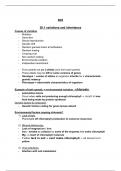
20.1 variations and inheritance
Causes of variation
- Mutation
- Gene flow
- Sexual reproduction
- Genetic drift
- Random gamete fusion at fertilisation
- Random mating
- Crossing over
- Non random mating
- Environmental variation
- Independent assortment
- From parents we get 2 alleles (one from each parent)
- These alleles may be diff or same versions of genes
- Genotype = combo of alleles an organism inherits for a characteristic -
genetic makeup
- Phenotype = observable characteristics of organism
Example of both genetic + environmental variation : chlorosis
- pale/yellow leaves
- Occur when cells not producing enough chlorophyll → result in less
food being made by protein synthesis
Genetic factors for chlorosis?
- Genetic factors coding for green leaves absent
Environmental factors causing chlorosis?
1) Lack of light
- Plants turn off chlorophyll production to conserve resources
2) Mineral deficiencies
- Lack of magnesium / iron
- Iron - needed as cofactor by some of the enzymes that make chlorophyll
- Mg - is heart of chlorophyll molecule
- If either lack in soil → cant make chlorophyll → all leaves turn
yellow
3) Virus infections
- Interfere with cell metabolism
, - Yellowing in infected tissues as they can no longer support synthesis of
chlorophyll
Continuous and discontinuous variation
Continuous Discontinuous
- Characteristic that can take any - Fall into distinct groups
value within a range - E.g. blood groups + round and
- E.g. height , weight , leaf sa wrinkled pea shape
and skin colour - Normally 1 gene involved
- Polygenes - Many genes - Environment has little effect
involved - Bar graph
- Environment has big effect
- Line graph
Monogenic inheritance - 20.2
31/10/23
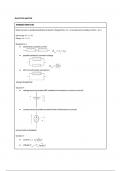
1) Homozygous crosses
- When homozygous recessive cross with homozygous dominant
- This is punnett square - shows all possible crosses + all possible genotype
offspring
- In the punnett square above - shows 100% heterozygous - makes one type of
allele
- F0 means the og generations + F1 = is results of that generation (100%
heterozygous in this case )
20.1 variations and inheritance
Causes of variation
- Mutation
- Gene flow
- Sexual reproduction
- Genetic drift
- Random gamete fusion at fertilisation
- Random mating
- Crossing over
- Non random mating
- Environmental variation
- Independent assortment
- From parents we get 2 alleles (one from each parent)
- These alleles may be diff or same versions of genes
- Genotype = combo of alleles an organism inherits for a characteristic -
genetic makeup
- Phenotype = observable characteristics of organism
Example of both genetic + environmental variation : chlorosis
- pale/yellow leaves
- Occur when cells not producing enough chlorophyll → result in less
food being made by protein synthesis
Genetic factors for chlorosis?
- Genetic factors coding for green leaves absent
Environmental factors causing chlorosis?
1) Lack of light
- Plants turn off chlorophyll production to conserve resources
2) Mineral deficiencies
- Lack of magnesium / iron
- Iron - needed as cofactor by some of the enzymes that make chlorophyll
- Mg - is heart of chlorophyll molecule
- If either lack in soil → cant make chlorophyll → all leaves turn
yellow
3) Virus infections
- Interfere with cell metabolism
, - Yellowing in infected tissues as they can no longer support synthesis of
chlorophyll
Continuous and discontinuous variation
Continuous Discontinuous
- Characteristic that can take any - Fall into distinct groups
value within a range - E.g. blood groups + round and
- E.g. height , weight , leaf sa wrinkled pea shape
and skin colour - Normally 1 gene involved
- Polygenes - Many genes - Environment has little effect
involved - Bar graph
- Environment has big effect
- Line graph
Monogenic inheritance - 20.2
31/10/23
1) Homozygous crosses
- When homozygous recessive cross with homozygous dominant
- This is punnett square - shows all possible crosses + all possible genotype
offspring
- In the punnett square above - shows 100% heterozygous - makes one type of
allele
- F0 means the og generations + F1 = is results of that generation (100%
heterozygous in this case )