Non-Fatal Evaluation
Prior Recommendations
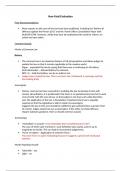
Many reports on this area of the law have been published, including the ‘Reform of
Offences against the Person 2015’ and the ‘Home Office Consultation Paper with
Draft Bill 1998’. However, whilst they have all emphasised the need for reform, no
action has been taken.
Common Assault
Merits of Common Law
Battery
The common law is an important feature of UK jurisprudence and allows judges to
update the law so that it remains applicable to the modern world.
Fagan – expanded the law by saying that there was a continuing act of battery.
Santa-Bermudez – allowed battery by omission.
DPP v K – held that battery can be an indirect act.
Judges have created the law. This is not their role. Parliament is sovereign and the
law-making body.
Sovereignty
Clearly, case law has been successful in enabling the law to develop in line with
society. Nevertheless, it is problematic that there is no parliamentary law that is used
concurrently with this area of law, so that judges to not have such wide discretion
over the application of the law. A foundation of parliamentary law is arguably
required so that the legislative is able to retain its sovereignty.
Suggests the law in this area should be codified to give parliamentary a greater level
of control. Judges should not act as lawmakers. If the other non-fatal offences
require statutory guidance, then so should common assault.
Terminology
‘Immediate’ in assault - How immediate does something have to be?
The case of Smith said ‘imminent’; such definition lacks clarity, and it’s up to
magistrate to decide. This can lead to inconsistent judgements.
‘Force’ in battery - Application of unlawful ‘force’.
The word ‘force’ is quite misleading because it suggests a great level of physical
exertion.
Words Negating Assault
Tuberville – yes
Light – no
Prior Recommendations
Many reports on this area of the law have been published, including the ‘Reform of
Offences against the Person 2015’ and the ‘Home Office Consultation Paper with
Draft Bill 1998’. However, whilst they have all emphasised the need for reform, no
action has been taken.
Common Assault
Merits of Common Law
Battery
The common law is an important feature of UK jurisprudence and allows judges to
update the law so that it remains applicable to the modern world.
Fagan – expanded the law by saying that there was a continuing act of battery.
Santa-Bermudez – allowed battery by omission.
DPP v K – held that battery can be an indirect act.
Judges have created the law. This is not their role. Parliament is sovereign and the
law-making body.
Sovereignty
Clearly, case law has been successful in enabling the law to develop in line with
society. Nevertheless, it is problematic that there is no parliamentary law that is used
concurrently with this area of law, so that judges to not have such wide discretion
over the application of the law. A foundation of parliamentary law is arguably
required so that the legislative is able to retain its sovereignty.
Suggests the law in this area should be codified to give parliamentary a greater level
of control. Judges should not act as lawmakers. If the other non-fatal offences
require statutory guidance, then so should common assault.
Terminology
‘Immediate’ in assault - How immediate does something have to be?
The case of Smith said ‘imminent’; such definition lacks clarity, and it’s up to
magistrate to decide. This can lead to inconsistent judgements.
‘Force’ in battery - Application of unlawful ‘force’.
The word ‘force’ is quite misleading because it suggests a great level of physical
exertion.
Words Negating Assault
Tuberville – yes
Light – no