Hazmat Operations (Based on Schnepp 3rd Edition)
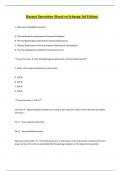
1. What does TRACEMP stand for?
A. Thermal Radiation Asphyxiation Chemical Etiological
B. Thermal Radiological Asphyxiation Chemical Mechanical
C. Thermal Asphyxiation Chemical Exposure Mechanical Psychological
D. Thermal Asphyxiation Radiation Chemical Electrical
**Correct answer: B. Thermal Radiological Asphyxiation Chemical Mechanical**
2. What is the maximum distance of an air line?
A. 100 ft.
B. 200 ft.
C. 300 ft.
D. 400 ft.
**Correct answer: C. 300 ft.**
corrosive ✔️(adj.) having the tendency to erode or eat away (The effect of the chemical was highly
corrosive.)
TIC ✔️Toxic Industrial Chemical
TIH ✔️Toxic Inhalation Hazard
Mass decontamination ✔️The physical process of reducing or removing surface contaminants from
large numbers of victims in potentially life-threatening situations in the fastest time possible.
, Technical decontamination ✔️The planned and systematic process of reducing contamination to a level
that is as low as reasonably achievable.
Emergency decontamination ✔️The physical process of immediately reducing contamination of
individuals in potentially life-threatening situations, with or without the formal establishment of a
decontamination corridor.
Secondary contamination ✔️transfer of a hazardous substance to a non-contaminated person or item
via contact with someone or something already contaminated by the substance.
acute ✔️New, usually of rapid onset and of concern, opposite of chronic
chronic ✔️Long-standing, constant. Opposite of acute
BLEVE ✔️Boiling Liquid Expanding Vapor Explosion - explosion caused by the rupture of a vessel
containing a pressurized liquid that has reached temperatures above its boiling point.
Radioactive pharmaceuticals ✔️medical drugs which contain radioactivity
Non-Pressurized Containers ✔️flammable liquids, mild corrosives and poisons, round or horseshoe
shaped
Pressurized Containers ✔️Typically ammonia, propane, freon, butane, rounded welded ends
CHEMTREC ✔️Chemical Transportation Emergency Center
Hazard Class 1 ✔️Explosives
Hazard Class 2 ✔️gases
1. What does TRACEMP stand for?
A. Thermal Radiation Asphyxiation Chemical Etiological
B. Thermal Radiological Asphyxiation Chemical Mechanical
C. Thermal Asphyxiation Chemical Exposure Mechanical Psychological
D. Thermal Asphyxiation Radiation Chemical Electrical
**Correct answer: B. Thermal Radiological Asphyxiation Chemical Mechanical**
2. What is the maximum distance of an air line?
A. 100 ft.
B. 200 ft.
C. 300 ft.
D. 400 ft.
**Correct answer: C. 300 ft.**
corrosive ✔️(adj.) having the tendency to erode or eat away (The effect of the chemical was highly
corrosive.)
TIC ✔️Toxic Industrial Chemical
TIH ✔️Toxic Inhalation Hazard
Mass decontamination ✔️The physical process of reducing or removing surface contaminants from
large numbers of victims in potentially life-threatening situations in the fastest time possible.
, Technical decontamination ✔️The planned and systematic process of reducing contamination to a level
that is as low as reasonably achievable.
Emergency decontamination ✔️The physical process of immediately reducing contamination of
individuals in potentially life-threatening situations, with or without the formal establishment of a
decontamination corridor.
Secondary contamination ✔️transfer of a hazardous substance to a non-contaminated person or item
via contact with someone or something already contaminated by the substance.
acute ✔️New, usually of rapid onset and of concern, opposite of chronic
chronic ✔️Long-standing, constant. Opposite of acute
BLEVE ✔️Boiling Liquid Expanding Vapor Explosion - explosion caused by the rupture of a vessel
containing a pressurized liquid that has reached temperatures above its boiling point.
Radioactive pharmaceuticals ✔️medical drugs which contain radioactivity
Non-Pressurized Containers ✔️flammable liquids, mild corrosives and poisons, round or horseshoe
shaped
Pressurized Containers ✔️Typically ammonia, propane, freon, butane, rounded welded ends
CHEMTREC ✔️Chemical Transportation Emergency Center
Hazard Class 1 ✔️Explosives
Hazard Class 2 ✔️gases