Hello ! Take your studying to the next level! For more organized and effective study
materials, check out my profile and flashcard shop Maggie's Flashcards - Payhip. From
notes to flashcards, I've got you covered!
Course : History
Theme : State Building in Europe
Topic : Nationalism and Liberalism
Years : 19th Century
In Text
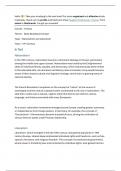
Nationalism
In the 19th century, nationalism became a dominant ideology in Europe, particularly
among the middle and upper classes. Nationalism was fueled by the Enlightenment
ideas of individual liberty, equality, and democracy, which had previously been limited
to the educated elite. As education and literacy rates increased, more people became
aware of their shared cultural and linguistic heritage, which led to a growing sense of
national identity.
The French Revolution's emphasis on the concept of "nation" as the source of
sovereignty and the unity of a people further contributed to the rise of nationalism. The
idea that a nation was a natural, organic entity that had its own distinct culture,
language, and history resonated with many Europeans.
As a result, nationalist movements emerged across Europe, seeking greater autonomy
or independence from foreign powers. In Germany, for example, the concept of
"Deutschtum" ( Germanness) became a powerful force, driving the unification of
various German states under Prussian leadership.
Liberalism
Liberalism, which emerged in the late 18th century, also gained popularity in 19th
century Europe. Liberal ideas emphasized individual rights and freedoms, such as free
speech, free press, and religious freedom. The concept of constitutional government,
where power is limited by laws and protected by individual rights, also gained traction.
, Liberal thinkers like John Stuart Mill and Alexis de Tocqueville advocated for limited
government intervention in economic affairs and the protection of individual property
rights. They also believed that democracy was the best way to ensure individual liberty
and equality.
In practice, liberalism led to significant reforms in Europe, such as the abolition of
serfdom in many countries and the expansion of suffrage (the right to vote). The
Industrial Revolution also created new social classes and demands for political
representation, leading to increased activism and demands for liberal reforms.
Conflicts between Nationalism and Liberalism
However, nationalism and liberalism often clashed in 19th century Europe. Nationalist
movements often demanded greater autonomy or independence from foreign powers,
which could lead to conflicts with liberal principles of individual rights and liberties. For
example:
• In Germany, liberal thinkers like Friedrich Nietzsche and Carl Schmitt criticized
nationalist movements for prioritizing national identity over individual freedom.
• In France, liberal politicians like Adolphe Thiers and Émile Ollivier advocated for
a centralized state that would preserve French unity over regionalist or
nationalist demands.
• In Italy, liberal thinkers like Giuseppe Mazzini and Giuseppe Garibaldi supported
Italian unification but also emphasized individual rights and freedoms.
Conclusion
In summary, nationalism and liberalism were two influential ideologies in 19th century
Europe that often conflicted with each other. Nationalism emphasized loyalty to a
nation or nation-state over individual or group interests, while liberalism focused on
individual rights and freedoms. As European societies underwent rapid changes due to
industrialization and urbanization, these ideologies shaped political debates and
reforms across the continent. Ultimately, both nationalism and liberalism played
important roles in shaping European politics and society in the 19th century.
materials, check out my profile and flashcard shop Maggie's Flashcards - Payhip. From
notes to flashcards, I've got you covered!
Course : History
Theme : State Building in Europe
Topic : Nationalism and Liberalism
Years : 19th Century
In Text
Nationalism
In the 19th century, nationalism became a dominant ideology in Europe, particularly
among the middle and upper classes. Nationalism was fueled by the Enlightenment
ideas of individual liberty, equality, and democracy, which had previously been limited
to the educated elite. As education and literacy rates increased, more people became
aware of their shared cultural and linguistic heritage, which led to a growing sense of
national identity.
The French Revolution's emphasis on the concept of "nation" as the source of
sovereignty and the unity of a people further contributed to the rise of nationalism. The
idea that a nation was a natural, organic entity that had its own distinct culture,
language, and history resonated with many Europeans.
As a result, nationalist movements emerged across Europe, seeking greater autonomy
or independence from foreign powers. In Germany, for example, the concept of
"Deutschtum" ( Germanness) became a powerful force, driving the unification of
various German states under Prussian leadership.
Liberalism
Liberalism, which emerged in the late 18th century, also gained popularity in 19th
century Europe. Liberal ideas emphasized individual rights and freedoms, such as free
speech, free press, and religious freedom. The concept of constitutional government,
where power is limited by laws and protected by individual rights, also gained traction.
, Liberal thinkers like John Stuart Mill and Alexis de Tocqueville advocated for limited
government intervention in economic affairs and the protection of individual property
rights. They also believed that democracy was the best way to ensure individual liberty
and equality.
In practice, liberalism led to significant reforms in Europe, such as the abolition of
serfdom in many countries and the expansion of suffrage (the right to vote). The
Industrial Revolution also created new social classes and demands for political
representation, leading to increased activism and demands for liberal reforms.
Conflicts between Nationalism and Liberalism
However, nationalism and liberalism often clashed in 19th century Europe. Nationalist
movements often demanded greater autonomy or independence from foreign powers,
which could lead to conflicts with liberal principles of individual rights and liberties. For
example:
• In Germany, liberal thinkers like Friedrich Nietzsche and Carl Schmitt criticized
nationalist movements for prioritizing national identity over individual freedom.
• In France, liberal politicians like Adolphe Thiers and Émile Ollivier advocated for
a centralized state that would preserve French unity over regionalist or
nationalist demands.
• In Italy, liberal thinkers like Giuseppe Mazzini and Giuseppe Garibaldi supported
Italian unification but also emphasized individual rights and freedoms.
Conclusion
In summary, nationalism and liberalism were two influential ideologies in 19th century
Europe that often conflicted with each other. Nationalism emphasized loyalty to a
nation or nation-state over individual or group interests, while liberalism focused on
individual rights and freedoms. As European societies underwent rapid changes due to
industrialization and urbanization, these ideologies shaped political debates and
reforms across the continent. Ultimately, both nationalism and liberalism played
important roles in shaping European politics and society in the 19th century.