Quote Analysis
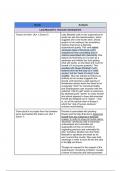
Lady Macbeth’s character development
“Unsex me here” (Act 1 Scene 5) Lady Macbeth calls on the supernatural to
assist her with this transformation, which
suggests she is the fourth witch, whose
speech in her soliloquy has incantatory
rhythms that lend it a distinctly
supernatural quality. This verb rejects
Jacobean ideas of femininity which
impedes her from committing acts of
violence associated with masculinity. She
rejects her femininity as it is seen as a
weakness and inhibits her from getting
what she wants, so she feels she must rid
herself of it to become powerful. This
parallels with Queen Elizabeth I who
believed she had the body of a “weak
woman” but the “heart of a king” to be
credible. She has refused to behave as
dutifully as her society suggests she
should, and becomes a dark parody of
femaleness whose wants her blood to be
unnaturally “thick” for menstrual fertility
and Shakespeare uses inversion with her
maternal “milk for gall” which is poisonous.
By addressing the “spirits” to unsex herself
she almost appears to have dehumanised
herself and stepped out of ‘nature’ – that
is, out of the natural order of things in
which the “milk of human kindness”
nurtures moral feeling.
“Have pluck’d my nipple from his boneless Plucked is associated with plucking
gums and bashed the brains out” (Act 1 flowers and the idea that she is distancing
scene 7) herself from any maternal or feminine
imagery in order to show her brutal nature.
‘Boneless’ reinforces child is extremely
undeveloped and vulnerable yet
supposedly LM has no remorse in
neglecting precious and vulnerable life.
Also ‘boneless’ alludes how she thinks
Macbeth is spineless and weak as he
won’t commit the murder. She uses both
meanings in order to taunt M with the idea
of his fate and future.
Though her request for the support of the
supernatural “murdering ministers” reveals
a sense of insecurity and lacking beneath
Lady Macbeth’s character development
“Unsex me here” (Act 1 Scene 5) Lady Macbeth calls on the supernatural to
assist her with this transformation, which
suggests she is the fourth witch, whose
speech in her soliloquy has incantatory
rhythms that lend it a distinctly
supernatural quality. This verb rejects
Jacobean ideas of femininity which
impedes her from committing acts of
violence associated with masculinity. She
rejects her femininity as it is seen as a
weakness and inhibits her from getting
what she wants, so she feels she must rid
herself of it to become powerful. This
parallels with Queen Elizabeth I who
believed she had the body of a “weak
woman” but the “heart of a king” to be
credible. She has refused to behave as
dutifully as her society suggests she
should, and becomes a dark parody of
femaleness whose wants her blood to be
unnaturally “thick” for menstrual fertility
and Shakespeare uses inversion with her
maternal “milk for gall” which is poisonous.
By addressing the “spirits” to unsex herself
she almost appears to have dehumanised
herself and stepped out of ‘nature’ – that
is, out of the natural order of things in
which the “milk of human kindness”
nurtures moral feeling.
“Have pluck’d my nipple from his boneless Plucked is associated with plucking
gums and bashed the brains out” (Act 1 flowers and the idea that she is distancing
scene 7) herself from any maternal or feminine
imagery in order to show her brutal nature.
‘Boneless’ reinforces child is extremely
undeveloped and vulnerable yet
supposedly LM has no remorse in
neglecting precious and vulnerable life.
Also ‘boneless’ alludes how she thinks
Macbeth is spineless and weak as he
won’t commit the murder. She uses both
meanings in order to taunt M with the idea
of his fate and future.
Though her request for the support of the
supernatural “murdering ministers” reveals
a sense of insecurity and lacking beneath