Syllabus 20: Privilege
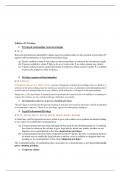
1. Privileged relationships General principle
[F10.1]
Relevant and otherwise admissible evidence may be excluded either on the grounds of privilege (P)
against self-incrimination or legal professional privilege.
(a) Person entitled to claim P may refuse to answer questions or disclose the document sought.
(b) If person entitled to claim P fails to do so or waives the P, no other person may object.
(c) A party seeking to prove a particular matter in relation to which a person claims P, is entitled
to prove the matter by other evidence.
2. Privilege against self-incrimination
[F10.2, F10.5]
Criminal Evidence Act 1898, s.1(2): a person charged in criminal proceedings who is called as a
witness in the proceedings may be asked any question in cross-examination notwithstanding that it
would tend to criminate him as to any offence with which he is charged in the proceedings.
Subject to s.1(2), no witness is bound to answer questions in court if to do so would have a tendency to
expose the witness to any criminal charge, forfeiture or penalty.
➢ Incrimination must be of person claiming privilege
This privilege is restricted to the person claiming it and does not extend to answers to which would tend
to incriminate a spouse. There is no privilege against incriminating strangers.
3. Legal Professionnal Privilege
[F10.17 - F10.18, F10.21, F10.28- F10.29, F10.38, F10.43- F10.44]
A client may, and his legal advisor must, refuse to give oral evidence or to produce documents relating
to two types of confidential communication:
(a) Communication between client and legal adviser made for the dominant purpose of enabling
the client to obtain or the adviser to give legal advice about any matter, whether or not
litigation was contemplated at the time (legal advice privilege).
(b) Communication between client or legal adviser and 3 rd parties, the sole or dominant purpose
of which was to enable the legal adviser to advise or act in relation to litigation that was
pending or in contemplation of the client (litigation privilege).
The evidential burden of establishing that a document or communication is privileged lies on the
party claiming privilege.
➢ Corporate clients
1. Privileged relationships General principle
[F10.1]
Relevant and otherwise admissible evidence may be excluded either on the grounds of privilege (P)
against self-incrimination or legal professional privilege.
(a) Person entitled to claim P may refuse to answer questions or disclose the document sought.
(b) If person entitled to claim P fails to do so or waives the P, no other person may object.
(c) A party seeking to prove a particular matter in relation to which a person claims P, is entitled
to prove the matter by other evidence.
2. Privilege against self-incrimination
[F10.2, F10.5]
Criminal Evidence Act 1898, s.1(2): a person charged in criminal proceedings who is called as a
witness in the proceedings may be asked any question in cross-examination notwithstanding that it
would tend to criminate him as to any offence with which he is charged in the proceedings.
Subject to s.1(2), no witness is bound to answer questions in court if to do so would have a tendency to
expose the witness to any criminal charge, forfeiture or penalty.
➢ Incrimination must be of person claiming privilege
This privilege is restricted to the person claiming it and does not extend to answers to which would tend
to incriminate a spouse. There is no privilege against incriminating strangers.
3. Legal Professionnal Privilege
[F10.17 - F10.18, F10.21, F10.28- F10.29, F10.38, F10.43- F10.44]
A client may, and his legal advisor must, refuse to give oral evidence or to produce documents relating
to two types of confidential communication:
(a) Communication between client and legal adviser made for the dominant purpose of enabling
the client to obtain or the adviser to give legal advice about any matter, whether or not
litigation was contemplated at the time (legal advice privilege).
(b) Communication between client or legal adviser and 3 rd parties, the sole or dominant purpose
of which was to enable the legal adviser to advise or act in relation to litigation that was
pending or in contemplation of the client (litigation privilege).
The evidential burden of establishing that a document or communication is privileged lies on the
party claiming privilege.
➢ Corporate clients