Ethics Revision Notes
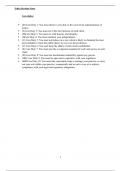
Core duties:
(D) Core Duty 1: You must observe your duty to the court in the administration of
justice.
(I) Core Duty 2: You must act in the best interests of each client.
(H)Core Duty 3: You must act with honesty and integrity.
(I)Core Duty 4: You must maintain your independence.
(C) Core Duty 5: You must not behave in a way which is likely to diminish the trust
and confidence which the public places in you or in the profession.
(C) Core Duty 6: You must keep the affairs of each client confidential.
(S) Core Duty 7: You must provide a competent standard of work and service to each
client.
(D) Core Duty 8: You must not discriminate unlawfully against any person.
(OR) Core Duty 9: You must be open and co-operative with your regulators.
(MP)Core Duty 10: You must take reasonable steps to manage your practice, or carry
out your role within your practice, competently and in such a way as to achieve
compliance with your legal and regulatory obligations.
1
, Ethics Revision Notes
You and the court
1. Making sure that the legal system works properly
Guarantee that the public interest is served by having a robust and transparent legal system.
Key outcome (oC1): The court can trust the information that is given to it, whether by someone
conducting litigation or by an advocate at court.
The interests of lay clients are of course to be protected but only to the extent that this is compatible
with the core duties and with oC1 and oC2.
2. Independence in the interests of justice
a) Factual information
The court will have to take on trust that the information is genuine, and it has no way of testing the
veracity. The advocate has to trust the lay client not to mislead him or her. It is not a function of the
advocate to play private detective and investigate the truthfulness of the instructions he has received
from the lay client, to go behind the client’s back.
b) Disclosure obligations
The advocate cannot knowingly present false evidence nor can the advocate withhold material
evidence.
3. The advocate must not mislead the court
Rule rC3
a) The advocate’s knowledge and belief
Must not mislead the court knowingly or recklessly or attempt to do so.
Take reasonable steps to ensure that the court has before it all relevant decisions and legislative
provisions.
The advocate must not make submissions to the court or any other sort of statement which he knows
are untrue or misleading. Must refuse to do this if client instructs to do this.
Must not ask a witness questions which suggest facts that the advocate knows or is instructed by the
client are false or misleading.
You do not have to believe what your client is telling you is factually true. You must present the
clients case based on his instructions, not on your intuition or belief.
Recklessness means ‘being indifferent to the truth or not caring whether something is true of false
(rC3.1).
b) Respecting confidentiality whilst not misleading the court
The advocate must not breach the clients confidentiality.
If the client refuses to disclose a document, the advocate has no alternative but to withdraw from the
case (gC13).
If the client insists on pleading NG, the defence can put the prosecution to proof. The defence
advocate is not advancing an alternative explanation which he knows to be false. If the advocate was
to suggest that the accused had not committed the offence then this would be actively misleading the
court and constitute a breach.
1
Core duties:
(D) Core Duty 1: You must observe your duty to the court in the administration of
justice.
(I) Core Duty 2: You must act in the best interests of each client.
(H)Core Duty 3: You must act with honesty and integrity.
(I)Core Duty 4: You must maintain your independence.
(C) Core Duty 5: You must not behave in a way which is likely to diminish the trust
and confidence which the public places in you or in the profession.
(C) Core Duty 6: You must keep the affairs of each client confidential.
(S) Core Duty 7: You must provide a competent standard of work and service to each
client.
(D) Core Duty 8: You must not discriminate unlawfully against any person.
(OR) Core Duty 9: You must be open and co-operative with your regulators.
(MP)Core Duty 10: You must take reasonable steps to manage your practice, or carry
out your role within your practice, competently and in such a way as to achieve
compliance with your legal and regulatory obligations.
1
, Ethics Revision Notes
You and the court
1. Making sure that the legal system works properly
Guarantee that the public interest is served by having a robust and transparent legal system.
Key outcome (oC1): The court can trust the information that is given to it, whether by someone
conducting litigation or by an advocate at court.
The interests of lay clients are of course to be protected but only to the extent that this is compatible
with the core duties and with oC1 and oC2.
2. Independence in the interests of justice
a) Factual information
The court will have to take on trust that the information is genuine, and it has no way of testing the
veracity. The advocate has to trust the lay client not to mislead him or her. It is not a function of the
advocate to play private detective and investigate the truthfulness of the instructions he has received
from the lay client, to go behind the client’s back.
b) Disclosure obligations
The advocate cannot knowingly present false evidence nor can the advocate withhold material
evidence.
3. The advocate must not mislead the court
Rule rC3
a) The advocate’s knowledge and belief
Must not mislead the court knowingly or recklessly or attempt to do so.
Take reasonable steps to ensure that the court has before it all relevant decisions and legislative
provisions.
The advocate must not make submissions to the court or any other sort of statement which he knows
are untrue or misleading. Must refuse to do this if client instructs to do this.
Must not ask a witness questions which suggest facts that the advocate knows or is instructed by the
client are false or misleading.
You do not have to believe what your client is telling you is factually true. You must present the
clients case based on his instructions, not on your intuition or belief.
Recklessness means ‘being indifferent to the truth or not caring whether something is true of false
(rC3.1).
b) Respecting confidentiality whilst not misleading the court
The advocate must not breach the clients confidentiality.
If the client refuses to disclose a document, the advocate has no alternative but to withdraw from the
case (gC13).
If the client insists on pleading NG, the defence can put the prosecution to proof. The defence
advocate is not advancing an alternative explanation which he knows to be false. If the advocate was
to suggest that the accused had not committed the offence then this would be actively misleading the
court and constitute a breach.
1