US Constitution
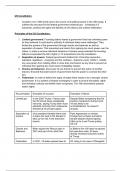
- Contains over 7,000 words and is the source of all political power in the USA today. It
outlines the structure for the federal government (national gov - consisting of 3
branches), protects the rights and liberties of US citizens and outlines federalism.
Principles of the US Constitution:
1. Limited government: Founding fathers feared a government that had unlimited power
as they believed it could lead to authority if individual states were challenged. They
limited the powers of the government through checks and balances as well as
separation of powers. This prevented one branch from gaining too much power over the
others. In order to ensure individual freedoms of citizens were protected the founding
fathers incorporated the bill of rights (1-10 amendment) into the constitution.
2. Separation of powers: Federal government divided into 3 branches (executive -
president, legislature - Congress and the Judiciary - Supreme court). Article 1, forbids
any one person from holding office in more than one branch as any time to prevent an
individual from gaining too much power (Ineligibility clause)
3. Checks and balances: (the power of one branch to prevent the action of another
branch). Ensured that each branch of government had the power to oversee the other
two
4. Federalism: In order to defend the rights of states there needs to be a stronger central
government. It is a system of shared sovereignty in order to ensure that states’ rights
and individual cultures and beliefs were not ignored. The 10th amendment protects
state’s rights.
Key principles Examples of success Examples of failure
Limited gov In the 2020 Trump v Vance case Despite Biden recognising that his
the SC struck down presidential eviction moratorium during Covid-
immunity, saying Trump didn’t have 19 was likely to be
absolute immunity from subpoenas unconstitutional, he issued it
directed at his private papers. anyway
Separation of Vice president Kamala Harris had Paris Agreement on climate
powers to leave her seat in the Senate to change has not been put before
take up her role in the executive senate despite Obama signing
branch USA up for it and Trump pulling
US out
Checks and Biden signed the Rescue plan in In Biden's first 100 days he passed
Balances 2021 and part of the Jobs Plan 64 executive order, 24 were
directly reversed executive orders
of Trump
Federalism In 2021, 19 states passed laws to SC ruling in the case of Obergefell
, restrict voting rights while 25 states v Hodges (2015) legalised same
passed laws to expand voting sex marriage in the whole of USA,
rights. including 13 states which it had
been illegal before this ruling.
The nature of the Constitution
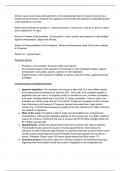
1. Codification: Written on a single document, the Constitution itself is the source of
political power in the USA. The Constitution is judiciable, meaning judges can interpret
actions and laws against the constitution and judge whether or not they are
constitutional.
2. Entrenchment: the document is protected by law and is therefore difficult to amend. The
US constitution protects itself through Article V, which outlines the amendment process.
This is to ensure rapid and quick decisions weren’t made in case of a tyranny.
Enumerated powers - Powers that are explicitly written down in the US constitution, E.g.
Presidential vetoes, making treaties. Implied powers - Not specifically granted in the
constitution but are assumed from the wording of the document, e.g. sign executive
orders, form a cabinet
3. Vagueness of the document: seen through the differences between enumerated and
implied powers. ‘Necessary and proper clause’ - within article 1 that allows Congress to
assume any powers which are necessary for it to be able to carry out enumerated
powers. This clause has been used to extend powers of Congress over time. Vagueness
is important in allowing it to adapt to changing circumstances and remain relevant
4. Bipartisanship: Attempting by the constitution to abolish factions and unite all parties
for the general welfare. The branches were required to cooperate in order to be able to
exercise their power. The different elections and appointments of each branch made it
difficult for one party to control all branches at the same time, this ensured compromise.
Some powers of congress and the amendment process require supermajority, which
require parties to compromise.
- Contains over 7,000 words and is the source of all political power in the USA today. It
outlines the structure for the federal government (national gov - consisting of 3
branches), protects the rights and liberties of US citizens and outlines federalism.
Principles of the US Constitution:
1. Limited government: Founding fathers feared a government that had unlimited power
as they believed it could lead to authority if individual states were challenged. They
limited the powers of the government through checks and balances as well as
separation of powers. This prevented one branch from gaining too much power over the
others. In order to ensure individual freedoms of citizens were protected the founding
fathers incorporated the bill of rights (1-10 amendment) into the constitution.
2. Separation of powers: Federal government divided into 3 branches (executive -
president, legislature - Congress and the Judiciary - Supreme court). Article 1, forbids
any one person from holding office in more than one branch as any time to prevent an
individual from gaining too much power (Ineligibility clause)
3. Checks and balances: (the power of one branch to prevent the action of another
branch). Ensured that each branch of government had the power to oversee the other
two
4. Federalism: In order to defend the rights of states there needs to be a stronger central
government. It is a system of shared sovereignty in order to ensure that states’ rights
and individual cultures and beliefs were not ignored. The 10th amendment protects
state’s rights.
Key principles Examples of success Examples of failure
Limited gov In the 2020 Trump v Vance case Despite Biden recognising that his
the SC struck down presidential eviction moratorium during Covid-
immunity, saying Trump didn’t have 19 was likely to be
absolute immunity from subpoenas unconstitutional, he issued it
directed at his private papers. anyway
Separation of Vice president Kamala Harris had Paris Agreement on climate
powers to leave her seat in the Senate to change has not been put before
take up her role in the executive senate despite Obama signing
branch USA up for it and Trump pulling
US out
Checks and Biden signed the Rescue plan in In Biden's first 100 days he passed
Balances 2021 and part of the Jobs Plan 64 executive order, 24 were
directly reversed executive orders
of Trump
Federalism In 2021, 19 states passed laws to SC ruling in the case of Obergefell
, restrict voting rights while 25 states v Hodges (2015) legalised same
passed laws to expand voting sex marriage in the whole of USA,
rights. including 13 states which it had
been illegal before this ruling.
The nature of the Constitution
1. Codification: Written on a single document, the Constitution itself is the source of
political power in the USA. The Constitution is judiciable, meaning judges can interpret
actions and laws against the constitution and judge whether or not they are
constitutional.
2. Entrenchment: the document is protected by law and is therefore difficult to amend. The
US constitution protects itself through Article V, which outlines the amendment process.
This is to ensure rapid and quick decisions weren’t made in case of a tyranny.
Enumerated powers - Powers that are explicitly written down in the US constitution, E.g.
Presidential vetoes, making treaties. Implied powers - Not specifically granted in the
constitution but are assumed from the wording of the document, e.g. sign executive
orders, form a cabinet
3. Vagueness of the document: seen through the differences between enumerated and
implied powers. ‘Necessary and proper clause’ - within article 1 that allows Congress to
assume any powers which are necessary for it to be able to carry out enumerated
powers. This clause has been used to extend powers of Congress over time. Vagueness
is important in allowing it to adapt to changing circumstances and remain relevant
4. Bipartisanship: Attempting by the constitution to abolish factions and unite all parties
for the general welfare. The branches were required to cooperate in order to be able to
exercise their power. The different elections and appointments of each branch made it
difficult for one party to control all branches at the same time, this ensured compromise.
Some powers of congress and the amendment process require supermajority, which
require parties to compromise.