History of Biology – Lecture 1
07-02-18
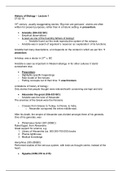
19th century: usually exaggerating stories; ‘Big men are geniuses’, stories are often
written for present purposes, rather than in a historic setting presentism.
Aristotle (384-322 BC):
- Empirical observations
- Is seen as one of the founding fathers of biology!
o Aristotle found out the male reproductive system of the octopus.
- Aristotle was in search of organism’s ‘essence’ as ‘explanation’ of its functions.
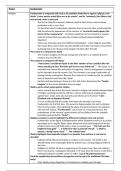
Aristotle had many descriptions, a lot depends on the context in which we put him
presentism.
Imhotep: was a doctor in 27th c. BC
Aristotle is seen as important in Western Biology for other cultures it ‘starts’
somewhere else.
Presentism:
- Highlights specific happenings
- Role model of ‘the heroes’.
- Putting concepts out of their time anachronism.
Limitations of history of biology:
Only stories that people thought were relevant/worth conserving are kept and told.
Alexander the great (356-323 BC):
- Aristotle was the tutor of Alexander
The enemies of the Greek were the Persians.
- Crosses from Greece to Turkey, to Persia, to India.
o Alexander conquered the entire middle-east.
After his death, the empire of Alexander was divided amongst three of his generals.
One of his generals, was
Ptolemaeus Soter (367-283BC):
Ruled Egypt, from Alexandria.
Great support for science, e.g.
1. Library of Alexandria (ca. 500.000-700.000) books
2. Pharos lighthouse
3. Medical knowledge
Herophilus (335-280BC):
Performed studies of the nervous system, with brain as thought centre, instead of the
heart.
Hypatia (±350-370 to 415):
07-02-18
19th century: usually exaggerating stories; ‘Big men are geniuses’, stories are often
written for present purposes, rather than in a historic setting presentism.
Aristotle (384-322 BC):
- Empirical observations
- Is seen as one of the founding fathers of biology!
o Aristotle found out the male reproductive system of the octopus.
- Aristotle was in search of organism’s ‘essence’ as ‘explanation’ of its functions.
Aristotle had many descriptions, a lot depends on the context in which we put him
presentism.
Imhotep: was a doctor in 27th c. BC
Aristotle is seen as important in Western Biology for other cultures it ‘starts’
somewhere else.
Presentism:
- Highlights specific happenings
- Role model of ‘the heroes’.
- Putting concepts out of their time anachronism.
Limitations of history of biology:
Only stories that people thought were relevant/worth conserving are kept and told.
Alexander the great (356-323 BC):
- Aristotle was the tutor of Alexander
The enemies of the Greek were the Persians.
- Crosses from Greece to Turkey, to Persia, to India.
o Alexander conquered the entire middle-east.
After his death, the empire of Alexander was divided amongst three of his generals.
One of his generals, was
Ptolemaeus Soter (367-283BC):
Ruled Egypt, from Alexandria.
Great support for science, e.g.
1. Library of Alexandria (ca. 500.000-700.000) books
2. Pharos lighthouse
3. Medical knowledge
Herophilus (335-280BC):
Performed studies of the nervous system, with brain as thought centre, instead of the
heart.
Hypatia (±350-370 to 415):