AQA Geography Paper 2: Resource Management
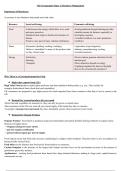
Importance of Resources:
A resource is any substance that people need and value.
Resource Social well-being Economic well-being
Food •Calories provide energy which allow us to work •Food production through farming provides
and enjoy ourselves valuable income for farmers, especially in
•Balanced diets improve health and resistance to developing countries
disease. •A health workforce is a more productive
•Food is a key part of many cultural celebrations workforce
Water •Domestic (drinking, cooking, washing) •Agriculture (crop irrigation),
•Water is ‘embedded’ in many of the products that •Industry (manufacturing, cooling,
we buy-virtual water recreation/tourism)
Energy •Electricity •Power stations generate electricity for the
•Heating national grid
•Transport •Most industries depend on energy
•Lighting lengthens the hours of daylight
that can be economically productive
Why There is a Growing Demand for Food
➔ High-value exports from LICs
High Value Food products make higher profit per unit than traditional bulk produce e.g. rice. They include for
example, horticultural foods (fresh fruit and vegetables).
UK consumers are prepared to pay higher prices for foods imported from these countries when they’re not in season in the
UK.
➔ Demand for seasonal produce all-year round
•Most fruit and vegetables are seasonal i.e. they can only be grown at certain times.
•But consumers in the UK now want all-year round supply of the foods they like to consume.
•As people’s incomes have increased, they have demanded greater choice and more exotic foods
➔ Demand for Organic Produce
Organic Produce: Food which is produced using environmentally and animal friendly farming methods on organic farms.
Reasons for higher prices:
→ Organic food grows more slowly.
→ pay for organic certification
→ greater labour inputs per unit of output.
Food imports mean that food miles increase contributing to a higher carbon footprint. Therefore there is now an emphasis on
buying locally sourced food.
Food miles are the distance that food travels from producer to consumer.
Carbon footprint is the measure of the impact that human activities have on the environment in terms of the amount of
greenhouse gases they produce.
Agribusiness – treating food production from farms like a large industrial business, making it a large scale, capital-intensive
commercial activity.
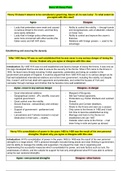
, Response Social impacts + - Economic impacts + - Environmental impacts + -
Buying locally + ‘Growing your own’ = + Produce bought from local + Red Tractor label
sourced food healthy lifestyle/ exercise; Red farmers benefitting the local improves environmental
Tractor label reassures economy. standards; reduced carbon
consumers about standards. - Farmers in LICs lose out. footprint/low food miles.
– Less variety of food - However, if monitoring
and regulation fail, Red
Tractor means nothing
Agribusiness + More food available; more - Mechanisation reduces - Removal of hedgerow
affordable food available labour needed on the farm; habitats; use of chemical
capital-intensive; dominance fertilisers and pesticides.
of large farming corporations
damages small-scale farming.
+ Increased yields, increased
profits; easier to make deals
with supermarkets.
Changing Demand for Water
The increases in demand in the UK are the result of:
→ Population growth
→ People showering and washing clothes more frequently
→ Farming systems such as greenhouses need more water for irrigation
→ More use of washing machines, dishwashers, power washers, hosepipes I
→ Increasing use of water by industry and energy generation
➔ Causes of Water Pollution
→ Chemicals such as pesticides and fertilisers run off from farming land. This speeds up the growth of algae and leads to
eutrophication, which means there is insufficient oxygen causing other organisms to die.
→ Untreated waste can poision wildlife. Sometimes the toxins can be transferred if they eat the fish which could cause
cancer.
→ Sewage containing bacteria may be pumped into rivers. Microbacteria in the sewage can cause the spread of infectious
diseases in aquatic life.
➔ Managing Water Quality
Management Scheme Advantages Disadvantages
Waste water treatment – local treatment plants + The technology has existed for - Local people might not want a
remove 1) large solid waste through sieves, 2) over 100 years and has been waste water works on their
smaller waste/sludge that deposits in settlement refined; environmentally friendly doorstep.
tanks and is scraped away, 3) other biological (dried solid waste incinerated to
material through decomposition (bacteria and create energy for the plant);
dissolved oxygen introduced), to leave clean recycles water within 4 hours!
water to return to the taps.
There are strict water quality laws such as the Clean Water Act, 1989 and Water Industry Act, 1991 which:
→ Restrict the types and amounts of discharge from industry and domestic systems
→ Has standards for wildlife health
Investment in new pipes and sewage systems to reduce leaks
Importance of Resources:
A resource is any substance that people need and value.
Resource Social well-being Economic well-being
Food •Calories provide energy which allow us to work •Food production through farming provides
and enjoy ourselves valuable income for farmers, especially in
•Balanced diets improve health and resistance to developing countries
disease. •A health workforce is a more productive
•Food is a key part of many cultural celebrations workforce
Water •Domestic (drinking, cooking, washing) •Agriculture (crop irrigation),
•Water is ‘embedded’ in many of the products that •Industry (manufacturing, cooling,
we buy-virtual water recreation/tourism)
Energy •Electricity •Power stations generate electricity for the
•Heating national grid
•Transport •Most industries depend on energy
•Lighting lengthens the hours of daylight
that can be economically productive
Why There is a Growing Demand for Food
➔ High-value exports from LICs
High Value Food products make higher profit per unit than traditional bulk produce e.g. rice. They include for
example, horticultural foods (fresh fruit and vegetables).
UK consumers are prepared to pay higher prices for foods imported from these countries when they’re not in season in the
UK.
➔ Demand for seasonal produce all-year round
•Most fruit and vegetables are seasonal i.e. they can only be grown at certain times.
•But consumers in the UK now want all-year round supply of the foods they like to consume.
•As people’s incomes have increased, they have demanded greater choice and more exotic foods
➔ Demand for Organic Produce
Organic Produce: Food which is produced using environmentally and animal friendly farming methods on organic farms.
Reasons for higher prices:
→ Organic food grows more slowly.
→ pay for organic certification
→ greater labour inputs per unit of output.
Food imports mean that food miles increase contributing to a higher carbon footprint. Therefore there is now an emphasis on
buying locally sourced food.
Food miles are the distance that food travels from producer to consumer.
Carbon footprint is the measure of the impact that human activities have on the environment in terms of the amount of
greenhouse gases they produce.
Agribusiness – treating food production from farms like a large industrial business, making it a large scale, capital-intensive
commercial activity.
, Response Social impacts + - Economic impacts + - Environmental impacts + -
Buying locally + ‘Growing your own’ = + Produce bought from local + Red Tractor label
sourced food healthy lifestyle/ exercise; Red farmers benefitting the local improves environmental
Tractor label reassures economy. standards; reduced carbon
consumers about standards. - Farmers in LICs lose out. footprint/low food miles.
– Less variety of food - However, if monitoring
and regulation fail, Red
Tractor means nothing
Agribusiness + More food available; more - Mechanisation reduces - Removal of hedgerow
affordable food available labour needed on the farm; habitats; use of chemical
capital-intensive; dominance fertilisers and pesticides.
of large farming corporations
damages small-scale farming.
+ Increased yields, increased
profits; easier to make deals
with supermarkets.
Changing Demand for Water
The increases in demand in the UK are the result of:
→ Population growth
→ People showering and washing clothes more frequently
→ Farming systems such as greenhouses need more water for irrigation
→ More use of washing machines, dishwashers, power washers, hosepipes I
→ Increasing use of water by industry and energy generation
➔ Causes of Water Pollution
→ Chemicals such as pesticides and fertilisers run off from farming land. This speeds up the growth of algae and leads to
eutrophication, which means there is insufficient oxygen causing other organisms to die.
→ Untreated waste can poision wildlife. Sometimes the toxins can be transferred if they eat the fish which could cause
cancer.
→ Sewage containing bacteria may be pumped into rivers. Microbacteria in the sewage can cause the spread of infectious
diseases in aquatic life.
➔ Managing Water Quality
Management Scheme Advantages Disadvantages
Waste water treatment – local treatment plants + The technology has existed for - Local people might not want a
remove 1) large solid waste through sieves, 2) over 100 years and has been waste water works on their
smaller waste/sludge that deposits in settlement refined; environmentally friendly doorstep.
tanks and is scraped away, 3) other biological (dried solid waste incinerated to
material through decomposition (bacteria and create energy for the plant);
dissolved oxygen introduced), to leave clean recycles water within 4 hours!
water to return to the taps.
There are strict water quality laws such as the Clean Water Act, 1989 and Water Industry Act, 1991 which:
→ Restrict the types and amounts of discharge from industry and domestic systems
→ Has standards for wildlife health
Investment in new pipes and sewage systems to reduce leaks