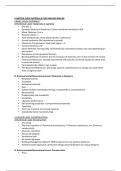
CHAPTER: NEW MATERIALS FOR INDOOR SPACES
I.BASIC LEVEL MATERIALS
A.Technical Level: materials or systems
• Density: ρ
• Dynamic Module of Elasticity: E (also sometimes denoted as Ed)
• Shear Modulus: G or μ
• Poisson's Ratio: ν
• Heat Conductivity: Umax [heat transfer coefficient]
• Sound Insulation: Rw [resistance to sound]
• Maximum Compression: total load (sigma - σ)
• Vickers Hardness: HV
• Shore Stiffness: Not typically represented by a standard symbol; may vary depending on
the context
• Resistance to Compression/Tension
• Bending Stiffness: EI (where E is the modulus of elasticity and I is the moment of inertia)
• Chemical Reaction/s: Usually represented with specific chemical equations rather than
a universal symbol
• Permeability (Air, Water): kair, kwater
• Fire Reaction/Resistance: Generally, specific classifications or ratings are used rather
than a single symbol
B. Environmental/Economical Level: Materials or Systems
• Volatility/toxicity
• Durability
• Ecological (natural)
• Size
• Carbon footprint (embodied energy, transportation, assemblation)
• Recyclability
• Disassembly and reusability
• Scalability
• Lifecycle performance
• Self cleaning properties -componentized materials
• Flexibility
• Price raw material, processed material
• Availability (local manufacturing)
II.HIGHER LEVEL CONSTRUCTION
A.Technical Level: Construction
• Fire rating
• Thermal insulation U (Thermal transmittance), R (Thermal resistance), or λ (Thermal
conductivity)
• Acoustic insulation
• Structural integrity
• Ventilation flow
• Air /water tightness
• Building Management System, BMS (respond to local weather patterns)
• Systems based approach / generative design (standardisation to unique designs)
B. Environmental/Economical Level: Construction
• Price
, • CO2 emissions
• Waste management
• Energy management
• Maintenance
III. HIGHEST LEEL CONSTRUCTION: PROJECT
A.Technical Level (project)
• Maintenance
• Operationality
• Flexibility
• Scalability
• Collaboration with Stakeholder
B. Environmental/economical level: Project
• Investment cost
• Return on investment
• Ownership
• Sustainable
• Regenerative
• Collaborative approach (architects, engineers and contractors
C. Societal Level: Project
• Impact on community / state
• Creation job opportunities (Labour market)
• Attraction investors
• Benefits to public
• Iconc architecture attracting visitors for remote locations
, New PLASTICS
Biodegradable vs. compostable vs. oxo-degradable plastics
Biodegradable compostable oxo-degradable
nearly every material Compostable plastics = subset ≠ bioplastic or biodegradable
of biodegradable plastics plastic
length of the biodegradation defined by standard conditions = but a conventional plastic
process: highly dependent on + timeframe under which they mixed with an additive in order
environmental parameters will biodegrade to imitate biodegradation
humidity + temperature
All compostable plastics = quickly fragment into smaller
which is why claiming that a biodegradable and smaller pieces
plastic is “biodegradable” not all biodegradable = microplastics
without any further context (i.e., plastics = compostable. • don’t break down at the
in what timeframe and under molecular or polymer
what environmental conditions) level like biodegradable
is misleading to consumers and compostable
plastics
The resulting microplastics are
left in the environment
indefinitely eventually fully
break down
I.BASIC LEVEL MATERIALS
A.Technical Level: materials or systems
• Density: ρ
• Dynamic Module of Elasticity: E (also sometimes denoted as Ed)
• Shear Modulus: G or μ
• Poisson's Ratio: ν
• Heat Conductivity: Umax [heat transfer coefficient]
• Sound Insulation: Rw [resistance to sound]
• Maximum Compression: total load (sigma - σ)
• Vickers Hardness: HV
• Shore Stiffness: Not typically represented by a standard symbol; may vary depending on
the context
• Resistance to Compression/Tension
• Bending Stiffness: EI (where E is the modulus of elasticity and I is the moment of inertia)
• Chemical Reaction/s: Usually represented with specific chemical equations rather than
a universal symbol
• Permeability (Air, Water): kair, kwater
• Fire Reaction/Resistance: Generally, specific classifications or ratings are used rather
than a single symbol
B. Environmental/Economical Level: Materials or Systems
• Volatility/toxicity
• Durability
• Ecological (natural)
• Size
• Carbon footprint (embodied energy, transportation, assemblation)
• Recyclability
• Disassembly and reusability
• Scalability
• Lifecycle performance
• Self cleaning properties -componentized materials
• Flexibility
• Price raw material, processed material
• Availability (local manufacturing)
II.HIGHER LEVEL CONSTRUCTION
A.Technical Level: Construction
• Fire rating
• Thermal insulation U (Thermal transmittance), R (Thermal resistance), or λ (Thermal
conductivity)
• Acoustic insulation
• Structural integrity
• Ventilation flow
• Air /water tightness
• Building Management System, BMS (respond to local weather patterns)
• Systems based approach / generative design (standardisation to unique designs)
B. Environmental/Economical Level: Construction
• Price
, • CO2 emissions
• Waste management
• Energy management
• Maintenance
III. HIGHEST LEEL CONSTRUCTION: PROJECT
A.Technical Level (project)
• Maintenance
• Operationality
• Flexibility
• Scalability
• Collaboration with Stakeholder
B. Environmental/economical level: Project
• Investment cost
• Return on investment
• Ownership
• Sustainable
• Regenerative
• Collaborative approach (architects, engineers and contractors
C. Societal Level: Project
• Impact on community / state
• Creation job opportunities (Labour market)
• Attraction investors
• Benefits to public
• Iconc architecture attracting visitors for remote locations
, New PLASTICS
Biodegradable vs. compostable vs. oxo-degradable plastics
Biodegradable compostable oxo-degradable
nearly every material Compostable plastics = subset ≠ bioplastic or biodegradable
of biodegradable plastics plastic
length of the biodegradation defined by standard conditions = but a conventional plastic
process: highly dependent on + timeframe under which they mixed with an additive in order
environmental parameters will biodegrade to imitate biodegradation
humidity + temperature
All compostable plastics = quickly fragment into smaller
which is why claiming that a biodegradable and smaller pieces
plastic is “biodegradable” not all biodegradable = microplastics
without any further context (i.e., plastics = compostable. • don’t break down at the
in what timeframe and under molecular or polymer
what environmental conditions) level like biodegradable
is misleading to consumers and compostable
plastics
The resulting microplastics are
left in the environment
indefinitely eventually fully
break down