Saturday, 2 November 2019
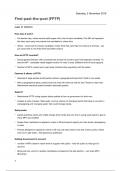
First-past-the-post (FPTP)
Law in Action
How does it work?:
- On election day, voters receive ballot paper with a list of each candidate. One MP will represent
the area, each party only stands one candidate to chose from
- Voters - cross next to chosen candidate. If they think that cand has low chance of winning - can
put cross next to one they think has better chance
How are FPTP counted?:
- During general election, 650 constituencies across the country each hold separate contests. To
become MP - candidate needs largest number of votes in area. (di erent level of local support).
- Number of MP’s a party has in parl rarely matches their popularity with the public
Features & e ects of FPTP:
- Generate 2 large parties (small parties without a geographical base nd it hard to win seats).
- With a geographical base, parties what are small UK-wide can still do well. Tends to mean that
Westminster electoral system bene ts nationalist parties.
Support:
- Westminster FPTP voting system allows parties to form a government on their own.
- Creates 2 sorts of areas: ‘Safe seats’ wot low chance of changing hands that there is no point in
campaigning and ‘swinging seats’ that could change hands.
Swing seats:
- parties prioritise voters who might change their minds and who live In swing seats (want to get as
many MP’s as possible)
- Design their manifestos to appeal to voters in SS and spend majority ion their funds campaigning
in them
- Policies designed to appeal to voters in SS may not help voters int he rest of the country. Voters
who live in safe seats = feel ignored by politicians
Holding Government to account:
- number of MP’s doesn’t match level of support with public - hard for public to hold govt to
account
- More pole can vote for a parties candidates compared to the last election - can looks MP’s
(&reverse)
1
ff fi fffi
First-past-the-post (FPTP)
Law in Action
How does it work?:
- On election day, voters receive ballot paper with a list of each candidate. One MP will represent
the area, each party only stands one candidate to chose from
- Voters - cross next to chosen candidate. If they think that cand has low chance of winning - can
put cross next to one they think has better chance
How are FPTP counted?:
- During general election, 650 constituencies across the country each hold separate contests. To
become MP - candidate needs largest number of votes in area. (di erent level of local support).
- Number of MP’s a party has in parl rarely matches their popularity with the public
Features & e ects of FPTP:
- Generate 2 large parties (small parties without a geographical base nd it hard to win seats).
- With a geographical base, parties what are small UK-wide can still do well. Tends to mean that
Westminster electoral system bene ts nationalist parties.
Support:
- Westminster FPTP voting system allows parties to form a government on their own.
- Creates 2 sorts of areas: ‘Safe seats’ wot low chance of changing hands that there is no point in
campaigning and ‘swinging seats’ that could change hands.
Swing seats:
- parties prioritise voters who might change their minds and who live In swing seats (want to get as
many MP’s as possible)
- Design their manifestos to appeal to voters in SS and spend majority ion their funds campaigning
in them
- Policies designed to appeal to voters in SS may not help voters int he rest of the country. Voters
who live in safe seats = feel ignored by politicians
Holding Government to account:
- number of MP’s doesn’t match level of support with public - hard for public to hold govt to
account
- More pole can vote for a parties candidates compared to the last election - can looks MP’s
(&reverse)
1
ff fi fffi