Tuesday, 8 October 2019
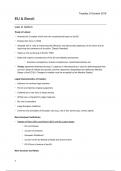
EU & Brexit
Law in Action
Treaty of Lisbon:
- Amends the 2 treaties which form the constitutional basis on the EU
- Entered into force 1/12/09
- Adopted with a ‘view to enhancing the e ciency and democratic legitimacy of the Union and to
improving the coherence of its action’ [Treaty Preamble]
- Treaty on the suctioning of the EU-TFEU
- Deals with explicit competences of the EU and detailed procedures;
- Exclusive competence, shared competences, coordinated policies etc.
- (Treaty: agreement between/among 2+ subjects of international law. Used to de ne/regulate their
common areas of interest and pursue common objectives. Negotiated and rati ed by Member
States of the EC/EU. Changes in treaties must be accepted by the Member States).
Legal Characteristics of treaties:
- in uence of continual legal systems
- French and German original supporters
- Codi ed law in the form of treaty articles
- Written law; compared to judge-made law
- No rule of precedent
- Legal European traditions
- Common law principles of European Law (e.g. rule of law, democracy, human rights)
New European Institutions:
- Treaties of Paris (1951) and Rome (1957) until the Lisbon treaty:
- EU commission
- Council of ministers
- European Parliament
- Council of the EU (Heads of State and Government)
- ECJ/Court of justice of the EU
New structure and Rules:
1
fl fi
ffi fi fi
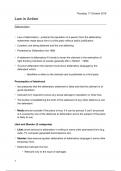
EU & Brexit
Law in Action
Treaty of Lisbon:
- Amends the 2 treaties which form the constitutional basis on the EU
- Entered into force 1/12/09
- Adopted with a ‘view to enhancing the e ciency and democratic legitimacy of the Union and to
improving the coherence of its action’ [Treaty Preamble]
- Treaty on the suctioning of the EU-TFEU
- Deals with explicit competences of the EU and detailed procedures;
- Exclusive competence, shared competences, coordinated policies etc.
- (Treaty: agreement between/among 2+ subjects of international law. Used to de ne/regulate their
common areas of interest and pursue common objectives. Negotiated and rati ed by Member
States of the EC/EU. Changes in treaties must be accepted by the Member States).
Legal Characteristics of treaties:
- in uence of continual legal systems
- French and German original supporters
- Codi ed law in the form of treaty articles
- Written law; compared to judge-made law
- No rule of precedent
- Legal European traditions
- Common law principles of European Law (e.g. rule of law, democracy, human rights)
New European Institutions:
- Treaties of Paris (1951) and Rome (1957) until the Lisbon treaty:
- EU commission
- Council of ministers
- European Parliament
- Council of the EU (Heads of State and Government)
- ECJ/Court of justice of the EU
New structure and Rules:
1
fl fi
ffi fi fi