OBJECTIVES:
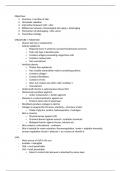
1. Understand importance of air quality
2. Aetiology of COPD (cigarette smoke)
3. Pathological features of COPD and emphysema
4. Understand how pathology impacts lung function
5. Understand accelerated aging hypothesis
LUNG STRUCTURE + FUNCTION:
- Conduction region
o Trachea bronchioles
- Gas exchange region
o Large surface area (100m2)
o Thin cross section (0.2uM)
- Control ventilation
- 5-8 L/min of air flow at rest
o 7000-12,000 L of air per day
- Peak capacity and function are reached at age 25 (approx.)
- Begin to lose lung function at age 30 (approx.)
AIR QUALITY:
- Lung is exposed to:
o Atmospheric gases = oxygen, nitrogen, CO2, water vapour
o Trace gases = NO2, SO2, CO, VOCs
o Viable particles = bacteria, viruses, fungi
o Non-viable particles = chemical mists, fumes, dust
- Losing lung function earlier than 30 has a large effect on function later in life
- Ex. Children in California who lived near the motorway had reduced lung growth +
function compared to children who didn’t live near motorways (Mudway et al, 2019)
- Ex. Exposure to air pollution during pregnancy in some mothers in Switzerland
negatively affected lung function in their new-borns (Latzin et al, 2009)
- Ex. Exposure to air pollution for adults accelerates lung function loss compared to the
normal trajectory for lung function loss (Downs et al, 2007)
Learn details about one of these studies so have something to refer to – maybe last one
- Smoking is known to be the largest contributor to declining lung function
- Fletcher Curve is a graph that depicts the decline in function at different ages
depending on smoking cessation
COPD AETIOLOGY:
- COPD = chronic obstructive pulmonary disease
- Progressive disease that limits air flow + is irreversible
1. Understand importance of air quality
2. Aetiology of COPD (cigarette smoke)
3. Pathological features of COPD and emphysema
4. Understand how pathology impacts lung function
5. Understand accelerated aging hypothesis
LUNG STRUCTURE + FUNCTION:
- Conduction region
o Trachea bronchioles
- Gas exchange region
o Large surface area (100m2)
o Thin cross section (0.2uM)
- Control ventilation
- 5-8 L/min of air flow at rest
o 7000-12,000 L of air per day
- Peak capacity and function are reached at age 25 (approx.)
- Begin to lose lung function at age 30 (approx.)
AIR QUALITY:
- Lung is exposed to:
o Atmospheric gases = oxygen, nitrogen, CO2, water vapour
o Trace gases = NO2, SO2, CO, VOCs
o Viable particles = bacteria, viruses, fungi
o Non-viable particles = chemical mists, fumes, dust
- Losing lung function earlier than 30 has a large effect on function later in life
- Ex. Children in California who lived near the motorway had reduced lung growth +
function compared to children who didn’t live near motorways (Mudway et al, 2019)
- Ex. Exposure to air pollution during pregnancy in some mothers in Switzerland
negatively affected lung function in their new-borns (Latzin et al, 2009)
- Ex. Exposure to air pollution for adults accelerates lung function loss compared to the
normal trajectory for lung function loss (Downs et al, 2007)
Learn details about one of these studies so have something to refer to – maybe last one
- Smoking is known to be the largest contributor to declining lung function
- Fletcher Curve is a graph that depicts the decline in function at different ages
depending on smoking cessation
COPD AETIOLOGY:
- COPD = chronic obstructive pulmonary disease
- Progressive disease that limits air flow + is irreversible