IDENTIFICATION EVIDENCE – REVISION NOTES
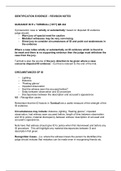
GUIDANCE IN R v TURNBULL [1977] QB 224
If prosecution case is ‘wholly or substantially’ based on disputed ID evidence
judge should:
- Warn jury of special need for caution
- Mistaken witnesses may be very convincing
- Direct jury to consider circumstances of ID and point out weaknesses in
the evidence
Where a case relies wholly or substantially on ID evidence which is found to
be weak and there is no supporting evidence then the judge must withdraw the
case from the jury.
Turnbull is also the source of the jury direction to be given where a case
concerns disputed ID evidence – but that is relevant to the end of the trial.
CIRCUMSTANCES OF ID
- Lighting
- Distance
- ‘Fleeting glance’
- Impeded observation
- Had the witness seen the accused before?
- Delay between observation and ID procedure
- Discrepancies between the description and accused’s appearance
NB – Recognition cases
Remember that the ID factors in Turnbull are a useful measure of the strength of the
ID evidence.
Circumstances may include: distance, lighting, “fleeting glance”, impeded
observation, had witness seen accused before, length of time between observation
and ID to police, material discrepancy between witness’ description of accused and
accused’s appearance.
Note here that witness should give ID to police when first interviewed and before any
ID procedure. This will highlight any material discrepancies between D and
description first given.
Recognition Cases - (i.e. where the witness knows the person he identifies) the
judge should indicate that mistakes can be made even in recognising friends etc.
GUIDANCE IN R v TURNBULL [1977] QB 224
If prosecution case is ‘wholly or substantially’ based on disputed ID evidence
judge should:
- Warn jury of special need for caution
- Mistaken witnesses may be very convincing
- Direct jury to consider circumstances of ID and point out weaknesses in
the evidence
Where a case relies wholly or substantially on ID evidence which is found to
be weak and there is no supporting evidence then the judge must withdraw the
case from the jury.
Turnbull is also the source of the jury direction to be given where a case
concerns disputed ID evidence – but that is relevant to the end of the trial.
CIRCUMSTANCES OF ID
- Lighting
- Distance
- ‘Fleeting glance’
- Impeded observation
- Had the witness seen the accused before?
- Delay between observation and ID procedure
- Discrepancies between the description and accused’s appearance
NB – Recognition cases
Remember that the ID factors in Turnbull are a useful measure of the strength of the
ID evidence.
Circumstances may include: distance, lighting, “fleeting glance”, impeded
observation, had witness seen accused before, length of time between observation
and ID to police, material discrepancy between witness’ description of accused and
accused’s appearance.
Note here that witness should give ID to police when first interviewed and before any
ID procedure. This will highlight any material discrepancies between D and
description first given.
Recognition Cases - (i.e. where the witness knows the person he identifies) the
judge should indicate that mistakes can be made even in recognising friends etc.