C9 Chemistry of the
Atmosphere
Quite a wafflely subject you don’t need to remember EVERY single thing
The Evolution Of The Atmosphere
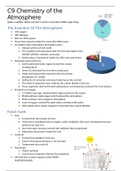
21% oxygen
78% Nitrogen
Rest are other gasses
These have stayed constant for some 200 million years
Formation of the atmosphere (first billion years)
1. Volcanic activity all over earth
2. The eruptions released gasses that form the atmosphere (CO2,
WATER VAPOUR, methane, ammonia)
3. Earths atmos. Consisted of mainly CO2 (like mars and Venus)
Removing some of the CO2
1. Earth cooled and water vapour turned into oceans
(condensation)
2. Some CO2 dissolved into it to form a weak acid
3. Weak acid reacted with minerals in the sea to form
precipitates (C1 I think)
4. Sediments of carbonate rock were locked up on the sea bed.
5. The shells of organisms were made by the carbon dioxide in the sea.
6. These organisms died and formed sedimentary rock limestone (removed CO 2 from atmos.)
Production of oxygen
1. 2.7 billion years ago, photosynthetic algae evolved in the oceans
2. Photosynthesis made oxygen which entered the atmosphere
3. Plants evolved, more oxygen in atmosphere
4. Level of oxygen reached the point where animals could evolve
5. When plants died, carbon trapped in fossil fuels (less carbon dioxide)
Fossil Fuels
Coal
1. Formed from the remains of trees
2. If they die in marshland (lack of oxygen, acidic conditions) they won’t decompose because
bacteria can’t get to it
3. Over time plant remains covered with sediment then compressed
4. High temp and pressure makes the coal
Crude oil
1. Formed from plankton in the sea
2. Doesn’t decompose because o2 isn’t present
3. Compressed into crude oil
Natural gas
1. Mainly methane
2. Found near oil deposits (formed from plankton)
All fossil fuels contain trapped carbon FROM
PHOTOSYNTHESIS
Atmosphere
Quite a wafflely subject you don’t need to remember EVERY single thing
The Evolution Of The Atmosphere
21% oxygen
78% Nitrogen
Rest are other gasses
These have stayed constant for some 200 million years
Formation of the atmosphere (first billion years)
1. Volcanic activity all over earth
2. The eruptions released gasses that form the atmosphere (CO2,
WATER VAPOUR, methane, ammonia)
3. Earths atmos. Consisted of mainly CO2 (like mars and Venus)
Removing some of the CO2
1. Earth cooled and water vapour turned into oceans
(condensation)
2. Some CO2 dissolved into it to form a weak acid
3. Weak acid reacted with minerals in the sea to form
precipitates (C1 I think)
4. Sediments of carbonate rock were locked up on the sea bed.
5. The shells of organisms were made by the carbon dioxide in the sea.
6. These organisms died and formed sedimentary rock limestone (removed CO 2 from atmos.)
Production of oxygen
1. 2.7 billion years ago, photosynthetic algae evolved in the oceans
2. Photosynthesis made oxygen which entered the atmosphere
3. Plants evolved, more oxygen in atmosphere
4. Level of oxygen reached the point where animals could evolve
5. When plants died, carbon trapped in fossil fuels (less carbon dioxide)
Fossil Fuels
Coal
1. Formed from the remains of trees
2. If they die in marshland (lack of oxygen, acidic conditions) they won’t decompose because
bacteria can’t get to it
3. Over time plant remains covered with sediment then compressed
4. High temp and pressure makes the coal
Crude oil
1. Formed from plankton in the sea
2. Doesn’t decompose because o2 isn’t present
3. Compressed into crude oil
Natural gas
1. Mainly methane
2. Found near oil deposits (formed from plankton)
All fossil fuels contain trapped carbon FROM
PHOTOSYNTHESIS