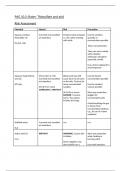
PAG 10.2: Rates- Thiosulfate and acid
Risk Assessment
Chemical Hazard Risk Precaution
Aqueous sodium Currently not classified Produces toxic products Use the smallest
thiosulfate (1) as hazardous i.e. SO2 when reacting quantity or
with acids concentration possible
Na2S2O3 (aq)
Wear eye protection
Take care not to inhale
sulfur dioxide;
asthmatics should be
especially careful
Use a fume cupboard to
avoid exposure
Aqueous hydrochloric (if less than 2.7 M) Dilute acid may still Use the lowest
acid (2) Currently not classified cause harm to the eyes concentration possible
as hazardous or the skin. Treat as for
HCl (aq) more concentrated Use the smallest
(if 6.8 M or more) samples. volume possible
CORROSIVE & IRRITANT
(if 6.8 M or more) Wear eye protection;
DANGER. It causes goggles for
burns. The vapour concentrated acids
irritates the lungs.
Avoid breathing the gas
or fumes from
concentrated solutions,
e.g., by use of a fume
cupboard
Distilled water Currently not classified n/a n/a
as hazardous
H2O
Sulfur solid (3) IRRITANT WARNING: Causes skin Wear eye protection
irritation. when heating or
S (s) burning sulfur
Some suppliers may
also classify it as a Use small amounts
, flammable solid. Under
the Explosives Avoid breathing fumes
Regulations it is illegal of sulfur dioxide, for
to make mixtures with example use a fume
potassium chlorate(V) cupboard or prevent
or other chlorates, sulfur vapour from
without the prior igniting by using a
approval of the Health mineral wool plug in the
& Safety Executive. mouth of a test tube.
Sulfur burns to form
sulfur dioxide gas
(TOXIC) (see CLEAPSS
Student Safety Sheet
52)
Asthmatics are
particularly vulnerable.
When melting sulfur or
heating it, for example
with iron, insert a plug
of mineral wool in the
mouth of the test tube
to prevent sulfur
vapour escaping and
igniting
Sulfur dioxide gas (4) CORROSIVE & TOXIC DANGER: causes severe If preparing the gas in
skin burns and eye test-tube reactions, use
SO2 (g) damage; toxic if inhaled the smallest amounts
possible
Effects of exposure by
inhalation may not be Wear eye protection
immediately apparent
and can develop or Take steps to prevent
increase over time suck back of water, e.g.
by the use of Bunsen
Inhalation by those with valves
known breathing
difficulties, eg asthma, Use a fume cupboard
may exacerbate such for anything larger than
pre-existing conditions test tube amounts of
gas; ensure good
Adverse health effects laboratory ventilation
may be apparent even and quickly dispose of
at very low levels, ~ 0.3 solutions containing
Risk Assessment
Chemical Hazard Risk Precaution
Aqueous sodium Currently not classified Produces toxic products Use the smallest
thiosulfate (1) as hazardous i.e. SO2 when reacting quantity or
with acids concentration possible
Na2S2O3 (aq)
Wear eye protection
Take care not to inhale
sulfur dioxide;
asthmatics should be
especially careful
Use a fume cupboard to
avoid exposure
Aqueous hydrochloric (if less than 2.7 M) Dilute acid may still Use the lowest
acid (2) Currently not classified cause harm to the eyes concentration possible
as hazardous or the skin. Treat as for
HCl (aq) more concentrated Use the smallest
(if 6.8 M or more) samples. volume possible
CORROSIVE & IRRITANT
(if 6.8 M or more) Wear eye protection;
DANGER. It causes goggles for
burns. The vapour concentrated acids
irritates the lungs.
Avoid breathing the gas
or fumes from
concentrated solutions,
e.g., by use of a fume
cupboard
Distilled water Currently not classified n/a n/a
as hazardous
H2O
Sulfur solid (3) IRRITANT WARNING: Causes skin Wear eye protection
irritation. when heating or
S (s) burning sulfur
Some suppliers may
also classify it as a Use small amounts
, flammable solid. Under
the Explosives Avoid breathing fumes
Regulations it is illegal of sulfur dioxide, for
to make mixtures with example use a fume
potassium chlorate(V) cupboard or prevent
or other chlorates, sulfur vapour from
without the prior igniting by using a
approval of the Health mineral wool plug in the
& Safety Executive. mouth of a test tube.
Sulfur burns to form
sulfur dioxide gas
(TOXIC) (see CLEAPSS
Student Safety Sheet
52)
Asthmatics are
particularly vulnerable.
When melting sulfur or
heating it, for example
with iron, insert a plug
of mineral wool in the
mouth of the test tube
to prevent sulfur
vapour escaping and
igniting
Sulfur dioxide gas (4) CORROSIVE & TOXIC DANGER: causes severe If preparing the gas in
skin burns and eye test-tube reactions, use
SO2 (g) damage; toxic if inhaled the smallest amounts
possible
Effects of exposure by
inhalation may not be Wear eye protection
immediately apparent
and can develop or Take steps to prevent
increase over time suck back of water, e.g.
by the use of Bunsen
Inhalation by those with valves
known breathing
difficulties, eg asthma, Use a fume cupboard
may exacerbate such for anything larger than
pre-existing conditions test tube amounts of
gas; ensure good
Adverse health effects laboratory ventilation
may be apparent even and quickly dispose of
at very low levels, ~ 0.3 solutions containing