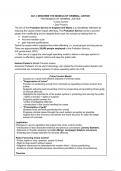
AC1.3 DESCRIBE THE MODELS OF CRIMINAL JUSTICE
TWO MODELS OF CRIMINAL JUSTICE
• Crime Control
• Due Process
The aim of the Probation Service in England and Wales is to rehabilitate offenders by
reducing the causes which impact offending. The Probation Service works to prevent
people from reoffending and to integrate them back into society by helping them to:
● locate housing
● find and maintain a job
● gain required qualifications
Tackle the issues which impacted their initial offending, i.e. social groups and drug abuse.
There are approximately 28,000 people employed in the Probation Service.
(UK government, 2021).
→ Their aim is to apply the new target operating model to deliver a stronger system to
prevent re-offending, support victims and keep the public safe.
Herbert Packer's Model Criminal Justice:
American Professor of Law and Criminology, who styled the Criminal Justice System and
constructed two competing systems of valves operating within the CJS.
Crime Control Model
- focuses on a quick and efficient disposal of criminal cases.
→ "Suppression of crime"
Focuses on protecting society from criminals by regulating criminal conduct and
justice.
Suggests reducing and preventing crime by prosecuting and punishing those guilty
of criminal offences.
Highlights the importance of the justice system in protecting and serving the public
- rights of society > rights of suspect
Supports greater powers for:
• police investigating offences.
• prosecutors in the courts handling the cases.
→ “Presumption of guilt”
Stresses strict and swift punishment for crimes.
Progress criminal cases through the court system as quickly as possible.
Argues that a few incorrect convictions are worth the price to catch the larger
amount of criminals
Legislation
Changes in Law & Legislation that support the crime control model:
• Introduction of bad character evidence and previous convictions (Jeremy Bamber).
• Removal of Double Jeopardy rule (Ann Mings’ campaign/ Stephen Leurence).
• Extended pre-charge detention for terrorist offences
Rules Favouring Crime Control
• Police nights to stop, question, search & arrest
• Right to stop search without reason
• Negative inferences for defendants the remain silent + during questioning
• Evidence of bad character/previous convictions permitted in some circumstances.
Theories
TWO MODELS OF CRIMINAL JUSTICE
• Crime Control
• Due Process
The aim of the Probation Service in England and Wales is to rehabilitate offenders by
reducing the causes which impact offending. The Probation Service works to prevent
people from reoffending and to integrate them back into society by helping them to:
● locate housing
● find and maintain a job
● gain required qualifications
Tackle the issues which impacted their initial offending, i.e. social groups and drug abuse.
There are approximately 28,000 people employed in the Probation Service.
(UK government, 2021).
→ Their aim is to apply the new target operating model to deliver a stronger system to
prevent re-offending, support victims and keep the public safe.
Herbert Packer's Model Criminal Justice:
American Professor of Law and Criminology, who styled the Criminal Justice System and
constructed two competing systems of valves operating within the CJS.
Crime Control Model
- focuses on a quick and efficient disposal of criminal cases.
→ "Suppression of crime"
Focuses on protecting society from criminals by regulating criminal conduct and
justice.
Suggests reducing and preventing crime by prosecuting and punishing those guilty
of criminal offences.
Highlights the importance of the justice system in protecting and serving the public
- rights of society > rights of suspect
Supports greater powers for:
• police investigating offences.
• prosecutors in the courts handling the cases.
→ “Presumption of guilt”
Stresses strict and swift punishment for crimes.
Progress criminal cases through the court system as quickly as possible.
Argues that a few incorrect convictions are worth the price to catch the larger
amount of criminals
Legislation
Changes in Law & Legislation that support the crime control model:
• Introduction of bad character evidence and previous convictions (Jeremy Bamber).
• Removal of Double Jeopardy rule (Ann Mings’ campaign/ Stephen Leurence).
• Extended pre-charge detention for terrorist offences
Rules Favouring Crime Control
• Police nights to stop, question, search & arrest
• Right to stop search without reason
• Negative inferences for defendants the remain silent + during questioning
• Evidence of bad character/previous convictions permitted in some circumstances.
Theories