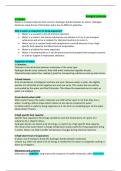
Biodiversity
Types
Species: number of species and number of individuals of each species
Habitat: number of different habitats in an area
Genetic: variety of genes within a species / proportion of genes that vary
Species: group of organisms similar in their morphology, physiology, behavior and
genetics that can interbreed to produce fertile offspring
Population: individuals of the same species in the same area at the same time
Community: different populations (species) living and interacting in the same area
Ecosystem: interaction btw a community and the non-living parts of the environment
SAMPLING
Take measurements from limited number of individuals in an area to estimate number
of organisms (abundance)
Random
Sample sites are selected at random through random number tables, calculators and
computers that select random coordinates
Each area has an equal chance of being selected
, 2
Unbiased: human involvement in choosing samples is removed, reducing effects of
chance and minimising errors in obtaining samples/measurements
Sample may be unrepresentative of whole area
Increase sample size for more reliable estimate
Non-random
Opportunistic
Deliberately sampling an area where a particular species is known to be
- Easier and quicker
- Biased
- Overestimate likely
Stratified
Take samples from each group, proportional to its size
- Over-representation of small areas
Systematic
Samples taken systematically at fixed intervals along the environmental gradient
Sampling techniques
Quadrat
Square frame subdivided into smaller squares
Plants in quadrat identified and counted
Allow estimate of percentage cover
Point: frame with pins set vertically that the plants hit = recorded
1. Grid pitch by using 2 tape measures placed at 90 degrees to each other
2. Select random coordinates
3. Place quadrat at 1st coordinate
4. Identify species by using a dichotomous key (instructions on pairs of
statements)
Types
Species: number of species and number of individuals of each species
Habitat: number of different habitats in an area
Genetic: variety of genes within a species / proportion of genes that vary
Species: group of organisms similar in their morphology, physiology, behavior and
genetics that can interbreed to produce fertile offspring
Population: individuals of the same species in the same area at the same time
Community: different populations (species) living and interacting in the same area
Ecosystem: interaction btw a community and the non-living parts of the environment
SAMPLING
Take measurements from limited number of individuals in an area to estimate number
of organisms (abundance)
Random
Sample sites are selected at random through random number tables, calculators and
computers that select random coordinates
Each area has an equal chance of being selected
, 2
Unbiased: human involvement in choosing samples is removed, reducing effects of
chance and minimising errors in obtaining samples/measurements
Sample may be unrepresentative of whole area
Increase sample size for more reliable estimate
Non-random
Opportunistic
Deliberately sampling an area where a particular species is known to be
- Easier and quicker
- Biased
- Overestimate likely
Stratified
Take samples from each group, proportional to its size
- Over-representation of small areas
Systematic
Samples taken systematically at fixed intervals along the environmental gradient
Sampling techniques
Quadrat
Square frame subdivided into smaller squares
Plants in quadrat identified and counted
Allow estimate of percentage cover
Point: frame with pins set vertically that the plants hit = recorded
1. Grid pitch by using 2 tape measures placed at 90 degrees to each other
2. Select random coordinates
3. Place quadrat at 1st coordinate
4. Identify species by using a dichotomous key (instructions on pairs of
statements)