AP Biology Exam Terms Questions and Answers
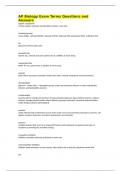
AP Biology Exam Terms Questions and Answers organic compounds contain carbon; examples include lipids, proteins, and carbs functional groups amino (NH2), carbonyl (RCOR), carboxyl (COOH), hydroxyl (OH), phosphate (PO4), sulfhydryl (SH) fat glycerol and three fatty acids saturated fats bad for you; animals and some plants have it; solidifies at room temp. unsaturated fats better for you, plants have it; liquifies at room temp. steriods lipids whose structures resemble chicken-wire fence. include cholesterol and sex hormones phospholipids glycerol + 2 fatty acids + 1 phosphate group; makes up membrane bilayers of cells; hydrophobic interiors and hydrophillic exteriors carbohydrates used by cells for energy and stucture; monosaccharides (glucose), disaccharides (sucrose, maltose, lactose), storage polysaccharides (starch [plants], glycogen [animals]), structural polysaccharides (chitin [fungi], cellulose [arthropods]) proteins made with the help of ribosomes out of amino acids; serve many functions (transport, enzymes, cell signals, receptor molecules, structural components, and channels) enzymes catalytic proteins that react in an induced-fit fashion with substrates to speed up that rate of reactions by lowering the activation energy competitve inhibtion inhibitor resembles substrate and binds to active site noncompetitive inhibition inhibitor binds elsewhere on the enzyme; alters active site so that the substrate cannot bind pH logarithmic scale; <7 acidic, 7 neutral, >7 basic (alkaline); 4 is 10 times more acidic than 5
Written for
- Institution
- AP Biology
- Module
- AP Biology
Document information
- Uploaded on
- May 7, 2024
- Number of pages
- 23
- Written in
- 2023/2024
- Type
- Exam (elaborations)
- Contains
- Questions & answers
Subjects
-
ap biology exam terms questions and answers organi

Also available in package deal