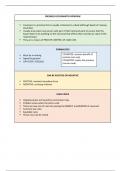
FREEHOLD COVENANTS OVERVIEW
▪ Covenant is a promise that is usually contained in a deed (although deed isn’t always
essential)
▪ Usually arise when one person sells part of their land and want to ensure that the
buyer doesn’t do anything on the new land that effects their amenity pr value of the
retained land.
▪ They are a means of PRIVATE CONTROL OF LAND USE.
FORMALITIES
▪ Must be in writing COVENTEE: receives benefit of
▪ Signed by grantor promise (can sue)
▪ (LPA 1925 s 53(1)(a)) COVENTOR: makes the promise
(can be sued)
CAN BE POSITIVE OR NEGATIVE
▪ POSITIVE: maintain boundary fence
▪ NEGATIVE: not keep chickens.
LEGAL ISSUE
▪ Original parties are bound by contractual rules.
▪ Problem arises when the land is sold
▪ There are two sets of rules for passing the BENEFIT and BURDEN of covenant.
▪ Common law rules
▪ Equitable rules
▪ These must not be mixed.
▪ Covenant is a promise that is usually contained in a deed (although deed isn’t always
essential)
▪ Usually arise when one person sells part of their land and want to ensure that the
buyer doesn’t do anything on the new land that effects their amenity pr value of the
retained land.
▪ They are a means of PRIVATE CONTROL OF LAND USE.
FORMALITIES
▪ Must be in writing COVENTEE: receives benefit of
▪ Signed by grantor promise (can sue)
▪ (LPA 1925 s 53(1)(a)) COVENTOR: makes the promise
(can be sued)
CAN BE POSITIVE OR NEGATIVE
▪ POSITIVE: maintain boundary fence
▪ NEGATIVE: not keep chickens.
LEGAL ISSUE
▪ Original parties are bound by contractual rules.
▪ Problem arises when the land is sold
▪ There are two sets of rules for passing the BENEFIT and BURDEN of covenant.
▪ Common law rules
▪ Equitable rules
▪ These must not be mixed.