Afternoons by Phillip Larkin (P.17)
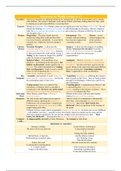
Narrative Afternoons describes an autumnal afternoon in a playground, at which young mothers arrive, burden
with children. The women’s husbands work and are seldom with them, making them feel their youth
is slipping away and responsibilities overcoming them.
Contexts Written in September 1959. Phillip Larkin was an English poet who lived from 1922 to 1982. He was
famous for detailing observations of everyday life and relationships in his poetry, often in a negative
light. He never married, had children or travelled, and worked as a librarian in Hull for 30 years. He
was thought to be a sexist.
Themes Progression – The poem details how the Entrapment – The Closure – across
women are losing their youth and how their women, without realising, various imagery the
lives have become melancholic. ‘Leaves fall in have become trapped into writer portrays a
one and twos’ emphasises how the change is a mundane routine. sense of closure.
gradual.
Literary Extended Metaphor – Larkin uses the Imagery – Larkin uses the imagery of wedding
Devices extended metaphor of the seasons to describe albums ‘lying near the television’ to portray the
the progression of the women’s lives. Summer lack of and the lust for romanticism as couples
is often associated with youth and the season is move on with their lives and accept
‘fading’ as the women no longer feel youthful responsibilities.
under the burden of responsibilities.
Pathetic Fallacy – The timeframe of an Ambiguity – There is ambiguity in whether the
afternoon – as portrayed in the title and in ‘the mothers we meet in the first stanza are consistent
hollows of afternoons’ further signifies the loss throughout – the kids could have aged across the
of youth. The wind is described to be ‘ruining poem, taking on the same roles and responsibilities
their courting-places’ which is used to similar their own parents did. ‘Something is pushing
effect as well as depicting the fast-moving them’ is applicable to both circumstances.
nature of life, rushing past them.
Key ‘Assemble’ used instead of ‘meet’ makes the ‘Something’ is ambiguous, reflecting the women’s
Language action feel like a practiced routine – portraying lack of grasp on their lives – they are being pushed
the unchanging nature of their lives. through lives blindingly, without any control over
their destination.
‘Unripe acorns’ acts as a symbol of the ‘Courting-places’ is repeated across Stanza 2 and
immaturity of children which is matched to 3, representing this cycle of a working-class
romanticism with ‘the lovers are all in school’, society, treading in their parent’s footsteps – this is
depicting how the women feel disillusioned. enjambed to maintain this flow.
Form and Three stanzas, each 8 lines, reflecting a Written in free verse, with not much rhythm,
Meter practiced routine. making it prosaic and thus mundane.
Structure The role of men and women are set apart in There is a lack of exclamations or dramatically
different stanzas, depicting the separation. short lines, only statements, to encapsulate this
Furthermore, the second stanza is fragmented mundanity – apart from ‘their beauty has
by commas to highlight the irregularity of the thickened’ which is significant in the message of
couple seeing each other. the poem.
Different focuses in each stanza encapsulates progression through life. In stanza one we see childhood
– with children ‘[set] free’ – possibly as they leave home; stanza two depicts newly-weds, and the
final stanza depicts parenthood. We see how the children in the final stanza have aged – ‘Their
beauty has thickened.’ – showing how this cycle of life will only continue.
Compare As Imperceptibly as Grief by Emily Dickinson To Autumn by John Keats
s with…
Quotations to remember
Summer is fading: In the hollows of afternoons
The leaves fall in one and twos Young mothers assemble
[…]
Setting free their children.
Behind them, at intervals, And the albums, lettered
Stand husbands in skilled trades, Our Wedding¸ lying
Near the television.
Before, the wind (But the lovers are all in school),
Is ruining their courting-places
[…] unripe acorns, Their beauty has thickened.
Expect to be taken home. Something is pushing them
To the side of their own lives.
Narrative Afternoons describes an autumnal afternoon in a playground, at which young mothers arrive, burden
with children. The women’s husbands work and are seldom with them, making them feel their youth
is slipping away and responsibilities overcoming them.
Contexts Written in September 1959. Phillip Larkin was an English poet who lived from 1922 to 1982. He was
famous for detailing observations of everyday life and relationships in his poetry, often in a negative
light. He never married, had children or travelled, and worked as a librarian in Hull for 30 years. He
was thought to be a sexist.
Themes Progression – The poem details how the Entrapment – The Closure – across
women are losing their youth and how their women, without realising, various imagery the
lives have become melancholic. ‘Leaves fall in have become trapped into writer portrays a
one and twos’ emphasises how the change is a mundane routine. sense of closure.
gradual.
Literary Extended Metaphor – Larkin uses the Imagery – Larkin uses the imagery of wedding
Devices extended metaphor of the seasons to describe albums ‘lying near the television’ to portray the
the progression of the women’s lives. Summer lack of and the lust for romanticism as couples
is often associated with youth and the season is move on with their lives and accept
‘fading’ as the women no longer feel youthful responsibilities.
under the burden of responsibilities.
Pathetic Fallacy – The timeframe of an Ambiguity – There is ambiguity in whether the
afternoon – as portrayed in the title and in ‘the mothers we meet in the first stanza are consistent
hollows of afternoons’ further signifies the loss throughout – the kids could have aged across the
of youth. The wind is described to be ‘ruining poem, taking on the same roles and responsibilities
their courting-places’ which is used to similar their own parents did. ‘Something is pushing
effect as well as depicting the fast-moving them’ is applicable to both circumstances.
nature of life, rushing past them.
Key ‘Assemble’ used instead of ‘meet’ makes the ‘Something’ is ambiguous, reflecting the women’s
Language action feel like a practiced routine – portraying lack of grasp on their lives – they are being pushed
the unchanging nature of their lives. through lives blindingly, without any control over
their destination.
‘Unripe acorns’ acts as a symbol of the ‘Courting-places’ is repeated across Stanza 2 and
immaturity of children which is matched to 3, representing this cycle of a working-class
romanticism with ‘the lovers are all in school’, society, treading in their parent’s footsteps – this is
depicting how the women feel disillusioned. enjambed to maintain this flow.
Form and Three stanzas, each 8 lines, reflecting a Written in free verse, with not much rhythm,
Meter practiced routine. making it prosaic and thus mundane.
Structure The role of men and women are set apart in There is a lack of exclamations or dramatically
different stanzas, depicting the separation. short lines, only statements, to encapsulate this
Furthermore, the second stanza is fragmented mundanity – apart from ‘their beauty has
by commas to highlight the irregularity of the thickened’ which is significant in the message of
couple seeing each other. the poem.
Different focuses in each stanza encapsulates progression through life. In stanza one we see childhood
– with children ‘[set] free’ – possibly as they leave home; stanza two depicts newly-weds, and the
final stanza depicts parenthood. We see how the children in the final stanza have aged – ‘Their
beauty has thickened.’ – showing how this cycle of life will only continue.
Compare As Imperceptibly as Grief by Emily Dickinson To Autumn by John Keats
s with…
Quotations to remember
Summer is fading: In the hollows of afternoons
The leaves fall in one and twos Young mothers assemble
[…]
Setting free their children.
Behind them, at intervals, And the albums, lettered
Stand husbands in skilled trades, Our Wedding¸ lying
Near the television.
Before, the wind (But the lovers are all in school),
Is ruining their courting-places
[…] unripe acorns, Their beauty has thickened.
Expect to be taken home. Something is pushing them
To the side of their own lives.