(Ode) To Autumn by John Keats (P.16)
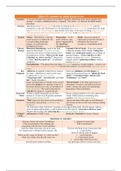
Narrative To Autumn describes the richness and wonders of autumn, describing as the season changes from
summer – in which a childhood naivety is captured – into winter – in which an inevitable death is
described.
Contexts John Keats was a Romantic poet who wrote To Autumn on an autumn evening in 1819 after he
returned on a walk near Winchester. It is the final poem in a sequence of odes written that year. Keats
was known for his sensual imagery, most notably in his odes. At the time of writing, Keats was sick
with tuberculosis which went on to kill him two years later. It had also taken the lives of his two
brothers and his sister in law.
Themes Nature – Described as a ‘pastoral’ Progression – As the Death – Keats was dying of
poem because it is inspired by life poem continues, time tuberculosis at the time and this is
in a rural setting. Keats uses passes, represented by reflected in the focus and
imagery of countryside life the ‘maturing’ acceptance of impending death.
throughout the poem. changing seasons.
Literary Rhetorical Questioning is used in the final Semantic Field of Death – Keats uses imagery
Devices stanza to show Keats’ acceptance of death, within the semantic field of death. ‘Full-grown
choosing not to focus on what has been lost in lambs’ and ‘small gnats mourn’ are exemplar of
the progression of time: “Where are the songs pastoral imagery. ‘As the wind lives or dies’
of Spring? Ay, where are they?” but goes on captures an aspect of mortality. Furthermore,
to winter “hast thy music too” - an optimistic imagery such as ‘gathering swallows’ create a
standpoint. feeling of closure.
Personification – Throughout the poem Keats personifies autumn as a female goddess – seasons were
often depicted as women in European art. Graceful and beautiful, it is used to create calm and content
image.
Key Adjectives are applied to almost every noun in Keats uses indulgent and rich imagery to
Language the poem – alliteration is used in some cases – represent the season of harvest: “plump the hazel
to capture the beauty of the season: shells”, “o’erbrimm’d their clammy cells”,
“winnowing wind”, “sweet kernel” and “rosy “fruitfulness” and “load”.
hue”. Highly descriptive.
Keats’ personification of Autumn in the second ‘Barred clouds’ in the final stanza create an
stanza uses imagery of a sleeping woman on a atmosphere of tension, foreshadowing Keats’
hot sunny afternoon to create an atmosphere of death. Contrasts the gentle and unassuming
calm contentment. The wind is described to description of the environment.
‘soft-lift’ her long her – a gentle adverb.
Form and Written in iambic pentameter across three Rhyme scheme progresses over each stanza from a
Meter stanzas of 11 lines each. Regularity represents simple ABAB scheme to something more
the inevitable nature of death. complex, reflecting growing maturity.
Structure “Mist” places the first stanza in the morning in The second stanza takes place in mid-afternoon
the summer, representing youthfulness and and focuses on harvest and work, placing it during
childhood. Autumn.
The final stanza deals with Keats’ acceptance of his approaching death. Morbid imagery reflects a
sense of closure and mortality, a stark contrast to the first stanza’s ‘warm days will never cease’.
Placed in the evening with ‘soft-dying day’, foreshadowing Keats’ demise.
Compare Afternoons by Phillip Larkin Death of a Naturalist by Seamus Heaney
s with…
Quotations to remember
Seasons of mists and mellow fruitfulness! [...] plump the hazel shells,
Close bosom-friend of the maturing sun With a sweet kernel
Conspiring with him how to load and bless
Until they think warm days will never cease, Thy hair soft-lifted by the winnowing wind,
For Summer has o’erbrimm’d their clammy cells. […] sound asleep,
Drows’d with the fume of poppies
Where are they songs of Spring? Ay, where are they? […] soft-dying day,
Think not of them, thou hast thy music too, […] small gnats mourn
[…] as the light wind lives or dies:
And full-grown lambs loud bleat And gathering swallows twitter in the skies.
Narrative To Autumn describes the richness and wonders of autumn, describing as the season changes from
summer – in which a childhood naivety is captured – into winter – in which an inevitable death is
described.
Contexts John Keats was a Romantic poet who wrote To Autumn on an autumn evening in 1819 after he
returned on a walk near Winchester. It is the final poem in a sequence of odes written that year. Keats
was known for his sensual imagery, most notably in his odes. At the time of writing, Keats was sick
with tuberculosis which went on to kill him two years later. It had also taken the lives of his two
brothers and his sister in law.
Themes Nature – Described as a ‘pastoral’ Progression – As the Death – Keats was dying of
poem because it is inspired by life poem continues, time tuberculosis at the time and this is
in a rural setting. Keats uses passes, represented by reflected in the focus and
imagery of countryside life the ‘maturing’ acceptance of impending death.
throughout the poem. changing seasons.
Literary Rhetorical Questioning is used in the final Semantic Field of Death – Keats uses imagery
Devices stanza to show Keats’ acceptance of death, within the semantic field of death. ‘Full-grown
choosing not to focus on what has been lost in lambs’ and ‘small gnats mourn’ are exemplar of
the progression of time: “Where are the songs pastoral imagery. ‘As the wind lives or dies’
of Spring? Ay, where are they?” but goes on captures an aspect of mortality. Furthermore,
to winter “hast thy music too” - an optimistic imagery such as ‘gathering swallows’ create a
standpoint. feeling of closure.
Personification – Throughout the poem Keats personifies autumn as a female goddess – seasons were
often depicted as women in European art. Graceful and beautiful, it is used to create calm and content
image.
Key Adjectives are applied to almost every noun in Keats uses indulgent and rich imagery to
Language the poem – alliteration is used in some cases – represent the season of harvest: “plump the hazel
to capture the beauty of the season: shells”, “o’erbrimm’d their clammy cells”,
“winnowing wind”, “sweet kernel” and “rosy “fruitfulness” and “load”.
hue”. Highly descriptive.
Keats’ personification of Autumn in the second ‘Barred clouds’ in the final stanza create an
stanza uses imagery of a sleeping woman on a atmosphere of tension, foreshadowing Keats’
hot sunny afternoon to create an atmosphere of death. Contrasts the gentle and unassuming
calm contentment. The wind is described to description of the environment.
‘soft-lift’ her long her – a gentle adverb.
Form and Written in iambic pentameter across three Rhyme scheme progresses over each stanza from a
Meter stanzas of 11 lines each. Regularity represents simple ABAB scheme to something more
the inevitable nature of death. complex, reflecting growing maturity.
Structure “Mist” places the first stanza in the morning in The second stanza takes place in mid-afternoon
the summer, representing youthfulness and and focuses on harvest and work, placing it during
childhood. Autumn.
The final stanza deals with Keats’ acceptance of his approaching death. Morbid imagery reflects a
sense of closure and mortality, a stark contrast to the first stanza’s ‘warm days will never cease’.
Placed in the evening with ‘soft-dying day’, foreshadowing Keats’ demise.
Compare Afternoons by Phillip Larkin Death of a Naturalist by Seamus Heaney
s with…
Quotations to remember
Seasons of mists and mellow fruitfulness! [...] plump the hazel shells,
Close bosom-friend of the maturing sun With a sweet kernel
Conspiring with him how to load and bless
Until they think warm days will never cease, Thy hair soft-lifted by the winnowing wind,
For Summer has o’erbrimm’d their clammy cells. […] sound asleep,
Drows’d with the fume of poppies
Where are they songs of Spring? Ay, where are they? […] soft-dying day,
Think not of them, thou hast thy music too, […] small gnats mourn
[…] as the light wind lives or dies:
And full-grown lambs loud bleat And gathering swallows twitter in the skies.