DVT NCLEX Question and answers correctly solved 2024
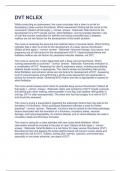
DVT NCLEX Question and answers correctly solved 2024 While conducting an assessment, the nurse concludes that a client is at risk for developing a deep venous thrombosis. Which assessment finding led the nurse to this conclusion? (Select all that apply.) - correct answer Rationale: Risk factors for the development of a DVT include cancer, atrial fibrillation, and myocardial infarction. Use of over-the-counter medication for arthritis and having controlled type 2 diabetes mellitus are not risk factors for the development of this health problem. The nurse is reviewing the personal and medical history of several clients. Which finding indicates that a client is at risk for the development of a deep venous thrombosis? (Select all that apply.) - correct answer Rationale: Hormone therapy, lung cancer, and pregnancy are all risk factors for the development of DVT. Hypercholesterolemia and diabetes mellitus are risk factors for peripheral vascular disease, not DVT. The nurse is caring for a client diagnosed with a deep venous thrombosis. Which nursing assessment is a priority? - correct answer Rationale: Pulmonary embolism is a complication of DVT. Assessing the client's respiratory status, including auscultating bilateral breath sounds, is appropriate. The client's airway and breathing take priority. Atrial fibrillation and ischemic stroke are risk factors for development of DVT. Assessing level of consciousness and performing a stroke scale assessment are appropriate to assess for ischemic stroke. Obtaining EKG rhythm and rate is appropriate to assess for atrial fibrillation. The nurse should assess which client for possible deep venous thrombosis? (Select all that apply.) - correct answer Rationale: Signs and symptoms of DVT include cyanosis, dull aching pain when walking, edema greater in one leg, and capillary refill greater in one leg. DVT is often asymptomatic. The client who has had surgery is at risk for DVT and should be assessed. The nurse is giving a presentation regarding the pathologic factors that may lead to the formation of a thrombus. Which participant statement indicates a need for further teaching? - correct answer Rationale: Virchow's triad is named for the three pathologic factors associated with the formation of a thrombus: circulatory stasis, vascular damage, and hypercoagulability. An inactive lifestyle (not an active lifestyle) can lead to circulatory stasis and thrombus formation The nurse is caring for a client admitted with new onset atrial fibrillation. Which intervention should be included in the plan of care? (Select all that apply.) - correct answer Rationale: Atrial fibrillation is a risk factor for deep venous thrombosis (DVT). Elevating the feet and keeping the knees slightly flexed will prevent venous stasis and decrease the risk for DVT. Edema, aching pain, warmth, cyanosis, and tenderness, especially in one lower extremity, are signs of DVT.
Written for
- Institution
- DVT NCLEX
- Module
- DVT NCLEX
Document information
- Uploaded on
- May 4, 2024
- Number of pages
- 4
- Written in
- 2023/2024
- Type
- Exam (elaborations)
- Contains
- Questions & answers
Subjects
-
dvt nclex
-
dvt nclex question and answers correctly solved 20

Also available in package deal