

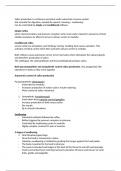
Saliva production is continuous secretion under autonomic nervous system
Not essential for digestion, needed for speech, chewing + swallowing.
Can be controlled by simple and conditioned reflexes.
Simple reflex
when chemoreceptors and pressure receptors when oral cavity respond to presence of food
initiates impulses via afferent nerve to salivary centre in medulla
Conditioned reflex
occurs unhat ora simulation, just thinking/ seeing/ smelling food causes salvation -This
activates cerebral cortex which then activates salivary centre in medulla.
Both reflexes cause autonomic nerves to be innervates which stimulates the salivary glands
and therefore production of saliva
The sublingual, the submandibular and the parotid glands produce saliva.
Both parasympathetic and sympathetic control saliva production. Not antagonistic like
elsewhere in body so they were together
Autonomic control of saliva production
Parasympathetic (chlorogenic)
- Innervated by medulla.
- Increases production of watery saliva- mouth watering
- Main control of saliva- dominant
1. Sympathetic (noradrenergic)
- Innervation from superior cervical ganglion
- Increase production of thick mucus saliva
- Dry mouth
- Eg in stressful situations.
Swallowing
- Voluntarily initiated followed by reflex.
- Reflex triggered by pressure receptors in pharynx.
- Controlled by swallowing centre in medulla.
- Highly complex, involved 31 pair of muscles.
3 stages of swallowing
1. Oral/Oropharyngeal stage
- Once the food is chewed into a bolus
- Voluntary swallowing is initiated by pushing the tongue against the hard palate.
- The bolus is pushed to the back to pharynx.
- The ovula is elevated and lodges at the back of the throat to seal off nasal passage.
- Food is prevented from entering trachea by elevation of larynx and closure of vocal
folds- glottis and epiglottis.
Not essential for digestion, needed for speech, chewing + swallowing.
Can be controlled by simple and conditioned reflexes.
Simple reflex
when chemoreceptors and pressure receptors when oral cavity respond to presence of food
initiates impulses via afferent nerve to salivary centre in medulla
Conditioned reflex
occurs unhat ora simulation, just thinking/ seeing/ smelling food causes salvation -This
activates cerebral cortex which then activates salivary centre in medulla.
Both reflexes cause autonomic nerves to be innervates which stimulates the salivary glands
and therefore production of saliva
The sublingual, the submandibular and the parotid glands produce saliva.
Both parasympathetic and sympathetic control saliva production. Not antagonistic like
elsewhere in body so they were together
Autonomic control of saliva production
Parasympathetic (chlorogenic)
- Innervated by medulla.
- Increases production of watery saliva- mouth watering
- Main control of saliva- dominant
1. Sympathetic (noradrenergic)
- Innervation from superior cervical ganglion
- Increase production of thick mucus saliva
- Dry mouth
- Eg in stressful situations.
Swallowing
- Voluntarily initiated followed by reflex.
- Reflex triggered by pressure receptors in pharynx.
- Controlled by swallowing centre in medulla.
- Highly complex, involved 31 pair of muscles.
3 stages of swallowing
1. Oral/Oropharyngeal stage
- Once the food is chewed into a bolus
- Voluntary swallowing is initiated by pushing the tongue against the hard palate.
- The bolus is pushed to the back to pharynx.
- The ovula is elevated and lodges at the back of the throat to seal off nasal passage.
- Food is prevented from entering trachea by elevation of larynx and closure of vocal
folds- glottis and epiglottis.


