

Intoxication and drunken mistake
Defences
Criminal liability
Mens Rea + Actus Reus (Wihtout a) Successful defence = Criminal liability
Mens Rea + Actus Reus + Successful defence = no criminal liability or reduced criminal
liability
For murder only!!!
Mens Rea + Actus Reus + Successful partial defence = voluntary manslaughter
Partial defences to murder
Ø Diminished Responsibility and Loss of Control
Ø Only apply to Murder
Ø DOES NOT Apply to Attempted Murder
Ø Murder should be committed
Ø If successfully applied turns murder into
VOLUNTARY MANSLAUGHTER
General defenses -
Intoxication -
Not technically a defense
A lack/denial of Mens Rea
Alcohol, dangerous drugs, intoxicating substances and medical drugs used for non-medical
purposes
Both elements of the crime must be there, but you can argue a defense which would
eliminate criminal liability
If D’s state of intoxication was such that D was incapable of forming the necessary MR
required for liability for the offence it may be a defense for D.
, Voluntary intoxication -
Knowingly consumed alcohol
Knowingly consumed drugs
Including mistaken as to strength, quality and effect of alcohol/drug consumed
Allen[1988]
DPP v Majewski [1977]
Majewski had taken large amounts of amphetamines and got drunk
at a pub.
Majewski inflicted actual bodily harm on two customers at the pub and on a police officer in
the execution of his duty.
Majewski claimed he could not remember any of it happening, therefore should not be
convicted of ABH and Assault as he was too intoxicated to form the necessary MR.
The authority case for Defense of Intoxication.
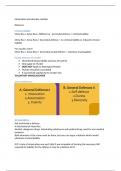
A- Is this a Voluntary or Involuntary intoxication?
B- Is the crime committed under the influence of intoxication is a crime of basic intent or a
specific intent?
Even if you do not remember, you could still be criminally liable - says the law.
Types of crimes of specific intent -
Murder
S.18 wounding/GBH with intent
Arson/criminal damage with intent to endanger life
Voluntary intoxication could only be a defence for these
Types of crimes of basic intent
Defences
Criminal liability
Mens Rea + Actus Reus (Wihtout a) Successful defence = Criminal liability
Mens Rea + Actus Reus + Successful defence = no criminal liability or reduced criminal
liability
For murder only!!!
Mens Rea + Actus Reus + Successful partial defence = voluntary manslaughter
Partial defences to murder
Ø Diminished Responsibility and Loss of Control
Ø Only apply to Murder
Ø DOES NOT Apply to Attempted Murder
Ø Murder should be committed
Ø If successfully applied turns murder into
VOLUNTARY MANSLAUGHTER
General defenses -
Intoxication -
Not technically a defense
A lack/denial of Mens Rea
Alcohol, dangerous drugs, intoxicating substances and medical drugs used for non-medical
purposes
Both elements of the crime must be there, but you can argue a defense which would
eliminate criminal liability
If D’s state of intoxication was such that D was incapable of forming the necessary MR
required for liability for the offence it may be a defense for D.
, Voluntary intoxication -
Knowingly consumed alcohol
Knowingly consumed drugs
Including mistaken as to strength, quality and effect of alcohol/drug consumed
Allen[1988]
DPP v Majewski [1977]
Majewski had taken large amounts of amphetamines and got drunk
at a pub.
Majewski inflicted actual bodily harm on two customers at the pub and on a police officer in
the execution of his duty.
Majewski claimed he could not remember any of it happening, therefore should not be
convicted of ABH and Assault as he was too intoxicated to form the necessary MR.
The authority case for Defense of Intoxication.
A- Is this a Voluntary or Involuntary intoxication?
B- Is the crime committed under the influence of intoxication is a crime of basic intent or a
specific intent?
Even if you do not remember, you could still be criminally liable - says the law.
Types of crimes of specific intent -
Murder
S.18 wounding/GBH with intent
Arson/criminal damage with intent to endanger life
Voluntary intoxication could only be a defence for these
Types of crimes of basic intent


