
Unit 23: Describe the process when Private-Matters affecting only individual people or
making an Act of Parliament corporations, e.g. University College London Act 1996
Bill Public- Matters of public policy affecting the whole country
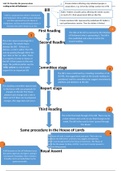
A Bill is a proposed law which is introduced or much of it. Most government bills are like this.
into Parliament. Once a Bill has been debated
and then approved by each House of Private members bills- Sponsored by individual MP. Ballot in
Parliament, and has received Royal Assent, it each parliamentary session. Time for debate is limited.
becomes `law and is known as an Act.
1
First Reading The title of the bill is read out by the Member
2 of Parliament who is sponsoring it. The bill is
then published and a date is set for the
This is the most crucial stage for a second reading.
bill to pass. The whole House Second Reading
debates the bill. If there is a
division, a vote is called. The MPs
vote by passing through either the
‘aye’ door or the ‘no’ door. There
is a majority of votes in favour of
the bill. It then passes to the next
stage. The political parties use the
‘whip’ system to ensure party Committee stage 3
support for an important bill.
The bill is now scrutinised by a standing committee of 16-
50 MPs. Any suggestions made at the second reading are
considered, and the committee may suggest amendments,
4 additions and deletions to the bill.
The standing committee reports back
to the House with any proposals for Report stage
changes to the bill. The House
debates each change and a vote is
taken on it.If there are no proposed
changes, this stage does not occur.
Third Reading 5
This is the final read-through of the bill. There may be
a short debate and a vote on any final changes to be
made. The bill is then said to have ‘passed through
the House’.
Same procedure in the House of Lords
6
The House of Lords is made up of unelected peers. Their role is to
scrutinise the bill further, and they may suggest amendments,
which must be approved by the House of Commons. The House of
7 Lords has the power to delay a bill for 1 year but it cannot prevent a
bill from being passed.
A bill becomes an Act of Parliament once
the queen approves and signs it, giving it
Royal Assent
royal assent. Nowadays, this is merely a
formality and is not undertaken by the
queen personally.
making an Act of Parliament corporations, e.g. University College London Act 1996
Bill Public- Matters of public policy affecting the whole country
A Bill is a proposed law which is introduced or much of it. Most government bills are like this.
into Parliament. Once a Bill has been debated
and then approved by each House of Private members bills- Sponsored by individual MP. Ballot in
Parliament, and has received Royal Assent, it each parliamentary session. Time for debate is limited.
becomes `law and is known as an Act.
1
First Reading The title of the bill is read out by the Member
2 of Parliament who is sponsoring it. The bill is
then published and a date is set for the
This is the most crucial stage for a second reading.
bill to pass. The whole House Second Reading
debates the bill. If there is a
division, a vote is called. The MPs
vote by passing through either the
‘aye’ door or the ‘no’ door. There
is a majority of votes in favour of
the bill. It then passes to the next
stage. The political parties use the
‘whip’ system to ensure party Committee stage 3
support for an important bill.
The bill is now scrutinised by a standing committee of 16-
50 MPs. Any suggestions made at the second reading are
considered, and the committee may suggest amendments,
4 additions and deletions to the bill.
The standing committee reports back
to the House with any proposals for Report stage
changes to the bill. The House
debates each change and a vote is
taken on it.If there are no proposed
changes, this stage does not occur.
Third Reading 5
This is the final read-through of the bill. There may be
a short debate and a vote on any final changes to be
made. The bill is then said to have ‘passed through
the House’.
Same procedure in the House of Lords
6
The House of Lords is made up of unelected peers. Their role is to
scrutinise the bill further, and they may suggest amendments,
which must be approved by the House of Commons. The House of
7 Lords has the power to delay a bill for 1 year but it cannot prevent a
bill from being passed.
A bill becomes an Act of Parliament once
the queen approves and signs it, giving it
Royal Assent
royal assent. Nowadays, this is merely a
formality and is not undertaken by the
queen personally.


