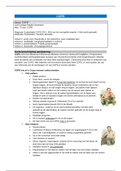
SHN169 - Psychology – Risk taking behaviour in children and young people
Risk Taking Behaviour in Adolescence
Introduction
Multifactorial phenomena
o Numerous types of activity
Synonymous with excitement, sensation seeking
Risk acknowledged
Young see themselves as invincible
Influenced by risk rather than reality
Personal Fable (Elkind 1967)
o Concept that you can take risks but nothing bad will happen to them – risks
to them in old age are too remote for them to comprehend
Aim and Outcomes
Aim – to discuss RTB in young people
Outcomes:
o Discuss what is RTB and why it is a health concern
o Examine types of RTB
o Discuss the influences on YP to engage in RTB
o Examine health promotion issues
Types of RTB
Smoking
Alcohol Use
Drug Use/Misuse
Committing Crime – e.g.:
o Shoplifting
o Stealing cars
Sexual activity
Antisocial behaviours
Why do you need a knowledge of RTB?
Understand the developmental perspective
Understand motivations
o E.g. is it an attempt to gain control over treatment for an existing condition;
an attempt to rebel etc.
Understand perspectives
Explains non concordant (compliant) behaviour
Provide advice on harm reduction
o Why it is important for them not to do what they are doing/or what they
should be doing but in a manner that is age appropriate
Provide safer outlets for RTB
o E.g. race tracks, climbing clubs
Signpost YP to support and helping services
Be able to give health promotion advice
1
, SHN169 - Psychology – Risk taking behaviour in children and young people
Reasons for RTB
Sensation seeking
Excitement
Adrenaline buzz
Pushing the boundaries
Exercising independence
Affiliation with group (social groups)
o Even being part of teams that could be associated as positive – e.g. football
teams could lead to RTB (e.g. excessing drinking, violence)
o Organised activity groups have been found to reduce RTB – safe environment
in which to engage in activities
o Those from lower income households are less likely to take part in organised
activities and more likely to engage in dangerous/risky behaviour
Coping with stress
Vulnerability
Smoking (Ash 2021)
4% of adolescent smoke weekly or daily
8% of 15-16 year olds (Year 11) say they smoke at least weekly
59% tried their first cigarette at 14 or 15
40% of adult smokers started smoking regularly before the age of 16
Children are over 70% more likely to start smoking if just one parent smoked
E-cigarette use amongst adolescents was rare
The younger children start smoking the more likely they are to become addictive due
to the way their brain is developing (more sensitive to nicotine)
o More likely to continue smoking into adulthood
Increased risk to health as they get older
o E.g. COPD
Alcohol
Recommended that it is best to abstain from alcohol until 18 however if they do
drink it should not be until at least 15
2018 – 38% of pupils said they drank alcohol at least a few times a year
Increased sharply by age from 9% of 11 year olds to 66% of 15 year olds
Sources of alcohol – parents/friends/shops
Places to drink: Home/parties/other homes
o Idea amongst some parents that they would rather their children drank and
home so they could monitor the situation
o Parents providing alcohol – 71%
o Friends providing alcohol – 49%
o Removal from home with permission – 48%
Company: Parents/friends/alone
o Drinking with Parents – 66%
o Drinking with friends – 58%
o Only 3% of people saying they drank alone
The proportion of 15 year olds who report having been drunk has generally fallen
across England, Scotland and Wales
2
Risk Taking Behaviour in Adolescence
Introduction
Multifactorial phenomena
o Numerous types of activity
Synonymous with excitement, sensation seeking
Risk acknowledged
Young see themselves as invincible
Influenced by risk rather than reality
Personal Fable (Elkind 1967)
o Concept that you can take risks but nothing bad will happen to them – risks
to them in old age are too remote for them to comprehend
Aim and Outcomes
Aim – to discuss RTB in young people
Outcomes:
o Discuss what is RTB and why it is a health concern
o Examine types of RTB
o Discuss the influences on YP to engage in RTB
o Examine health promotion issues
Types of RTB
Smoking
Alcohol Use
Drug Use/Misuse
Committing Crime – e.g.:
o Shoplifting
o Stealing cars
Sexual activity
Antisocial behaviours
Why do you need a knowledge of RTB?
Understand the developmental perspective
Understand motivations
o E.g. is it an attempt to gain control over treatment for an existing condition;
an attempt to rebel etc.
Understand perspectives
Explains non concordant (compliant) behaviour
Provide advice on harm reduction
o Why it is important for them not to do what they are doing/or what they
should be doing but in a manner that is age appropriate
Provide safer outlets for RTB
o E.g. race tracks, climbing clubs
Signpost YP to support and helping services
Be able to give health promotion advice
1
, SHN169 - Psychology – Risk taking behaviour in children and young people
Reasons for RTB
Sensation seeking
Excitement
Adrenaline buzz
Pushing the boundaries
Exercising independence
Affiliation with group (social groups)
o Even being part of teams that could be associated as positive – e.g. football
teams could lead to RTB (e.g. excessing drinking, violence)
o Organised activity groups have been found to reduce RTB – safe environment
in which to engage in activities
o Those from lower income households are less likely to take part in organised
activities and more likely to engage in dangerous/risky behaviour
Coping with stress
Vulnerability
Smoking (Ash 2021)
4% of adolescent smoke weekly or daily
8% of 15-16 year olds (Year 11) say they smoke at least weekly
59% tried their first cigarette at 14 or 15
40% of adult smokers started smoking regularly before the age of 16
Children are over 70% more likely to start smoking if just one parent smoked
E-cigarette use amongst adolescents was rare
The younger children start smoking the more likely they are to become addictive due
to the way their brain is developing (more sensitive to nicotine)
o More likely to continue smoking into adulthood
Increased risk to health as they get older
o E.g. COPD
Alcohol
Recommended that it is best to abstain from alcohol until 18 however if they do
drink it should not be until at least 15
2018 – 38% of pupils said they drank alcohol at least a few times a year
Increased sharply by age from 9% of 11 year olds to 66% of 15 year olds
Sources of alcohol – parents/friends/shops
Places to drink: Home/parties/other homes
o Idea amongst some parents that they would rather their children drank and
home so they could monitor the situation
o Parents providing alcohol – 71%
o Friends providing alcohol – 49%
o Removal from home with permission – 48%
Company: Parents/friends/alone
o Drinking with Parents – 66%
o Drinking with friends – 58%
o Only 3% of people saying they drank alone
The proportion of 15 year olds who report having been drunk has generally fallen
across England, Scotland and Wales
2