DIRECT EFFECT – REVISION STRUCTURE
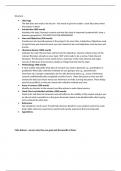
- Introduction = in this essay, I will be explaining and critically analysing direct
effect and indirect effect
- Direct Effect Definition = the principle was created by the CJEU, which
emphasises on the supranational nature of the CJEU; direct effect also has no
formal basis in the Treaties
~ direct effect: EU law has direct effect when individuals can enforce their
rights created by EU in national courts
Van Gend = is a landmark case, which defined direct effect
~ the case created the Van Gend test, which states that the EU right in
question meets the following criteria: it must be sufficiently clear, precise and
unconditional – if the EU rights satisfy the criteria, then it has direct effect
– the purpose is to ensure that individual rights created by EU law are
enforceable and protected in national courts
- Direct Applicability vs Direct Effect =
~ Direct Applicability: member state does not need to implement legislation
– it automatically becomes law; however, it may not create rights
~ Direct Effect: refers to whether individuals can rely on the EU in domestic
courts – there are two types of direct effects: horizontal and vertical
- Difference between Vertical and Horizontal Direct Effect = there are two types
of direct effect – vertical direct effect is when EU rights are enforced against
the state and horizontal direct effect is when EU rights are enforced against
other individuals
- Which EU law has Direct Effect =
> Treaty Articles: article 288 states that treaties have general and direct
application - they have vertical direct effect as established in Van Gend and
they also have horizontal direct effect as shown in Defrenne = this case was
regarding equal pay for male and female – this case established that Treaty
Articles can only have horizontal direct effect if the Van Gend test is passed -
if they are clear, precise ad unconditional
> Regulations: Article 288 TFEU states that a regulation shall have general
application – it shall be binding in its entirety and directly applicable in all
Member States – similar to Treaties, regulations are also directly applicable
and can have both vertical and horizontal direct effect if they pass the Van
Gend Test
~ Fratelli = showed regulations have vertical direct effect
~ Munoz = showed regulations have horizontal direct effect
- Introduction = in this essay, I will be explaining and critically analysing direct
effect and indirect effect
- Direct Effect Definition = the principle was created by the CJEU, which
emphasises on the supranational nature of the CJEU; direct effect also has no
formal basis in the Treaties
~ direct effect: EU law has direct effect when individuals can enforce their
rights created by EU in national courts
Van Gend = is a landmark case, which defined direct effect
~ the case created the Van Gend test, which states that the EU right in
question meets the following criteria: it must be sufficiently clear, precise and
unconditional – if the EU rights satisfy the criteria, then it has direct effect
– the purpose is to ensure that individual rights created by EU law are
enforceable and protected in national courts
- Direct Applicability vs Direct Effect =
~ Direct Applicability: member state does not need to implement legislation
– it automatically becomes law; however, it may not create rights
~ Direct Effect: refers to whether individuals can rely on the EU in domestic
courts – there are two types of direct effects: horizontal and vertical
- Difference between Vertical and Horizontal Direct Effect = there are two types
of direct effect – vertical direct effect is when EU rights are enforced against
the state and horizontal direct effect is when EU rights are enforced against
other individuals
- Which EU law has Direct Effect =
> Treaty Articles: article 288 states that treaties have general and direct
application - they have vertical direct effect as established in Van Gend and
they also have horizontal direct effect as shown in Defrenne = this case was
regarding equal pay for male and female – this case established that Treaty
Articles can only have horizontal direct effect if the Van Gend test is passed -
if they are clear, precise ad unconditional
> Regulations: Article 288 TFEU states that a regulation shall have general
application – it shall be binding in its entirety and directly applicable in all
Member States – similar to Treaties, regulations are also directly applicable
and can have both vertical and horizontal direct effect if they pass the Van
Gend Test
~ Fratelli = showed regulations have vertical direct effect
~ Munoz = showed regulations have horizontal direct effect