

DEMAND AND SUPPLY
Demand
Law of demand – There is an inverse relationship between the price of good and demand
A normal good is a good for which demand increases as income rises and demand decreases
as income falls. An inferior good is a good for which demand decreases as income rises and
demand increases as income falls.
Demand for a good or service is the quantity that purchasers are willing and able to buy at a
given price in an amount of time.
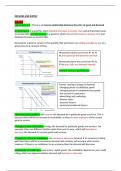
Movement up the curve from P1 to P2
as price goes up and demand contracts
Movement down the curve from P1 to
P3 as price falls and demand extends
revenue = price x quantity sold
Factors causing a change in demand:
-changing prices of substitute goods
-changing prices of complementary goods
-the income of consumers
-advertising and marketing
-interest rates
-seasonal factors
-social and emotional factors
-Advertising and publicity will increase the demand for a particular good or service. This is
because there will be an increase in desirability, as there is more exposure of the certain
good or service.
-Changes in taste and fashion change the demand for particular goods and services. For
example, there are different fashion styles from year to year, which will increase or
decrease the demand for certain goods and services.
-Changes in consumer confidence can increase or decrease demand. If an economy is doing
well then there will be an increase in demand and certainty will increase with income.
However, if there is no confidence in an economy then the demand will decrease.
-Availability of credit loans used to buy capital goods. The availability depends on your credit
rating, which can depend whether demand will increase or decrease.
, -Changes in the rate of interest charged on loans to consumers and firms. The rate of
interest is the percentage cost of borrowing and the percentage reward for saving and the
price of money.
-Advances in technology increase demand. New technology decreases the price of old
products and so increases the demand of the new products.
-Seasonal factors can increase demand of certain goods and services. For example, at
Halloween the demand for pumpkins and sweets will increase.
Complementary Goods
-complements are said to be in joint demand, because they are consumed together; such as
fish and chips, bread and butter.
As the price of bread rises, the demand
for bread contracts and there is a
movement up the curve.
Therefore, the demand decreases for
butter.
As the price of bread falls, the demand
for bread extends and there is a
movement down the curve.
Therefore, the demand increases for
the butter.
Substitute Goods
-substitutes are goods in competitive demand and are replacements for other products.
As the price of the sun rises, the
demand for the sun contracts and there
is a movement up the curve.
Therefore, the demand increases for
the mirror.
As the price of the sun falls, the
demand for the sun extends and there
is a movement down the curve.
Therefore, the demand decreases for
the mirror.
Demand
Law of demand – There is an inverse relationship between the price of good and demand
A normal good is a good for which demand increases as income rises and demand decreases
as income falls. An inferior good is a good for which demand decreases as income rises and
demand increases as income falls.
Demand for a good or service is the quantity that purchasers are willing and able to buy at a
given price in an amount of time.
Movement up the curve from P1 to P2
as price goes up and demand contracts
Movement down the curve from P1 to
P3 as price falls and demand extends
revenue = price x quantity sold
Factors causing a change in demand:
-changing prices of substitute goods
-changing prices of complementary goods
-the income of consumers
-advertising and marketing
-interest rates
-seasonal factors
-social and emotional factors
-Advertising and publicity will increase the demand for a particular good or service. This is
because there will be an increase in desirability, as there is more exposure of the certain
good or service.
-Changes in taste and fashion change the demand for particular goods and services. For
example, there are different fashion styles from year to year, which will increase or
decrease the demand for certain goods and services.
-Changes in consumer confidence can increase or decrease demand. If an economy is doing
well then there will be an increase in demand and certainty will increase with income.
However, if there is no confidence in an economy then the demand will decrease.
-Availability of credit loans used to buy capital goods. The availability depends on your credit
rating, which can depend whether demand will increase or decrease.
, -Changes in the rate of interest charged on loans to consumers and firms. The rate of
interest is the percentage cost of borrowing and the percentage reward for saving and the
price of money.
-Advances in technology increase demand. New technology decreases the price of old
products and so increases the demand of the new products.
-Seasonal factors can increase demand of certain goods and services. For example, at
Halloween the demand for pumpkins and sweets will increase.
Complementary Goods
-complements are said to be in joint demand, because they are consumed together; such as
fish and chips, bread and butter.
As the price of bread rises, the demand
for bread contracts and there is a
movement up the curve.
Therefore, the demand decreases for
butter.
As the price of bread falls, the demand
for bread extends and there is a
movement down the curve.
Therefore, the demand increases for
the butter.
Substitute Goods
-substitutes are goods in competitive demand and are replacements for other products.
As the price of the sun rises, the
demand for the sun contracts and there
is a movement up the curve.
Therefore, the demand increases for
the mirror.
As the price of the sun falls, the
demand for the sun extends and there
is a movement down the curve.
Therefore, the demand decreases for
the mirror.


