Neuro Assessment
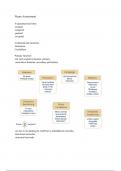
4 suprainterioral lobes
-frontal]
-temporal
-parietal
-occipital
2 infratentorial structures
-brainstem
Cerebellum
Primary function
-for each cognitive domain- primary
-associative domains- secondary and tertiary
-an area is not parking by itself but is embedded in networks
-functional networks
-structural networks
,Laboratory tests
-neuroimaging
-blood proteins
-csf
Premorbid functioning
Definition?
= level of functioning that an individual exhibited before the onset of a particular neurological
illness, injury or condition
Why assess it?
need a baseline with which to compare the individual’s current performance/personality –
what might be an average score for one person will be below average for another
norms are therefore only a guideline, not a ‘rule’
How to assess it?
• History
• NART / WTAR
• WAIS: FSIQ
• Best Performance Method
,• Listening to close family members
Psychometric properties
-reliability
-validity
Interpretation of the scores
• Normalized scores
expected observed performance on a variety of test scores
If significant discrepancy, then we talk about a deficit (see Lezak pg99)
• Compare this pattern with patterns for specific neurological patient groups
• Integrate information
Writing a report
• Components
• Case demographics + date of assessment
• Referral reason/question
• Assessment materials that were used
• Test results and interpretation
• Conclusion, translation to daily life functioning and recommendations
for patient, family and support team
• Considerations
• ~ reader?
• typically short
• try to avoid jargon
• data presentation
(e.g. raw scores can either be explained or attached in an appendix)
Book material
Chapter 5
- Baseline study- an initial study which testes all major functions
Context for interpreting examination findings also depends on 5 aspects of the patient
background
-social history
-current life events
-medical history
-cultural background
-circumstances around the examination
, -any question that the patient might have should be taken into account
When to examine
-sudden onset conditions like trauma strokes should be investigated inn the following weeks
-acute stages no examination/ full assessment
-after the postacute stage usually six months can follow a through examination
-long term planning -one or two times years after the event
-evolving conditions can have multiple examination with the second six months after the first
one
Seven topics must be covered before examination
-the purpose of the examination
-the nature of the examination
-the way the results are going to be handled
-confidentiality
-feedback to the patient
-how they feel about the examination
-brief explanation of the test procedure
-many examiners believe that longer tests are more reliable than shorter ones
-adaptive tests are designated to fit with the patients skills
-positive predictive value takes into account that a person with a positive score has a target
condition
-negative signifies the probability that a negative tst performance signifies the lack of condition
Optimal versus standard conditions
-optimal enable people to do the best
-standard makes sure that each administration the same so that they can be compared
Chapter 6
-behavioral observations
-numerically quantitative data
-descriptive-qualitative data
-scores are summary statements about observed behaviour
-a test score should represent as less categories as possible
-if attest is too inclusive it becomes impossible to know what it represents
4 suprainterioral lobes
-frontal]
-temporal
-parietal
-occipital
2 infratentorial structures
-brainstem
Cerebellum
Primary function
-for each cognitive domain- primary
-associative domains- secondary and tertiary
-an area is not parking by itself but is embedded in networks
-functional networks
-structural networks
,Laboratory tests
-neuroimaging
-blood proteins
-csf
Premorbid functioning
Definition?
= level of functioning that an individual exhibited before the onset of a particular neurological
illness, injury or condition
Why assess it?
need a baseline with which to compare the individual’s current performance/personality –
what might be an average score for one person will be below average for another
norms are therefore only a guideline, not a ‘rule’
How to assess it?
• History
• NART / WTAR
• WAIS: FSIQ
• Best Performance Method
,• Listening to close family members
Psychometric properties
-reliability
-validity
Interpretation of the scores
• Normalized scores
expected observed performance on a variety of test scores
If significant discrepancy, then we talk about a deficit (see Lezak pg99)
• Compare this pattern with patterns for specific neurological patient groups
• Integrate information
Writing a report
• Components
• Case demographics + date of assessment
• Referral reason/question
• Assessment materials that were used
• Test results and interpretation
• Conclusion, translation to daily life functioning and recommendations
for patient, family and support team
• Considerations
• ~ reader?
• typically short
• try to avoid jargon
• data presentation
(e.g. raw scores can either be explained or attached in an appendix)
Book material
Chapter 5
- Baseline study- an initial study which testes all major functions
Context for interpreting examination findings also depends on 5 aspects of the patient
background
-social history
-current life events
-medical history
-cultural background
-circumstances around the examination
, -any question that the patient might have should be taken into account
When to examine
-sudden onset conditions like trauma strokes should be investigated inn the following weeks
-acute stages no examination/ full assessment
-after the postacute stage usually six months can follow a through examination
-long term planning -one or two times years after the event
-evolving conditions can have multiple examination with the second six months after the first
one
Seven topics must be covered before examination
-the purpose of the examination
-the nature of the examination
-the way the results are going to be handled
-confidentiality
-feedback to the patient
-how they feel about the examination
-brief explanation of the test procedure
-many examiners believe that longer tests are more reliable than shorter ones
-adaptive tests are designated to fit with the patients skills
-positive predictive value takes into account that a person with a positive score has a target
condition
-negative signifies the probability that a negative tst performance signifies the lack of condition
Optimal versus standard conditions
-optimal enable people to do the best
-standard makes sure that each administration the same so that they can be compared
Chapter 6
-behavioral observations
-numerically quantitative data
-descriptive-qualitative data
-scores are summary statements about observed behaviour
-a test score should represent as less categories as possible
-if attest is too inclusive it becomes impossible to know what it represents