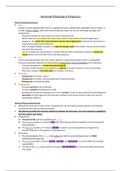
Hormonal Physiology in Pregnancy
Role of Placental Hormones
hCG
Human chorionic gonadotrophin (hCG) is a peptde hormone synthesised by trophoblast cells of embryo. It
is made in first 12 weeess, after wehich tme the placenta tases over the role of masing oestrogen and
progesterone.
- Prevents involuton of corpus luteum at end of menstrual cycle
- Binds to the ovary to promote the maintenance of the corpus luteum during the beginning of
pregnancy. This allows the corpus luteum to secrete the progesterone during the frst trimester (12
weeks) before placental development.
- Due to its highly negatve charge it can repel the immune cells of the mother, thus protect the foetus
during the frst trimester.
- Acts on sensitvity of osmoreceptors, causing a lefward shif in threshold for pituitary vasopressin
release (hence why thirst ofen occurs during pregnancy).
hPL
Human placental lactogen (hPL) asa Human Chorionic somatomammotropins (hCS) is a polypeptde
hormone structurally related to GH and prolactn synthesised by syncytotrophoblast cells of placenta
- Promote development of maternal mammary glands
- Decreases insulin sensitvity and utlizaton of glucose by mother so there is more for the foetus
- Play role in release of free faty acids from mother’s fat stores
Oestrogen
- Enlargement of mother’s uterus
- Enlargement of mother’s breasts and growth of ductal structure
- Enlargement of external genitalia
Progesterone
- Increases secretory role of placenta
- Increases nutriton from placenta to baby
- Development of uterine endometrium & role in nutriton of early embryo (decidual cell development)
- Relaxaton of pelvic ligaments (SIJ and pubic symphysis) and smooth muscle of uterus (to prevent
spontaneous aborton)
Maternal-Placental-Foetal Unit
Although the placenta is major source of progesterone and oestrogens during pregnancy, the placenta
cannot synthesise these hormones by itself
The placenta provides the enzymes needed to synthesis the hormones, from the substances supplied by
both the mother and foetus.
Progesterone
1) Cholesterol/LDL partcles supplied by the mother
2) The placenta provides an enzyme (SCCE/side chain cleaving enzyme) needed to convert cholesterol
into pregnolone.
3) The placenta provides a 2nd enzyme (3β-HSD) needed to convert pregnolone to progesterone.
- Overall: Cholesterol pregnolone progesterone
Oestrogens
1) The adrenal glands of the foetus (and mother) provide the weak androgen known as DHEA
(Dehydroepiandrosterone).
2) The placenta provides enzymes (3β-HSD, 17β-HSD, and Aromatase) to convert DHEA into estradiol
and oestrone.
3) The liver of the foetus also provides an enzyme (16α-OH-DHEA-S) to convert estradiol and oestrone
into estriol.
Role of Placental Hormones
hCG
Human chorionic gonadotrophin (hCG) is a peptde hormone synthesised by trophoblast cells of embryo. It
is made in first 12 weeess, after wehich tme the placenta tases over the role of masing oestrogen and
progesterone.
- Prevents involuton of corpus luteum at end of menstrual cycle
- Binds to the ovary to promote the maintenance of the corpus luteum during the beginning of
pregnancy. This allows the corpus luteum to secrete the progesterone during the frst trimester (12
weeks) before placental development.
- Due to its highly negatve charge it can repel the immune cells of the mother, thus protect the foetus
during the frst trimester.
- Acts on sensitvity of osmoreceptors, causing a lefward shif in threshold for pituitary vasopressin
release (hence why thirst ofen occurs during pregnancy).
hPL
Human placental lactogen (hPL) asa Human Chorionic somatomammotropins (hCS) is a polypeptde
hormone structurally related to GH and prolactn synthesised by syncytotrophoblast cells of placenta
- Promote development of maternal mammary glands
- Decreases insulin sensitvity and utlizaton of glucose by mother so there is more for the foetus
- Play role in release of free faty acids from mother’s fat stores
Oestrogen
- Enlargement of mother’s uterus
- Enlargement of mother’s breasts and growth of ductal structure
- Enlargement of external genitalia
Progesterone
- Increases secretory role of placenta
- Increases nutriton from placenta to baby
- Development of uterine endometrium & role in nutriton of early embryo (decidual cell development)
- Relaxaton of pelvic ligaments (SIJ and pubic symphysis) and smooth muscle of uterus (to prevent
spontaneous aborton)
Maternal-Placental-Foetal Unit
Although the placenta is major source of progesterone and oestrogens during pregnancy, the placenta
cannot synthesise these hormones by itself
The placenta provides the enzymes needed to synthesis the hormones, from the substances supplied by
both the mother and foetus.
Progesterone
1) Cholesterol/LDL partcles supplied by the mother
2) The placenta provides an enzyme (SCCE/side chain cleaving enzyme) needed to convert cholesterol
into pregnolone.
3) The placenta provides a 2nd enzyme (3β-HSD) needed to convert pregnolone to progesterone.
- Overall: Cholesterol pregnolone progesterone
Oestrogens
1) The adrenal glands of the foetus (and mother) provide the weak androgen known as DHEA
(Dehydroepiandrosterone).
2) The placenta provides enzymes (3β-HSD, 17β-HSD, and Aromatase) to convert DHEA into estradiol
and oestrone.
3) The liver of the foetus also provides an enzyme (16α-OH-DHEA-S) to convert estradiol and oestrone
into estriol.